Stopping Power
A Winter story chronicled the experiences of six undergraduate alums who took time off before graduating.
I am so proud of Stanford for printing this article, particularly Arthur Alvarez’s story. Stopping out; stopping out for mental health reasons; and stopping out for mental health reasons related to needed support for first-generation college students are not topics that prestigious universities bring forward for public education and discussion. I stopped out for five years. Friends who stopped out of Harvard and I have discussed the shame we had to overcome because of the lack of normalization and discourse, which made stopping out feel like a stigma.
Shout-out to my Stanford adviser in 1988—I wish I remembered their name. They gave me the best advice: Declare your major before you stop out because it will make finishing straightforward and faster. I had no idea what I wanted to make my focus of study. But upon return, it didn’t matter. I knew exactly which classes I needed to take to expedite a degree, and I supplemented with amazing courses that fulfilled my curiosity, passions, and identity at that time.
I’m smiling because during my freshman year I was part of the Stanford Chaparral collab with the Harvard Lampoon—a type of Big Game rivalry—and I bet you beat Harvard in bringing this discussion to the forefront.
Marcie Gilbert, ’90
Pasadena, California
|
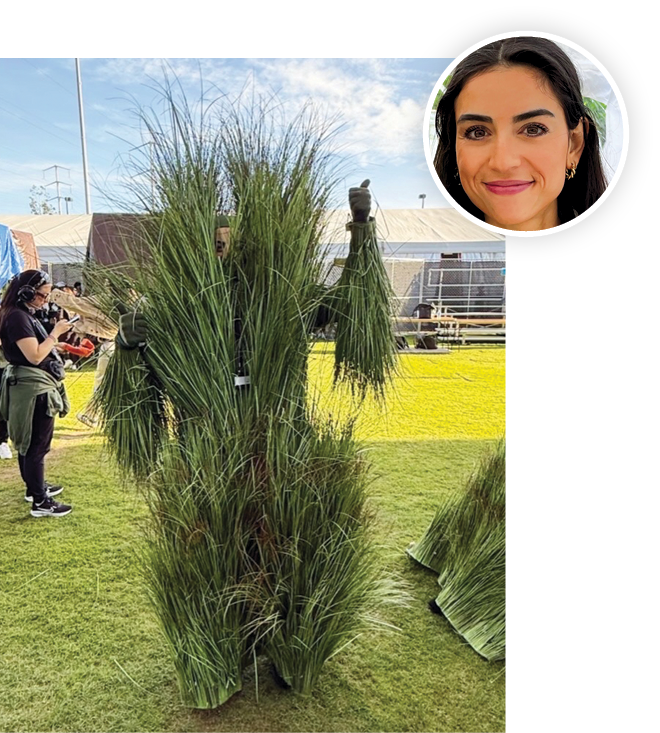
“Once a Tree, Always a Tree!”A photograph of Léa Koob, ’19, one of 380 “human trees” in the Super Bowl LX halftime show, captured the hearts of alums.  Photo: Courtesy Léa Koob (2) |

Snow Day
The Winter issue included a photo of campus from January 21, 1962, one of three times it has snowed on the Farm since the university was built.
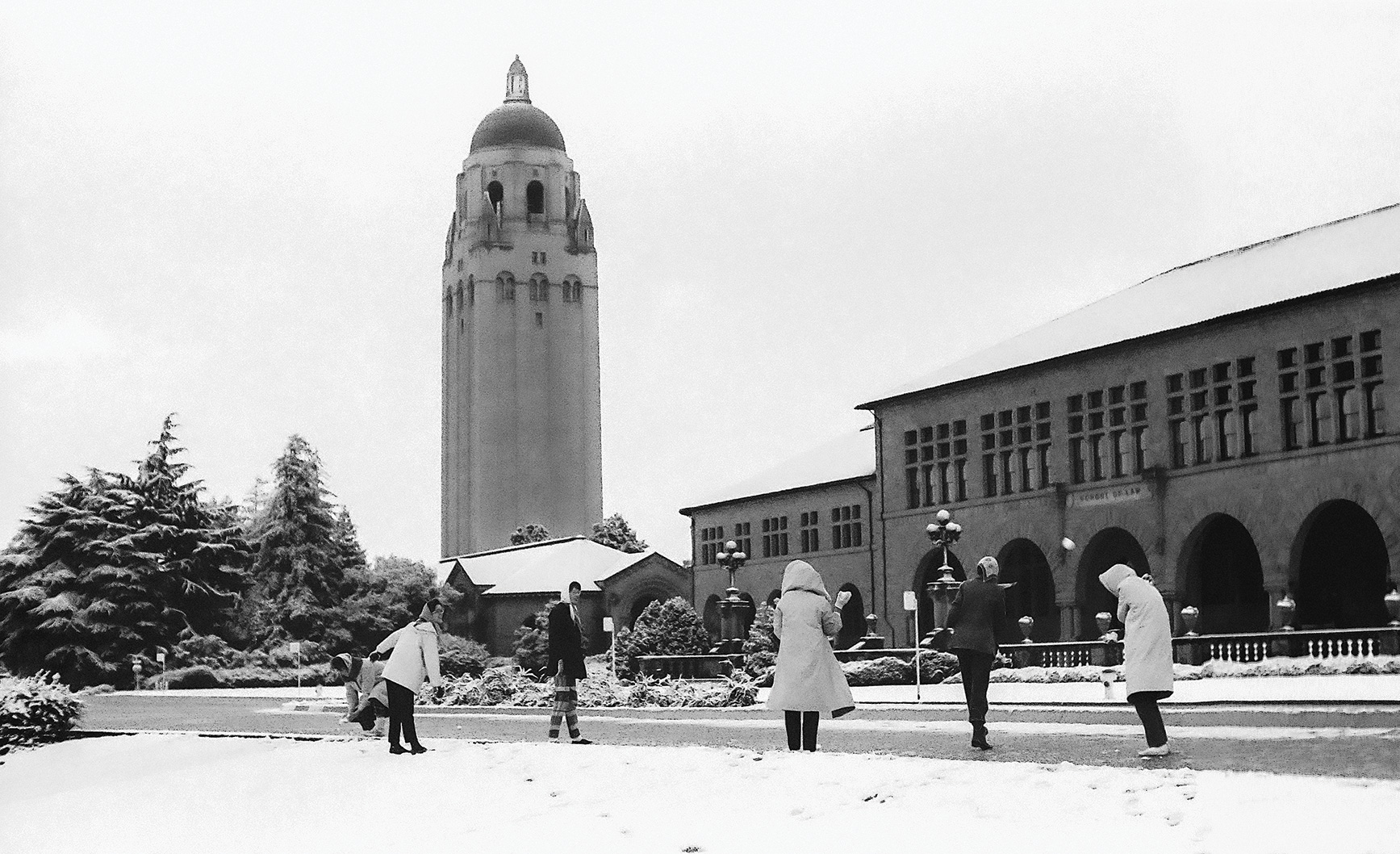 Photo: Stanford News Service
A few months earlier, at an event for incoming freshmen, I had walked from Roble Hall all the way to Frost Amphitheater in my new, grown-up, high-heeled shoes. That walk bruised my heels so badly that I needed surgery on my Achilles tendons the next summer. In the meantime, the only shoes I could stand to wear were slingback sandals. So that’s what I had to wear in the snow to get to class that day. Oh yes, I remember it well!
Sharon Fogleman Hockensmith, ’65
McKinney, Texas
I was a grad student living in Escondido Village. Out the window that morning was a wonder. I picked up my 6-month-old daughter and we drove up to the hills to enjoy the show. The thing that struck me was golfers on the course hitting a red ball.
Roger Bourke, ’60, MS ’61, PhD ’64
Alta, Utah
Myth Buster
In a Winter essay, sophomore Chloe Shannon Wong mused about shifting her goal from living up to Stanford alumni legends to living for daily joy.
I am much older than you and therefore attended Stanford at a time predating the dot-com giants. I had the great fortune of having similar yet diverse frosh dormmates, and we came together over wanting to create a fun and forward-moving community, which I think is so important to everyone, everywhere. There are so many ways to mutually support others in their explorations and fulfillment of dreams, and sometimes our biggest contributions turn out to have begun almost by accident. Looking back with friends, our fondest memories are of the little kindnesses offered among us way back when. Like the time Anne loaned us her car to get to chemistry class on time, or how we all shared what our favorite things on campus were, so that everyone could get the most out of their precious time at Stanford. A mature bio lab student changed my life when he said I could study overseas and take the MCAT. So hang on to your integrity; keep being kind and curious. It seems like you’re doing great already. (And stop looking up your classmates on LinkedIn.)
Tiffany Chow, ’87, MS ’88
La Jolla, California
Costs and Benefits
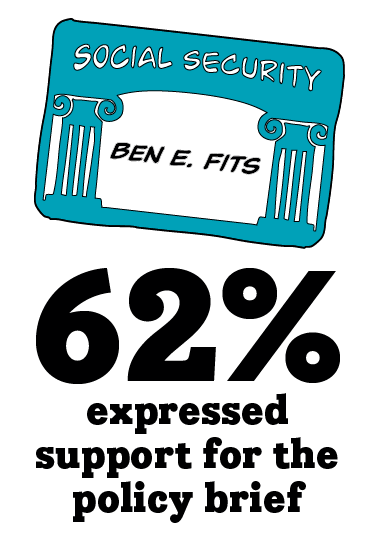
The Winter issue included a story on a Social Security policy proposal written by Andrew Biggs, a fellow at the Stanford Institute for Economic Policy Research (SIEPR), and John Shoven, a professor emeritus of economics and a senior fellow emeritus at SIEPR. Their brief detailed recommendations for closing half of the looming Social Security funding gap. We asked what you thought of their ideas, and what you would do to shore up the other half.
[Increasing the] retirement age to 69 is tough, not only for people with shorter life spans but also due to the nature of some jobs. Construction workers can’t keep going as long as senators and upper management. To finish bridging the deficit, I’m with Willie Sutton: You’ve got to get the money from where the money is. I’d favor raising the tax cap to infinity and/or creating a wealth tax. High-end wealth is created by the whole society—inventors, investors, workers, and consumers. The society prospers best by sharing in that wealth. Please keep developing solutions and please promote them vigorously. Our nation needs its scholars to speak up.
Dan Greaney, ’79
Redding, California
Do these experts live in the same world as 90 percent of citizens? Not raising the top limit above $184,500 because it “would make it politically tougher to increase taxes for other societal priorities” ignores the fact that those earning five to 1,000 times more are already “sheltering” their income from taxes—which never goes into other public infrastructure priorities, health care, or education.
John Rosenblum, PhD ’87
Sebastopol, California
To ensure longevity of Social Security, the Old-Age, Survivors, and Disability Insurance (OASDI) rate—currently 6.2 percent for employee and 6.2 percent for employer—should be increased to 6.4 percent paid by each, and the earnings cap on which OASDI is levied should be increased. To appease business owners, employers’ cap on OASDI could be left as is, at $184,500 with indexing.
Tushar Moorti, MS ’94
Mountain View, California
Go ahead and raise the tax cap for high earners and increase the full retirement age, but do not alter the current income replacement percentages. Your proposal would unfairly penalize higher-income workers. We should be able to address the issue with reasonable adjustments to age and tax caps, starting with a phased approach beginning in 2030.
Ted Lawson, ’82
Los Altos, California
Unfortunately, Biggs and Shoven failed to include a promising option: universal basic income as a replacement for Social Security.
Stephen Wiel, ’60, MS ’62
Incline Village, Nevada
I was an actor in Dallas for 30 years. Now, I’m a grocery store assistant manager at age 65. [Biggs and Shoven] need to get meetings with as many Democrat and Republican senators as they can and beg them to put this plan in place ASAP. At a minimum, send them petitions with the signatures of people like me who want this to be put into place now, not later.
Something is better than nothing.
Leticia Magana Graybael, ’83
Dallas, Texas
You brainiacs rock! Let’s get it done. I just got paid Social Security Income today and can attest to the great thing it is to benefit from. Thank you for helping us sort out the fix for the dilemma we cannot escape.
Khadijeh Nabi, ’80
Napa, California
There may also be employment for low- and middle-income earners that is low stress, keeps people active, keeps our country competitive, and replaces Social Security checks for two to five years. An attractive choice that retirees can make. All of the stops need to be pulled.
Stan Kaplita, MBA ’89
Sammamish, Washington
I would gladly give up 30 percent of my Social Security check to ensure the program’s survival and reestablish fairness in benefits. Social Security is a societal compact; we need to restore the safety net to those most in need. Economic justice will make our country healthier and happier.
Matthew Messner, ’77
Tucson, Arizona
Correction
In Winter, the obituary for Ronald Nicholas Gibson, MD ’90, should have said that he was known for his “reverence for life,” not “reference for life.”