In June, the World Cup—one of the biggest sporting events in the world—will begin in North America, and this time, it will be bigger than ever. For the first time in the men’s tournament’s 96-year history, three countries—the United States, Canada, and Mexico—are co-hosting the quadrennial event organized by soccer’s global governing body, FIFA.
And getting the assist in each of the host countries are three alumni who head up the sport in their nations: JT Batson, ’05, CEO and secretary general of U.S. Soccer; classmate Kevin Blue, ’05, who holds the same position in Canada; and Ivar Sisniega, ’79, executive president of the Mexican Football Federation. Each oversees all organized soccer—men’s and women’s—in his respective country, including youth programs, national teams, and professional leagues (except Liga MX).
The tournament this year will be dramatically expanded, with 48 teams instead of 32 playing a collective 104 games, up from 64. Most games—78—will be played in 11 stadiums across the United States, while Canada and Mexico will host 13 games each. The supersizing may continue: The 2030 men’s World Cup is planned for three continents, while the United States has submitted the sole bid to host the 2031 women’s World Cup, which it plans to do jointly with Mexico, Jamaica, and Costa Rica.
Already, the modern World Cup has been drawing quite a crowd: In 2022, when tiny Qatar hosted the tournament, some 1.42 billion people watched the final match between Argentina and France. (For comparison, U.S. viewership of the 2026 Super Bowl peaked at 137.8 million.) Three of the 2022 games—including the final—tied for the second-highest recorded attendance for a World Cup game since 1994, with nearly 89,000 fans packing into a sold-out Lusail Stadium.
Sisniega says bigger is better. “There’s a huge hunger for watching fútbol around the world,” he says. “It’s just the sport that everybody in the world understands. When the national team plays in pretty much every country, activity stops that day. It’s a holiday, or people leave work early or get up in the middle of the night. People are very passionate about watching their national team.”
In the United States, soccer generally doesn’t command that level of attention. But 1994—when the country hosted its first World Cup—moved the ball up the field. The tournament broke attendance records, attracting 3.6 million spectators collectively, and more than than 94,000 fans packed the Rose Bowl in Pasadena to watch Brazil defeat Italy 3-2 in penalty kicks in the final. (Stanford also played a key role in that tournament, hosting six games at Stanford Stadium.) More recently, Batson led U.S. Soccer in launching Soccer Forward, a foundation created as U.S. Soccer’s legacy project for the 2026 FIFA men’s World Cup. It’s aimed at making the sport more accessible by providing more places to play in areas reachable by walking, biking, or public transit as well as digital resources about the game’s impact.
In the months leading up to the 2026 kickoff, Batson, Blue, and Sisniega—who will each attend every match their nation plays—spoke with STANFORD about their roles in the preparations and more.
JT Batson |
|
At Stanford: Worked for the men’s and women’s soccer teams and men’s basketball team as a student assistant Previously: Co-founder and CEO of advertising software company Hudson MX Meet Cute: Batson started in a volunteer role for U.S. Soccer in 2013—which included creating a fundraising arm for the organization—after meeting a former board chair on Amtrak. (For fiscal 2024-25, philanthropic contributions reached $50 million, a sevenfold increase from the prior year.) Photo: Adam Hagy/ISI Photos |
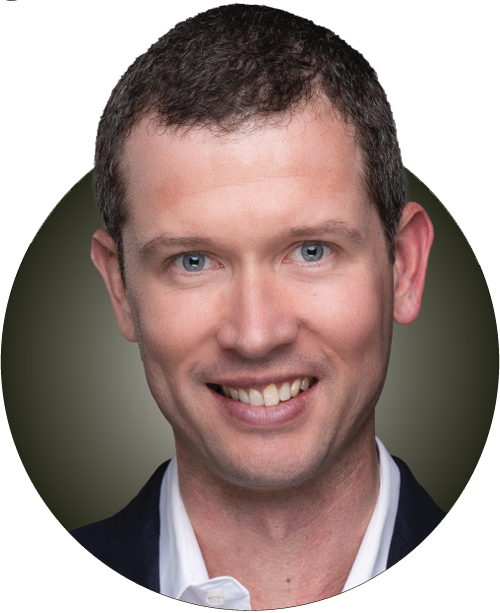
Kevin Blue
|
|
At Stanford: Captain of the varsity golf team Previously: Chief sport officer at Golf Canada The Other Football: Blue was a Stanford Athletics administrator when the Card nabbed its Orange Bowl (2011) and Rose Bowl (2013, 2016) wins. Photo: Bruna Rico |
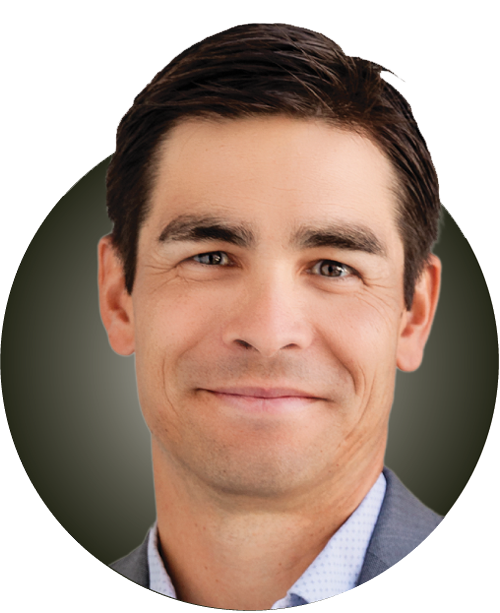
Ivar Sisniega
|
|
At Stanford: Varsity swimmer before leaving to represent Mexico as a pentathlete in three Olympics Previously: Secretary general of Panam Sports, where he led Olympic sports development in the 41 American countries Like Father . . .: One son, Carlos, ’15, attended Stanford; another, Pablo, plays for Major League Soccer’s San Diego FC. Photo: Federación Mexicana de Fútbol |

Stanford: What is the first World Cup you remember?
Blue: The first World Cup that I really got immersed in was in 1994. The dramatic way it ended in penalties was unforgettable.
Sisniega: My life was very shaped by the 1968 Olympics, held in Mexico, and then the 1970 World Cup. I was 10 and 12 at the time. I think if they had been inverted maybe I would have been a soccer player and not a swimmer or an Olympic athlete, but I decided after 1968 that I would be an Olympian.
Batson: I remember the 1990 World Cup, watching on television at one of my teammate’s houses. I guess I was 7. And, of course, I distinctly remember the 1994 World Cup and how that swept America and pulled so many of us into the global game.
What has been the most challenging part of preparing to host?
Sisniega: We’re a fútbol nation, so there’s a real enthusiasm and frustration in the sense that not everybody will get to go to the stadium. That’s always complicated. The government down here in Mexico is taking this as an opportunity to showcase its tourism. In the World Cup, fans go to a match, and then there are three to four days between matches, so they need to find things to do. The government has done a good job creating an alternative program so people can really get to know everything Mexico has to offer.
Blue: I think that the demand for tickets in the country—not only from soccer fans but also sports fans and general Canadians—is creating a scarcity that’s unprecedented in Canadian soccer. The sport is not used to this overwhelming demand for tickets. That is both a positive thing and also a challenging thing in the sense that people are used to being able to attend and support the team if they want to. We’re doing our best to make the event as relevant and accessible [as possible] across the country for people not in either Toronto or Vancouver—everything from community engagement opportunities to working directly with local youth soccer clubs to make sure [they’re] equipped to do things like have watch parties and festivals.
Batson: Fortunately, in the United States and Canada and Mexico you have the infrastructure to host large-scale events at any time, and so really the two big things are making sure our team is in the best position to be successful and making sure that we as a country are doing everything possible to benefit the legacy of what soccer can be in this country, leveraging big events like World Cup ’26.
Kevin, at Stanford Athletics, you served as the university’s project manager for the Orange Bowl, Fiesta Bowl, and Rose Bowl. How relevant has that been to what you’re doing in the lead-up to the World Cup?
Blue: Those experiences are helpful in that they give you a sense of what to expect when ticket demand is very high and tickets are scarce, and there’s a lot of focus and energy and buildup and anticipation. Having that experience is very comforting. Of course, the World Cup is global, and the intensity level of the World Cup is extraordinary, and so that isn’t necessarily analogous to a U.S.-specific tradition like the Rose Bowl, but nonetheless, it’s a similar dynamic in the sense of a major event and making sure your organization is ready to excel in all ways, competitively and on the business and operational side.
JT and Kevin, you knew each other at Stanford. What is it like to have a former classmate as a counterpart?
Blue: When I was considering this job, [JT] had already taken his job, so I called him to talk about it. Obviously having a classmate bond and some familiarity with each other from 20 years ago is unique, and it’s great. I had some specific questions about the landscape of global soccer and the North American position in it. His insights have been super helpful. He’s accomplished a lot and helped the U.S. federation significantly in his time there.
Batson: I was incredibly excited about Kevin being in his role. He’s doing great things for Canada Soccer. The success of Canada and Mexico is very important for the United States. Canada and Mexico are the teams we play against the most, so we want them to be in a very strong position because you want to play against good competition to prepare you for World Cups and other major tournaments.
What helped you two land your current jobs?
Blue: Some of the experiences I had early in my career when I was in U.S. college sports were very applicable to what we’re trying to do with the soccer federation in Canada. It’s a highly commercial sports organization, but it’s a nonprofit entity that’s mission-driven rather than owner-driven, so there are a lot of similarities between the nonprofit structure and the philosophical underpinnings of the soccer federation as compared with U.S. college sports.
Batson: One of my Branner dormmates sent me a note when I got this job saying, if we all had to write on a card and stick it in an envelope our freshman year what our dream job was, [this is] what you would have written. I got pulled into Silicon Valley and really had a wonderful career in the technology [and] media world, but soccer was always my passion. I was always trying to find ways to be involved, to support and help grow the sport, and this was the latest opportunity to do that.
JT, the first software you ever worked on was for assigning youth soccer referees in Georgia, where you grew up. Are there any exciting technology upgrades you’ve made at U.S. Soccer?
Batson: We hired our first-ever chief product officer, Abe Geiger [ ’03]. He was captain of the Stanford men’s soccer team. We’ve built out a number of proprietary systems focused on helping our teams win as well as helping to make soccer way more accessible across the country. We have technology and digital products that help players train, help coaches learn and develop, help referees learn and grow, help fans connect with the program. And there’s a lot more that we’ll be doing over the coming years there.
Ivar, you were born in the United States but grew up in Mexico. What does it mean to be representing one of your countries in this way?
Sisniega: I was born in Wisconsin. When I was a year old, we came down to Mexico. My father was Mexican; my mother was American, so I grew up with both nationalities. Anybody who’s from a soccer nation knows: When you have two nationalities, who do you want to win when they play each other? That was very clear early on. I’ve always been a Mexico fan. I competed for Mexico in three Olympic games, so even though I’m half American, my heart, my feelings have always been with Mexico. Mexico is the first country ever to organize a World Cup three times—this will be our third. The opening ceremony in Estadio Banorte [formerly Azteca] will be the first time the World Cup has opened in the same stadium for a third time.
What’s been the most fun or exciting part of preparing for the World Cup?
Blue: Just the opportunity to really build our team in preparation for the event. We’ve got our men’s national team at its all-time best in terms of performance and excitement. We hired a new coach right after I arrived, and that’s worked out beautifully. Really what this tournament is about for Canada on the men’s side is fully establishing itself as a globally impactful footballing country.
Sisniega: I enjoy very much being close to the national team, meeting with the coaching staff, with the players, trying to figure out how we can get more out of them and get the best performance possible. When I got here, we had one national team coach, and we’ve had to change that person twice already, so that’s part of the complexity of trying to figure out if you have the best fit for the team. Probably not so much in Canada and the United States, but in Mexico, the national team coach comes under a lot of scrutiny. Everybody at home is a coach. They know better.
Batson: I think how excited everyone is at all levels, all across the country—really all across the world. To see their smiles and how much they’re looking forward to it, that to me is—you get to be a little kid again.
|
|
A Highlight ReelIn 1994, Stanford Stadium played host to six World Cup games, a milestone immortalized beneath the Quad in the Class of 1994 time capsule, which includes a World Cup poster. In a July 4 group-stage match, eventual champion Brazil bested the U.S. national team 1-0. ★ In his team’s 6-1 thumping of Cameroon, Russian striker Oleg Salenko scored 5 goals—a World Cup record for a single game. ★ The highest-stakes game was a quarterfinal between Romania and Sweden. After a 2-2 draw, Sweden advanced in penalties. |
Rebecca Beyer is a freelance writer in the Boston area. Email her at stanford.magazine@stanford.edu.