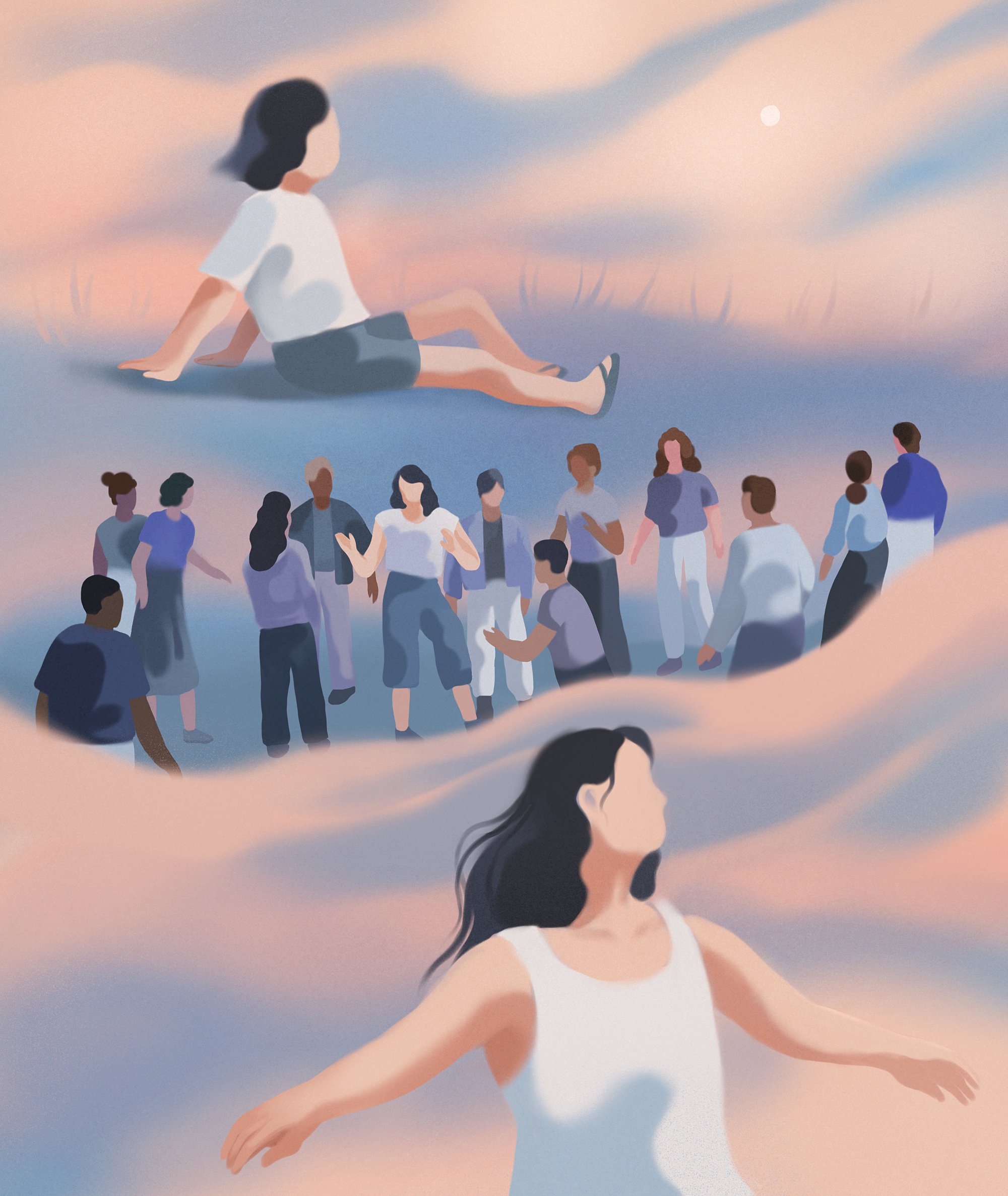
As a child, I was never bothered by the idea of being alone. Being alone meant freedom—climbing on monkey bars without a teacher yelling at me to get my feet back on solid ground or stuffing myself full of saltwater taffy without my parents warning me about an imminent trip to the dentist. During the school year, the Pacific Ocean was my backyard, and a corroded blue bike got me around my coastal California hometown. In the summer, when I would visit my grandparents in South Korea, I had the urban jungle of Seoul to explore to my heart’s content. Every side alley felt like a trail on a pirate’s map, promising some small treasure at the end—a convenience store selling an elusive popsicle flavor or an air-conditioned bookstore where no one would bother me as I worked through a stack of novels. Truly, nothing seemed more spectacular than spending time alone.
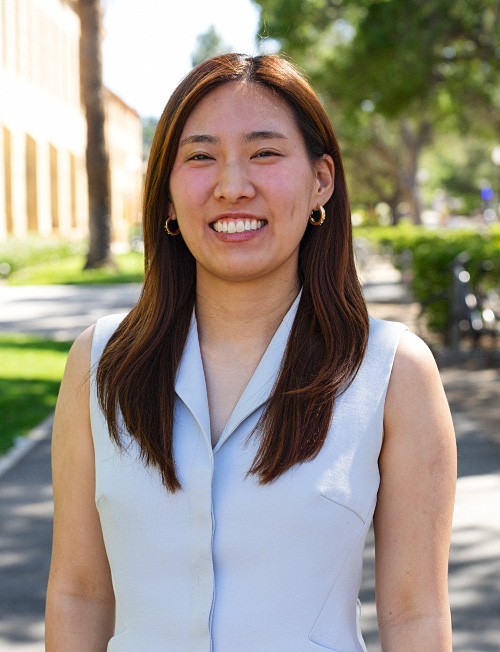 Suh (Photo: Kali Shiloh)
However, when I came to college, it felt like a switch had been flipped. Suddenly, I was inundated with people and social activities almost every waking hour. If it wasn’t a speaker event featuring a tech mogul, it was a dorm activity with free In-N-Out burgers (and free food was hard to pass up). I began to view any time spent alone as time not spent deepening my relationships with others. And at a one-of-a-kind place like Stanford, where students are constantly told that the connections they make on campus will be some of the most important of their lives, the scales never tipped in favor of being alone. (Exception: the occasional bout of cramming in Green Library.) Slowly but surely, spending time alone became something to avoid rather than savor.
The social choice was also the more comfortable one. Among incessant midterm schedules, internship recruiting cycles, and a creeping sense of existential dread, anxieties were ramping up to a degree I had never experienced. Spending any meaningful time alone meant coming face to face with those squirmy, hot feelings in the pit of my stomach, so I looked for ways to distract myself. I joined friends attending concerts with artists I had never heard of (and found myself dozing off in the stands of Chase Center and Bill Graham Civic Auditorium), sat in on classes in subjects I couldn’t imagine pursing as a major, and attended networking events for career paths I had once scoffed at. A voice in the back of my mind would pipe up every now and then, questioning whether I was truly doing what was right for me. I quieted that voice with the conviction that spending time with other people—no matter what I was doing or how little I was enjoying the activity—provided me with something I wouldn’t be able to find on my own.
It wasn’t until I studied at the Stanford in Washington program the spring of my junior year that I was forced to grapple with this truth. Working an internship during the day and taking classes at night meant that I had little flexibility to coordinate other activities. If I wanted to make the most of my time, I had to do it whenever I found space in my schedule.
At a one-of-a-kind place like Stanford, where students are constantly told that the connections they make on campus will be some of the most important of their lives, the scales never tipped in favor of being alone.
One day during a lunch break, I wandered into the United States Botanic Garden. A co-worker had recommended the location but couldn’t join me for the outing, so I reluctantly ventured alone. The softly gurgling fountains, temperature-regulated humidity, and exotic flora provided a soothing escape from the hubbub of the workday. Sitting on a bench to admire my surroundings, I noticed groups of people milling around me—families, friends, and couples. It was like the sun had broken through a layer of morning fog. I realized this was the first time that I was voluntarily spending time alone since coming to Stanford. And what’s more, I was enjoying it. The idea of being on my own had felt daunting, but I would have missed out on this experience if I had let that fear steer my decisions. The switch flipped again.
Emboldened, I booked Amtrak tickets for a solo weekend trip to New York to explore the city. Scrambling at the last minute to find somewhere to sleep for the night (other than the floor of Penn Station), I texted a high school friend, and she let me crash on her couch. That weekend, I saw Charli XCX at Barclays Center during her Brat tour and tried a few restaurants that had been sitting idle on my foodie list. A few weeks later, I hopped on an airplane to Los Angeles to catch a music festival that none of my Stanford friends were able to attend.
Since returning to campus for my senior year, I’ve had fewer “solo side quests” (as I informally dubbed these adventures), but I’ve tried to keep this spirit alive. In the fall, I trekked to San Francisco to check out a trendy coffee shop in the Dogpatch neighborhood that I found on social media. Intending to only spend the afternoon there, I ended up hopping around to three other coffee shops nearby and stayed in the City until nearly midnight. This winter, I returned to San Francisco to visit a Buddhist Zen center that I learned about in a book (although the true adventure was braving Highway 101 during evening rush hour), where I spent 90 minutes in my first group guided meditation. When participants were asked to break into small groups to discuss strategies for managing anger toward others, I joined three strangers next to me. One by one, we opened up about processing the anger of grief, distancing oneself in friendships, falling into the same arguments with lovers, and maintaining relationships with difficult family members. A kinship was formed in knowing that we would probably never see each other again, which led me to be more honest than I might have been with people I knew. And because of that honesty, I learned that, despite our age differences, we were all in a similar process—maybe lifelong in nature—of deepening our relationship with ourselves in an attempt to better understand the world around us.
My desire to spend time alone has morphed as I’ve grown older. With evolving relationships and responsibilities, peeling back those layers to find the original seed of what I loved as a child requires time and effort. But each new version of myself that I meet, as I try to better understand who I am, reminds me that the essence of that wonder remains intact.
Sidney Suh, ’26, is an editorial intern at STANFORD. She’ll graduate in June with a degree in political science. Email her at stanford.magazine@stanford.edu.