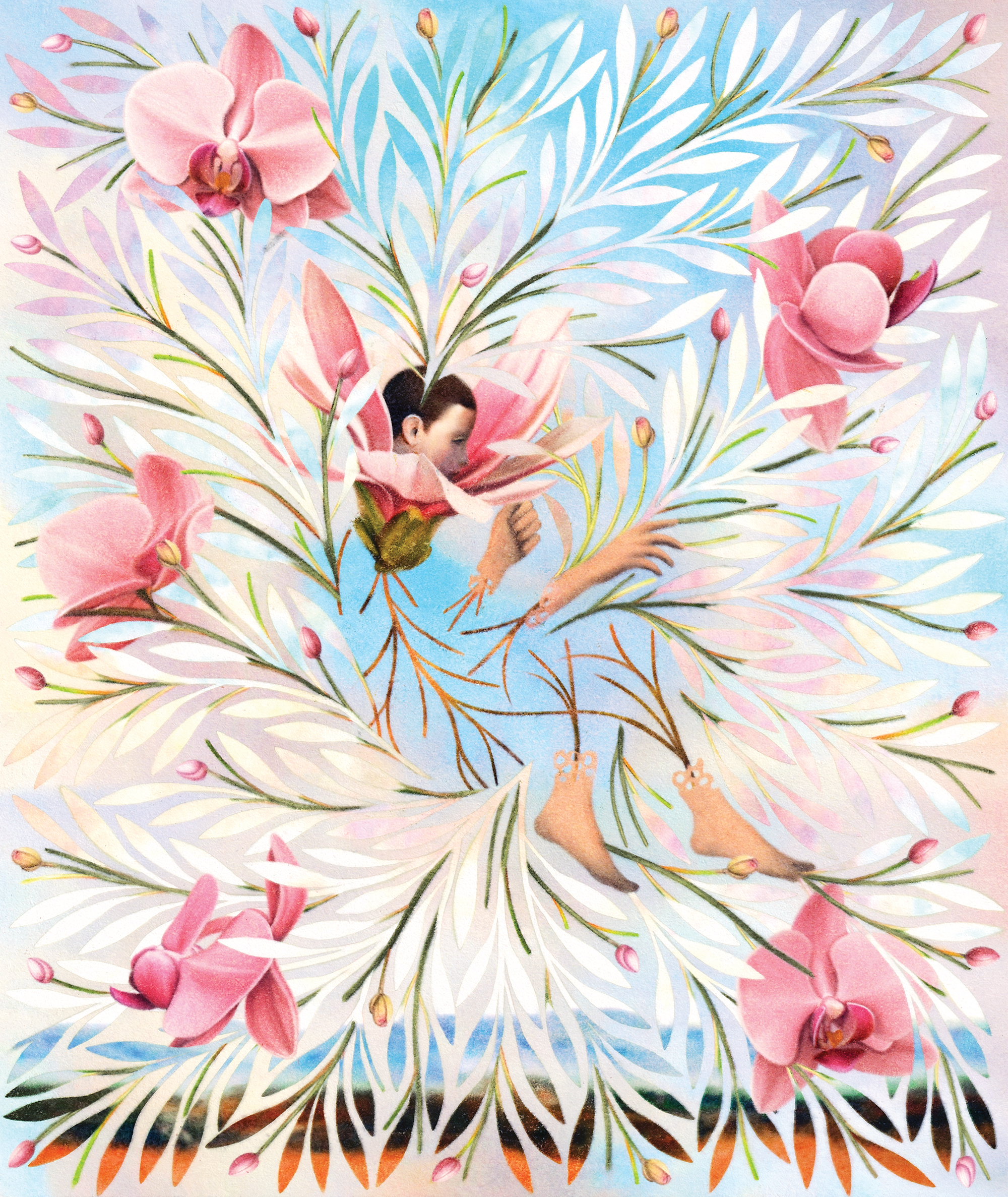
I can’t pinpoint the exact moment I fell in love with the environment.
My home city of Toledo, Ohio, isn’t quite known for its natural beauty. There were no looming mountains to hike, just flat, often-littered swamplands. I didn’t go to lakes—the closest to me is the great Lake Erie, which is known by locals for its harmful algal blooms and pollution. And my family certainly couldn’t afford to go backpacking in golden valleys whenever we wanted to.
In reality, my passion came from gardening with my mom—planting irises passed down from her great-grandmother in our front yard, decorating the grass around the shed with hostas, and finding worms, spiders, and toads. She taught me to care for life, for the plants and flowers that sustain bees and butterflies. As a kid, I was sure I’d become a wildlife conservationist.
One day when I was in my second year of high school, my mom came home with a gift for me: a pink moth orchid, with one flowering bud supported by two stems and a couple of wooden stakes. Every day, I’d go to my living room, where there was a pile of unfolded laundry we kept on the couch out of laziness. Along the windowsill was a cluster of plants, including my pink orchid, and I’d spray its two big leaves until we were both satisfied.
For over a year, this was my ritual. Together, the orchid and I thrived. It was a safe partnership for me. Because at school, things were different. My friends would remark on how my clothes smelled like cigarettes. I’d tell them it wasn’t my fault. “It’s just how my family lives.” Classmates ragged on me for my overbite and gapped, crooked teeth. Braces were too expensive. At the end of the school day, when I climbed into my grandma’s Nissan Altima with no door handles, only two working windows, and a hole in the floor, my friends would tease me: “Have fun at your crack shack!” Ugh. So embarrassing. “Haha, OK! See you guys later!” Once I got back home, the home where it did actually smell like cigarettes, it was routine. I’d take off my school boots, and right before taking my daily power nap, I’d water my orchid.
Until, one day, I noticed a petal had fallen from its limbs. Day by day, more petals would fall. I couldn’t understand what was happening. Watering turned into a futile act. Over the coming weeks, my pink moth orchid became barren.
When I was a senior applying to colleges, I stumbled upon Stanford. I didn’t know much about the university going in; my high school wasn’t huge on college prep. The Farm’s environmental programs through the Stanford Doerr School of Sustainability are what caught my interest—a perfect path to the career I wanted. My family encouraged me to apply. When I got in early decision through the Questbridge Match (a binding, early-admission program for low-income high schoolers), I didn’t tell anyone for two hours. I knew it would make my parents proud, but the distance from home wasn’t exactly great news. Sure enough, the moment was bittersweet. I felt the warmth of my mom’s hug surround my entire body, my dad joining in from behind, while my aunt gave a “Congratulations!” from a few feet away. I felt their joy, their pride, but my mom couldn’t help crying. She already missed me. Nine months later, I moved to California, leaving a naked orchid on my windowsill.
I felt guilty that the burden of getting by was lifted off my shoulders while my family was left behind.
Coming to Stanford, I was sure my path was in environmentalism. The possibilities seemed endless: research, activism, environmental engineering—well, maybe not environmental engineering (I had hated chemistry). There was nothing I, a nature enthusiast, wanted more than to preserve the gift of life. As a wildlife conservationist, I could work to regenerate vegetation lost to human hands, helping at-risk species native to the Great Lakes like blue-spotted salamanders and purple fringed orchids. I entered my frosh dorm, West Lag, with high hopes and a motivated heart. I took engineering courses to build up my skills. I joined a club to make Stanford sustainable.
But there were feelings that never escaped me: worry, guilt, and loneliness. I was away from home, getting an education my family never had, where my food and housing were free. I felt guilty that the burden of getting by was lifted off my shoulders while my family was left behind. I realized that whatever I got out of Stanford must circle back to help my family: my mom and dad, my two older brothers, my grandparents, aunts, cousins—everyone who I thank for getting me here in the first place.
One day in autumn quarter, I was sitting in the Eucalipto lounge writing for one of my classes when I overheard a conversation between two dormmates. One recounted making more than $100 an hour at a start-up during his freshman fall. The moment really tested my passion. As a wildlife conservationist, I’d likely make a modest salary (about $69,000, the internet predicts). It’s not quite greed that took over but, in a way, necessity. Do I pursue an education where I learn what I want, or one that almost guarantees I’ll make enough to help my family—money for bills, food, to pay off the house? For hours, days, weeks, my morals clashed with each other, my head lighter than my wallet. Big tech—that’s the way to go, I thought. Study electrical engineering and land a job in Silicon Valley. Maybe then I can help my family.
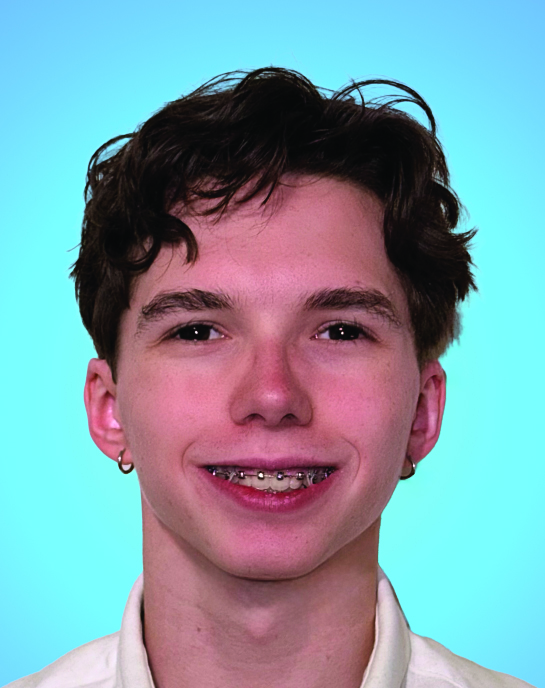 Photo: Gabrielle Rosado
Fast-forward to the end of winter quarter. I had just gotten back from my math final. It was cloudy and raining. My roommates were gone, so I tossed my bags to the floor and hopped on my bed. I was so relieved to be done with everything—my courses were difficult, but I’d persevered. My busy quarter ensured I’d be ready to become an electrical engineer in the years to come. But as I thought back on how my quarter went, I recalled feeling sour almost every day. I recalled having to drag myself to classes. I recalled the heartbreaking feeling of being at Stanford while my family was stuck back home. Alone in my dark room, I started crying, quietly enough to make sure my roommates wouldn’t notice, if they happened to enter.
I cried for my family back home, where the costs of food, my mom’s medication, and other bills are too much to handle. I cried for the times I was teased and called poor at school, for the times my car was called trashy. I cried because I’d lost that version of myself I’d brought to Stanford—one who worked hard for myself and my family, who was motivated to be a conservationist and pursue what I felt was right.
I felt barren. Ugly. Petal-less. I had abandoned the kid who loved being outdoors, who loved animals and plants, the natural world. I was trying to morph into the people around me. I was chasing something I didn’t actually care about because I felt like I had to. But what change could I make?
Today, a year later, I’m still pursuing electrical engineering. Though it’s a path I never expected, I’m learning to find myself through it. It’s hard to say whether I’ll pursue environmental work after graduating. When I preach to others to follow their dreams, I feel like each word coming out of my mouth is more hypocritical than the last. Sometimes I feel like I haven’t stopped chasing a version of me that never existed.
It’s up to me to water the parts I don’t want to lose.
But lately, I’ve begun to water the little parts of me I brought to Stanford. I work with the low-income community on campus through a service group I founded last fall, Proyecto Vidas Valiosas. I lead it with the help of the Vida Valiente Foundation, which supports first-generation Stanford students. By surveying nonprofit leaders, together we’ve found that many nonprofits don’t have the resources or knowledge to pursue their work effectively: Volunteer numbers are dwindling, funding is being cut, and it’s hard for the organizations to keep up with technology. I saw an area where Stanford students could help local nonprofits, by modernizing their technology and websites, assisting with grant applications, and promoting their events.
I water myself by exploring nature in ways I was never able to back home. I went on my first backpacking trip through SPOT, a pre-orientation program, and found a part of me that needed to explore mountains and forests. Now I live in Trancos, a dorm dedicated to outdoor exploration and sustainability through thought, play, and hands-on experiences to pursue this discovered self. I can’t change who I am and what I care about.
I can’t change who I am and what I care about. And it’s up to me to water the parts I don’t want to lose.
Over the summer, I went back home and visited my orchid. Yes, it’s still there, waiting for me on that windowsill. It has one flower on it. It has lost its petals many times, but with enough water and care, orchids can always bloom again.
Edmund Dyer-Essig, ’28, now keeps a white moth orchid on his dorm windowsill. Email him at stanford.magazine@stanford.edu.