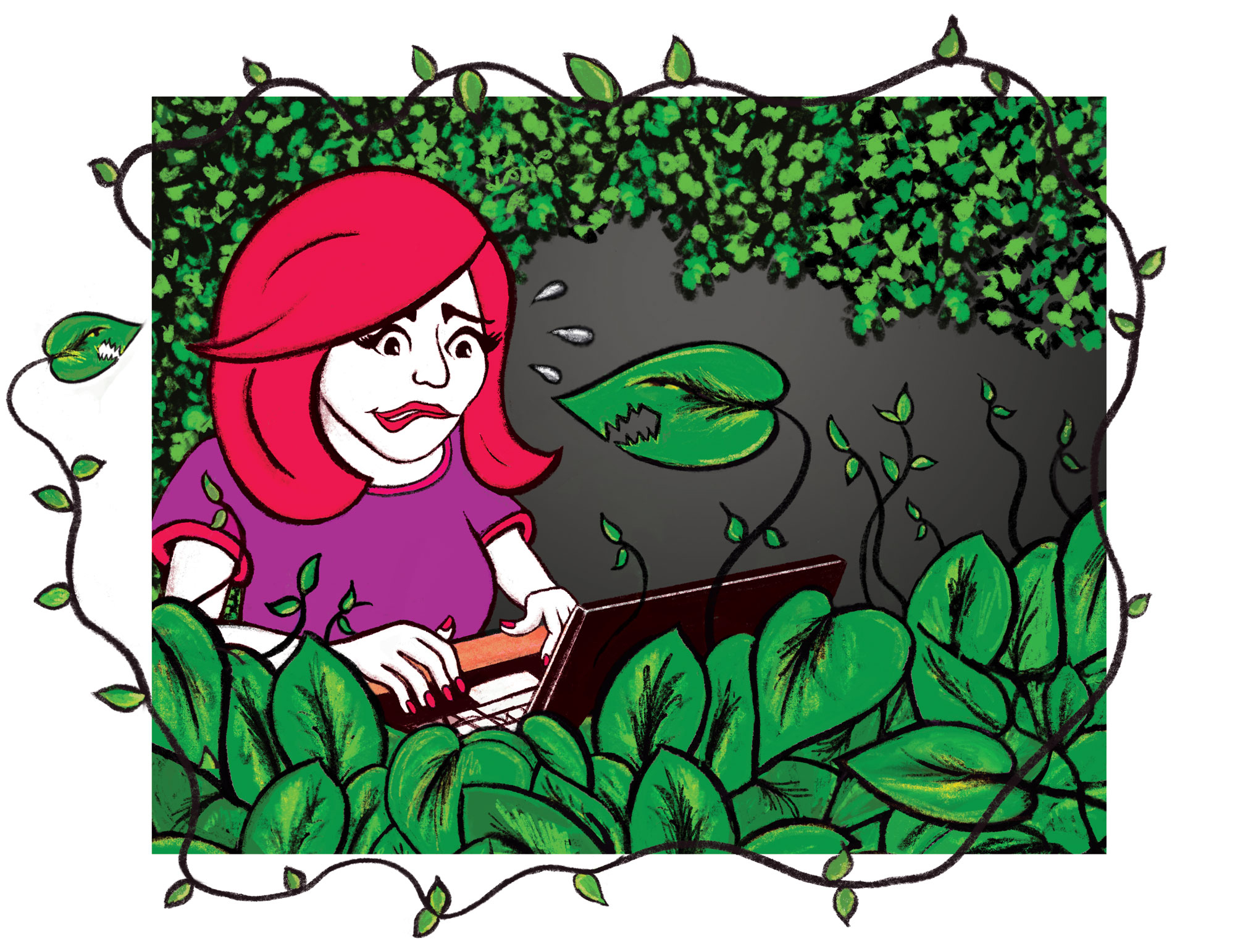
Research shows that natural design features—a potted Ficus here, an exposed wood beam there—are good for our well-being. But those studies compare greenery with no greenery, or measure subjective levels of nature. (What, pray tell, is a “medium” amount of succulents?) Eva Bianchi, PhD ’25, and her adviser, professor of civil and environmental engineering Sarah Billington, decided it was time to stop beating around the bush and quantify the effects of indoor nature.
The researchers put participants in virtual rooms containing varying percentages of nature and natural materials, then introduced stressors such as asking participants to count backward from 1,022 by increments of 13. To Bianchi’s surprise, participants experienced the highest stress increase with the biggest dose of nature—60 percent greenery and wood combined. Participants felt the greatest sense of restoration and belonging when about 20 percent of their indoor view was greenery. Wood furniture and features alone had no effect on well-being—but it’s possible that could be chalked up to poor wood-grain simulation. The findings uproot the notion that more nature is always better.
Summer Moore Batte, ’99, is the deputy and digital editor of Stanford. Email her at summerm@stanford.edu.