Judged by wins alone, Mark Marquess’s coaching career may have reached its apex during three months in 1988. After leading Stanford to a second consecutive College World Series title in June, Marquess, ’69, didn’t have time to go home before taking the helm of the U.S. baseball team ahead of the Olympic Games in South Korea. He returned to campus in September with that championship as well.
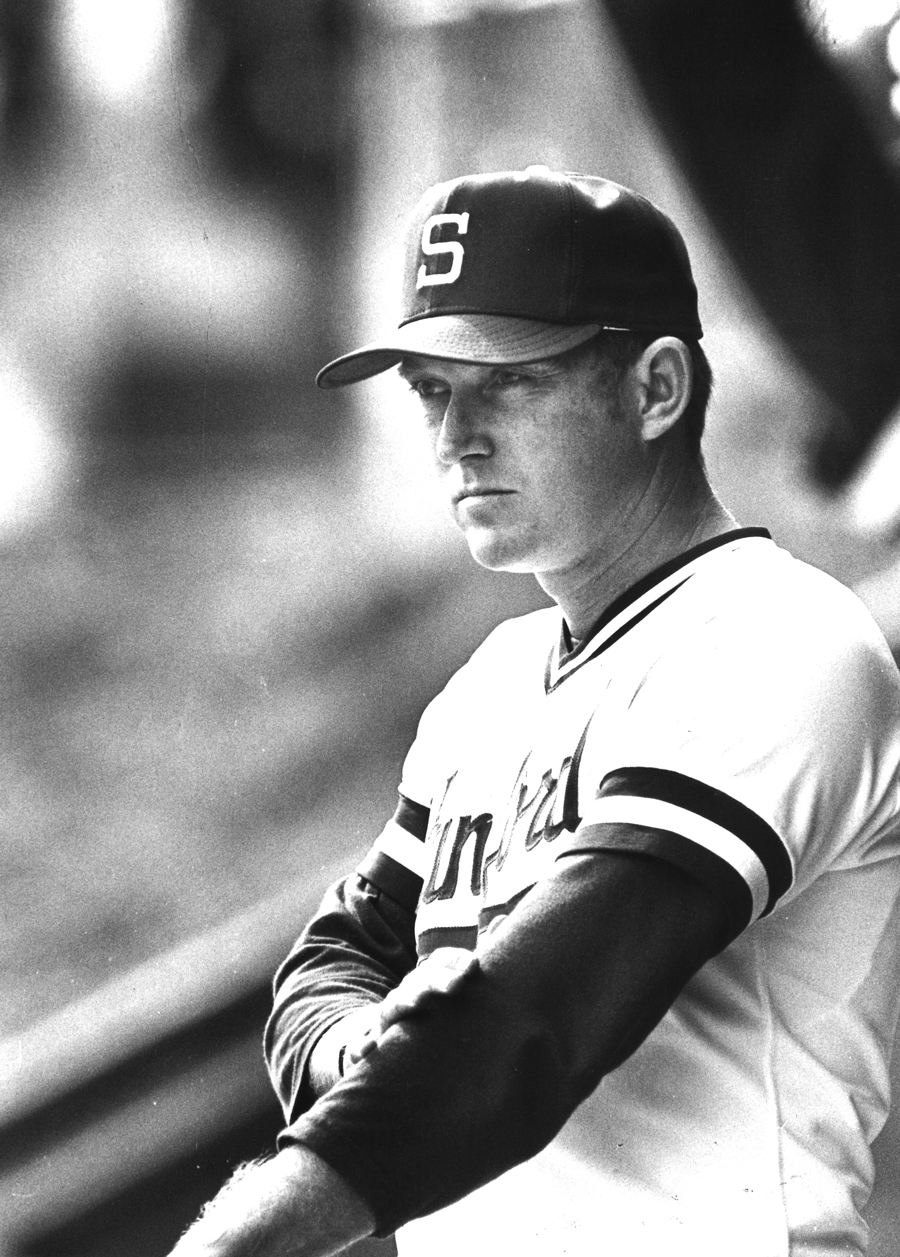 Photo: Stanford Athletics
Marquess, however, had other criteria for success. In a 2021 oral history, he recalled a game early in 2017, his final season. It was attended by 250 of his former players, perhaps half the total he had coached over five decades. At the postgame barbecue, the reminiscing wasn’t so much about wins and losses as about the program’s culture of teamwork, academics, and hard work, including that Marquess asked players to maintain their section of the field. “We’re not pro coaches. We’re teachers,” he said. “That, for me personally, was probably the highlight of my career.”
The leader of Stanford baseball for 41 years and a former star athlete himself, Mark Edward Marquess—known widely as “Nine,” his jersey number—died on January 30 of a stroke. He was 78.
Marquess grew up in Stockton, Calif., four blocks from the College of the Pacific, whose facilities enabled endless pick-up games, in multiple sports, that honed his athleticism. Neither of his parents had attended college, but they esteemed Stanford’s academic reputation. For Marquess, a football star, Stanford’s appeal was increased by its openness to his playing baseball as well.
On the gridiron, Marquess was versatility personified. A 1968 Stanford Daily article dubbed him “the man on the move” for his ability to play everything from safety to quarterback. In baseball, by contrast, he was fixed at first base, an All-American whose .404 batting average in 1967 still ranks fifth in school history. After being drafted by the White Sox, Marquess was playing AA ball in Asheville, N.C., in 1971 when he got a call from Stanford head coach Ray Young, ’56, MA ’64, asking him to be an assistant coach. Five years later, Marquess was head coach. He was not yet 30.
Even as a young coach, Marquess was old-school. Team rules included traveling in coat and tie, even on red-eyes, no facial hair, and no hats while eating indoors. The team would even practice standing for the national anthem and running off the field.
Marquess was also deeply invested in players as people. On seven-hour bus rides to Southern California, he used to sit up front and call player after player to take the seat beside him. “Ninety percent of the conversations had nothing to do with baseball,” says Dean Stotz, ’75, his lieutenant for 37 years. “He just kind of understood what was important in life.”
Marquess’s survivors include his wife, Susan; his daughters, Bridget Dunnington, Anne Thomas, and Maureen Sullivan, ’04; and nine grandchildren.
Sam Scott is a senior writer at Stanford. Email him at sscott3@stanford.edu.