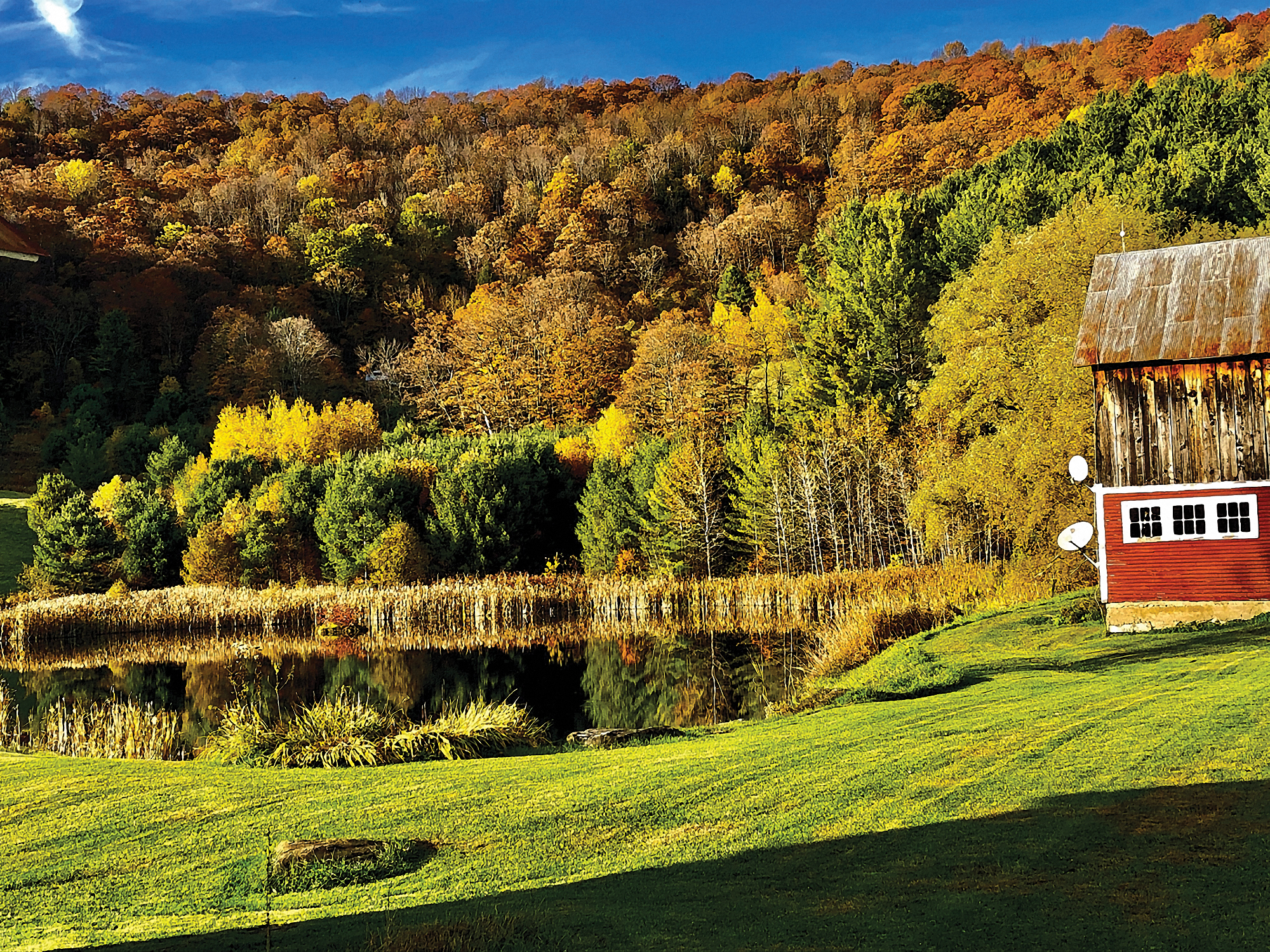
Bruce Beck didn’t buy back his grandparents’ Vermont farm to make maple syrup. He bought it because some places never let you go. The syrup was, well, the topping on the waffle.
Beck’s Norwegian immigrant forebears purchased Elm Rock Farm, in Chelsea, Vermont, in 1918 with a $300 loan secured by a few cows. It was once the center of family life, sustained by dairy cattle, maple syrup, and “sheer determination,” says Beck, ’70. His father worked extra jobs to keep the farm through the Great Depression. Even after the land was sold in the 1960s, Beck was able to visit regularly, walking the trails and soaking up the memories. “The history is important to me,” he says.
The property came up for sale again in 2013, just as Beck retired from a career as a pulmonologist in the Bay Area. Sure, the house was run down and the barn needed work, but the bones—and the memories—were intact.
So were the maple trees. Maple sugaring happens when the sap runs—at the tail end of winter when temps are freezing overnight but warmer during the day. Each year, about 200 taps on Beck’s trees feed sap via tubes to a sugarhouse. Beck has partnered with his neighbors to handle the long days of work filtering, boiling, and finishing the syrup. “There’s a frenetic pace,” he says, “because once it’s started, you know that it’s going to go quickly, whether it’s a two-week season or an eight-week season.” The color of the resulting syrup changes as the season progresses, from golden to amber to dark (Beck’s favorite for its slight smokiness) and, finally, very dark, more commonly used for cooking than for drizzling over French toast. It takes about 10 gallons of sap to make just one quart of syrup.
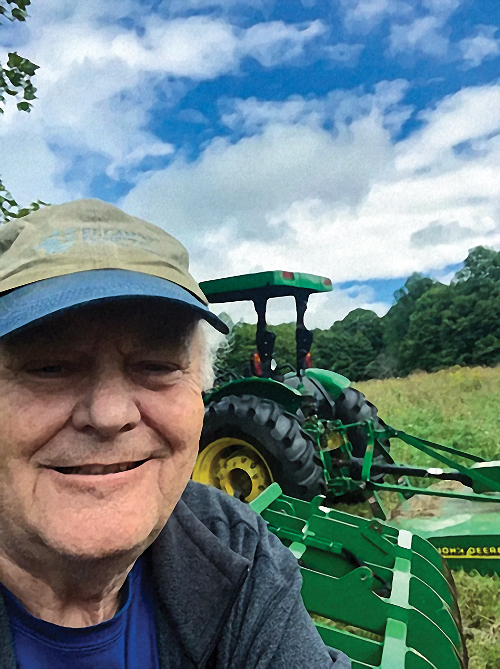
Beck’s farm produces a few hundred quarts each year, which he shares with his neighbor-partners. His portion makes for a sweet gift for family and friends, but what’s even sweeter to Beck is doing something meaningful with his family’s land: first restoring the farm’s 19th-century house and barn, and now rebuilding its original sugar shack. “It was a good way for me to shift my interests when I left clinical medicine, to focus in on something new,” he says.
Most years, Beck ends sugaring season with the long drive back to Los Altos, where he lives with his wife, Kathleen (Marini, ’74). Packed beside him are quarts of sweet amber goodness to pour over pancakes for another year.
Christine Foster is a writer in Connecticut. Email her at stanford.magazine@stanford.edu.