Novel Reads
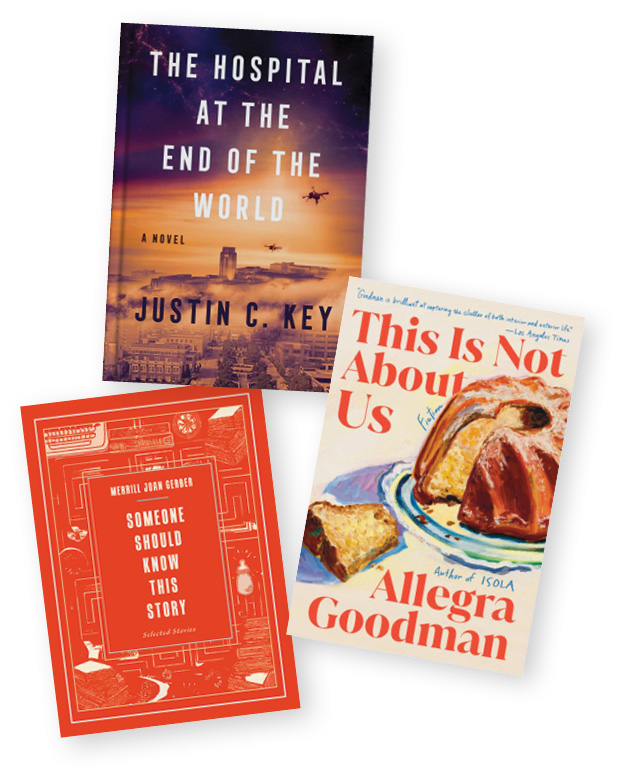
The Hospital at the End of The World (HarperCollins), by Justin Key, ’09, depicts a dystopia in which a global AI organization leads society and the medical system that underpins it. After enduring a rigged medical school admissions process and the mysterious death of his father, a physician’s son seeks answers at the last university to insist on human-led medicine.
In This is Not About Us (Dial Press), Allegra Goodman, PhD ’97, creates a mosaic of family: feuds, grief, and love. Each chapter tells a new tale from the Rubinstein family, weaving together stories of misunderstandings about apple cake, marital strife, and college applications to reflect on what divides and unites those closest to us.
A woman trying to make sure her mother isn’t buried in the wrong grave. A son-in-law irked by too much help with the baby. An overly flirtatious sister. These are among the characters in Someone Should Know This Story (Sagging Meniscus Press), by Merrill Joan Gerber, Gr. ’63, an anthology of 25 short stories published over the course of the former Stegner Fellow’s life.
Children’s Corner
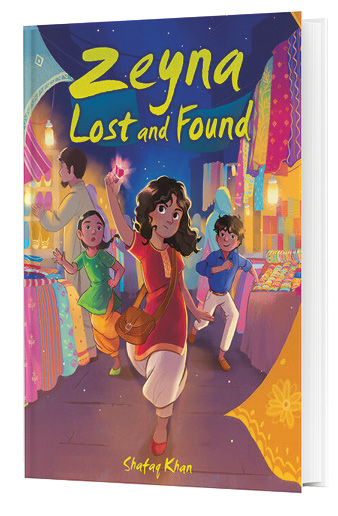
Zeyna, a 12-year-old British-Pakistani girl, is a self-assured young detective with a quick wit and a proclivity for what her mother calls trouble. When in the summer of 1970 she observes a mysterious man following her family, and her parents subsequently go missing, she follows clues along the bustling streets of England and Pakistan. In Zeyna Lost and Found (Carolrhoda Books), Shafaq Khan, the executive director of the Levin Center for Public Interest Law and Public Service at Stanford Law School, creates a realm of magic and allure for middle-grade would-be sleuths.
No One Told Sandra Day O’Connor What to Do (Sleeping Bear Press) chronicles the life and perseverance of the first woman to serve on the U.S. Supreme Court. O’Connor, ’50, LLB ’52, journeys from an Arizona ranch to Stanford to the mahogany bench in this picture book by Molly Golden, MA ’02, complemented with mixed-media illustrations by Julia Breckenreid.
New in Nonfiction
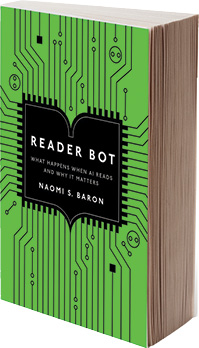
Everyone’s mind is on AI: In The Emergent Mind: How Intelligence Arises in People and Machines (Basic Books), Stanford professor of psychology Jay McClelland and San Francisco State University associate professor of psychology Gaurav Suri, MS ’91, MS ’93, PhD ’15, explore how a mind may arise from patterns of activity, whether in brain or machine. Using academic research, personal anecdotes, and the occasional fictional conversation between Sigmund Freud and Adam Smith, the authors provide an accessible explanation of the neural network models that underpin our daily interactions. . . . There’s much ado about the quality of chatbots’ writing, but American University professor emerita of world languages and cultures Naomi Baron, PhD ’72, points out that large language models are first and foremost readers. In Reader Bot: What Happens When AI Reads and Why It Matters (Stanford U. Press), she makes the case for why humans should not fully outsource that task. “Not everyone in the world is fortunate enough to be literate,” she writes. “Those of us who are hold a special veritable light sword to help combat everything from ignorance to boredom.” . . . And in AI and Assembly: Coming Together and Apart in a Datafied World (Stanford U. Press), editors Toussaint Nothias, a clinical associate professor at New York University, and Lucy Bernholz, MA ’92, PhD ’95, a founding co-director of Stanford’s Digital Civil Society Lab, present a collection of essays about AI’s potential effects on the freedoms of assembly and association. “How, where, when, and with whom we come together, for a host of reasons—political, cultural, educational, artistic, religious, familial, or market-based actions—and who or what monitors or restricts those choices will be key chapters in the story of democracy in the twenty-first century,” they write.
Some 40 million Americans feed pinworms, 11 million Germans host roundworms, and at least 10 million East Asians carry intestinal flukes. In Our Bodies, Our Planet: A Parasite’s History of Us (Reaktion Books), environmental historian Marcus Hall, ’81, seeks to “write parasites back into human history.” By reckoning with the organisms that inhabit us, he contends, we can learn how to better care for the planetary host we inhabit in turn.
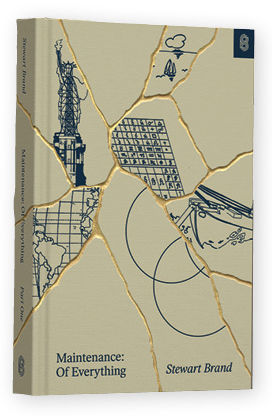
‘Philosophers don’t write extremely popular books about repairing cars, but two have about repairing motorcycles.’
Life Stories
Former San Francisco firefighter Caroline Paul, ’86, has long flown experimental aircraft, notably a bright yellow gyrocopter named Woodstock. Why Fly: Seeking Awe, Healing, and Our True Selves in the Sky (Bloomsbury Publishing) is Paul’s meditation on why she—and so many others—take to the skies, penned as her long marriage comes in for a landing.
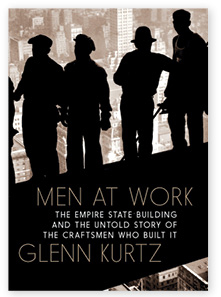
“The Sky Boy” is one of several artifacts Glenn Kurtz, MA ’89, PhD ’94, examines in Men at Work: The Empire State Building and the Untold Story of the Craftsmen who Built It (Seven Stories Press). The photo of a man perched on a wire several dozen stories above Manhattan gives up some of its secrets, but not all—much like the rest of the largely anonymous workers who built the iconic Art Deco edifice.
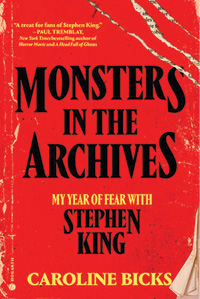
When Caroline Bicks, PhD ’97, became the inaugural Stephen E. King Chair in Literature at the University of Maine, she figured she’d never meet the famous novelist for whom her endowed professorship is named. Instead, he phones; she invites him to class; and she ends up with unprecedented access to his and his wife’s archives. Horror fans and writing aficionados—and those who are both—will all find moments of delight in the result: Monsters in the Archives: My Year of Fear with Stephen King (Hogarth).