Novel Reads
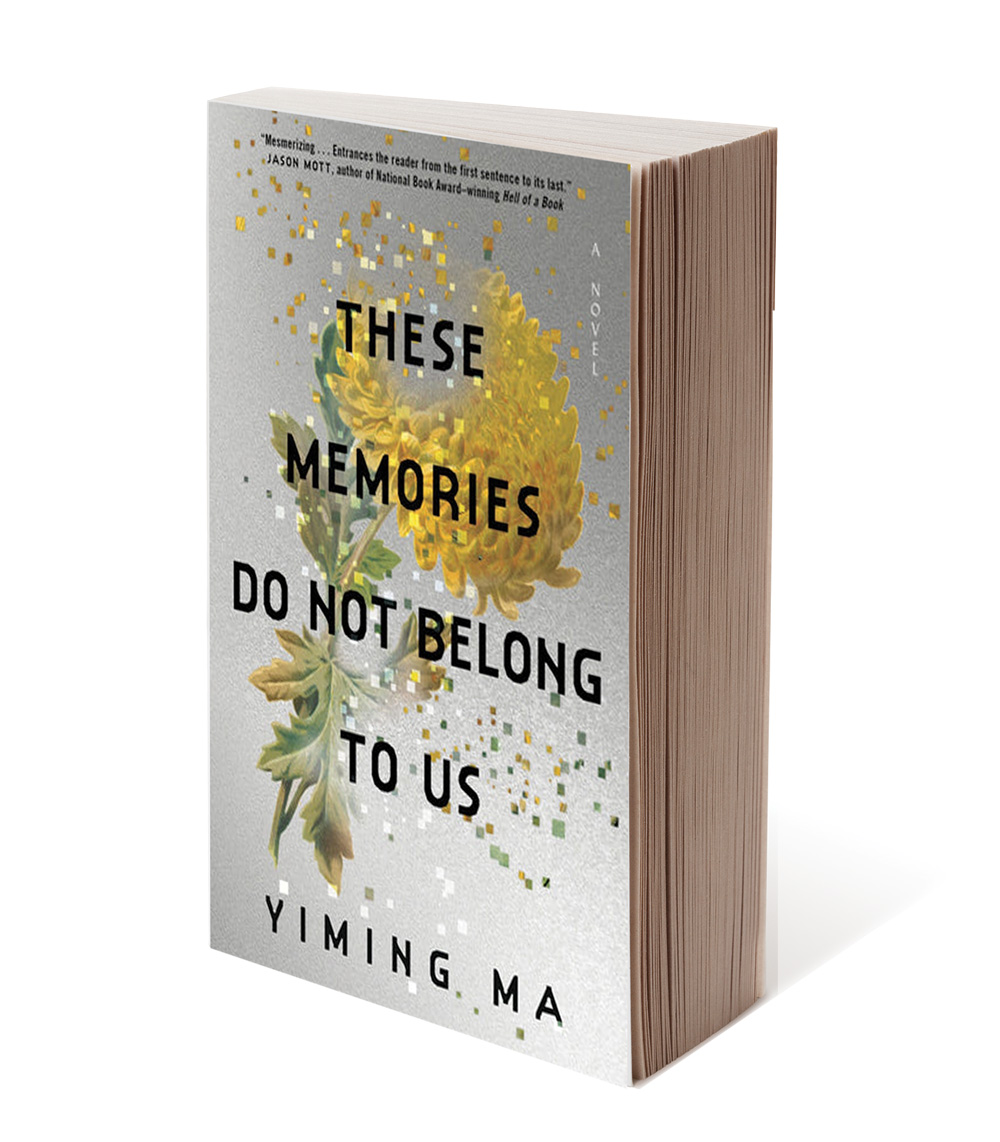
What if memories were no longer tied to their creators, but could be bought, sold, and annihilated across minds? This is the world Yiming Ma, MBA ’18, imagines in These Memories Do Not Belong to Us (Mariner Books), where the reliving of inherited memories becomes a form of resistance against a government seeking to control history through its most intimate and personal construction.
Memory again comes alive in Bad Bad Girl (Knopf) when Gish Jen, Gr. ’80, hears her dead mother’s voice shunning her for being a “bad bad girl.” In this fictionalized memoir, Jen depicts her mother as a rebellious spirit, showing her determination to move from China to the United States to pursue a PhD and imagining her interjections all the while. Laced with the complexities of the relationship between strong-willed mother and daughter, the resulting novel is a decade-spanning tale of them both.
The decades have imposed scarcity on young Kōrero’s home island in Tonga in Adam Johnson’s The Wayfinder (Farrar, Straus and Giroux), when the arrival of a stranger sparks a heroic epic into unfamiliar waters. With magic on every page and a tone reminiscent of oral storytelling, Johnson, a professor of English, transforms deeply researched history into a complex fictional world with a bit of everything: love and war, peril and humor, mysticism and sincerity.
Bio Box
Many have attempted biographies of Philip Roth; few have succeeded. Enter history professor Steven J. Zipperstein, whose Philip Roth: Stung by Life (Yale U. Press) centers the writer’s work and its real-life inspirations. “Beware of knowing an author!” one of many lovers recounts Roth saying. “He will steal from you!”
In McNamara at War: A New History (W.W. Norton & Company), journalist Philip Taubman, ’70, and his brother William, a political scientist, explore how Robert McNamara’s particular combination of traits—among them intellectual acumen, self-blame, loyalty, and inflexibility—led him to drive the Vietnam War forward when he knew it was unwinnable. They also illuminate the junctures that can make all the difference in the life of a person, or a country: Had his wife Margy not had a serious case of polio, they write, McNamara might have become a professor at Harvard Business School rather than rocketing from president of Ford Motor Company to secretary of defense.
Longtime college football writer Ivan Maisel, ’81, explains in American Coach: The Triumph and Tragedy of Notre Dame Legend Frank Leahy (Grand Central Publishing) how Leahy not only restored the Fighting Irish to its pedestal in the 1940s and ’50s but also transferred “the imprimatur of winning” from his legendary mentor, Knute Rockne, to the institution, making a Catholic university in a remote Midwestern town synonymous with gridiron success (at great cost to his health). “[If] there had been no Leahy, there’s no guarantee there would be the Notre Dame football that college football fans continue to love—and hate.”
Life Stories
Nerd Nation devotees will particularly appreciate one anecdote from Life, Law, and Liberty (Simon & Schuster), by Justice Anthony M. Kennedy, ’58: As a Harvard Law student, he took study materials for his tax course to watch Ted Williams play for the Red Sox. From behind him came a stentorian voice—that of the dean: “You do not bring the Revenue Code to a baseball game.” Throughout the book, Kennedy uses Supreme Court cases to illuminate his judicial philosophy with the patience of the constitutional law professor he once was.
“I write from two standpoints: that of a mother, and that of a scholar,” writes Danilyn Rutherford, ’84. “Thanks to Millie, the mother and the anthropologist are one and the same.” In Beautiful Mystery: Living in a Wordless World (Duke U. Press), Rutherford aims not to write a parent’s memoir of disability, or even difference, but to plumb the depths of cognitive mystery—what it is to live with, love, and affirm the personhood of someone with an unknowable mind, and learn what she has to teach us about interdependence.
When their neighbor rushed in with a warning that their names were on a police list of Jews to round up in Vichy France, 9-year-old Benjamin Parket, his parents, and his two elder brothers stole across the courtyard from their apartment to another neighbor’s workshop. They would remain there for two years. In The Courtyard (Amsterdam Publishers), Parket, ’62, and his daughter-in-law Alexa Morris pay tribute to the community of tradespeople who fed, sheltered, and protected the family. “Compared to the story
of many Jews during the Holocaust, not that much happened,” they write. “And because not much happened, everything has been possible.”
New in Nonfiction
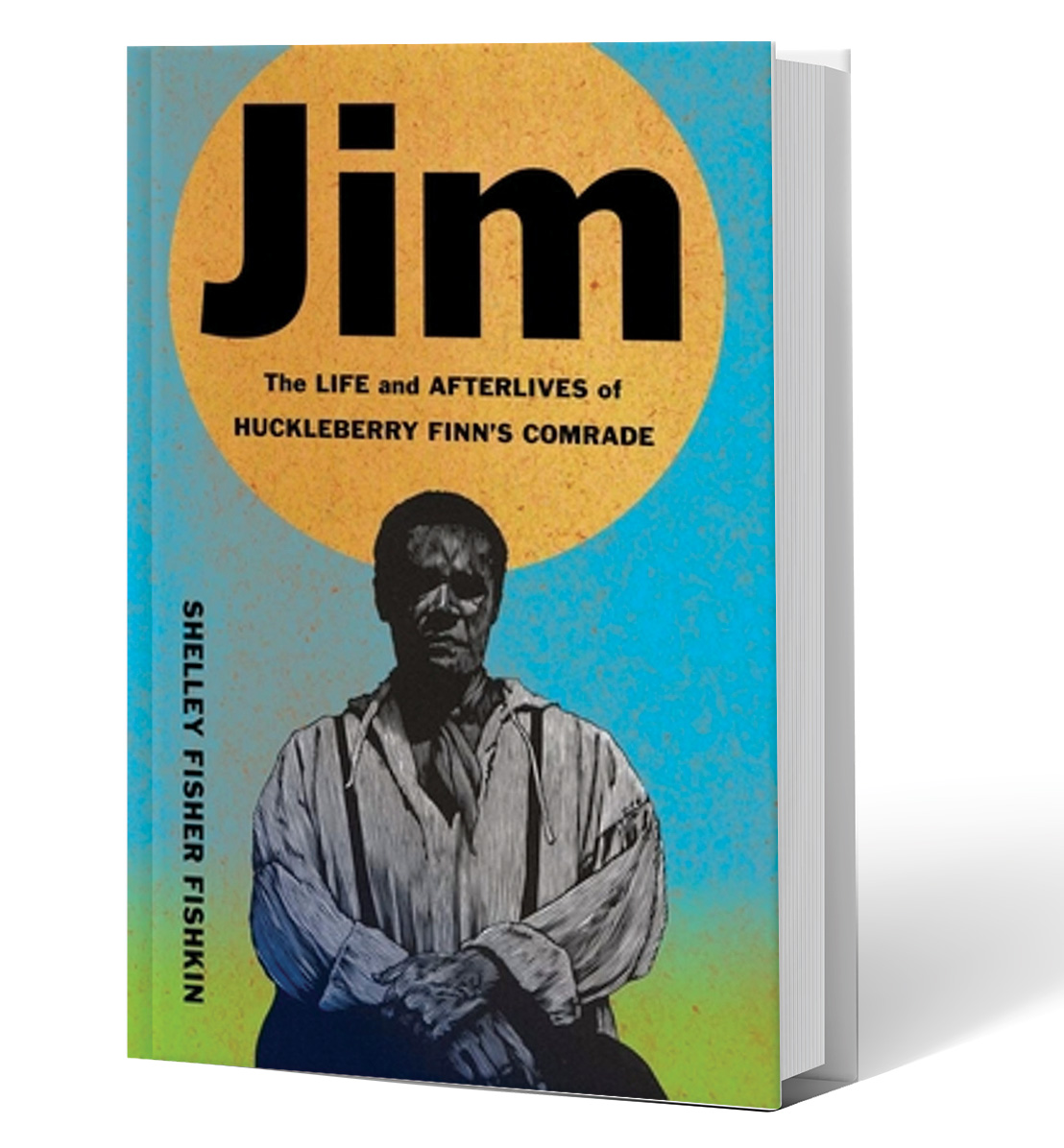
Jim: The Life and Afterlives of Huckleberry Finn’s Comrade (Yale U. Press) provides a nonfiction complement to James, Percival Everett’s 2024 reimagining of Mark Twain’s novel from the fugitive slave’s perspective. English professor Shelley Fisher Fishkin examines the character in historical context, cultural debates, and classrooms, in translation and on stage and screen. “Jim has been hiding in plain sight,” she writes. “The first Black father in a novel by a white male American author, Jim has been disparaged, demeaned, and dismissed by many critics for more than a century. But he is more complex and multilayered than meets the eye.”
Individual ignorance is vast and inevitable, but the societal production of ignorance is worthy of understanding and study, writes Robert N. Proctor in the preface to Ignorance Unmasked: Essays in the New Science of Agnotology (Stanford U. Press), which he edited with Londa Schiebinger. The history professors’ goal is less to convince the reader of particular positions on, say, Adam Smith’s economic theory or the causes of obesity and more to examine the tools and techniques used to amplify, distort, or suppress information.
Three lenses through which to contemplate the past, present, and future of the relationship between China and the United States: Autocrats vs. Democrats: China, Russia, America, and the New Global Disorder (Mariner Books), by professor of political science Michael McFaul, ’85, MA ’86, examines the lessons and the limits of the “Cold War II” metaphor and sets forth policy recommendations that “make the case for why a return to internationalism, multilateralism, and support for democracy and human rights worldwide best serves American national interests.” Princeton historian Beth Lew-Williams, MA’06, PhD’11, uses big data to construct a new legal history of Chinese people in the American West in John Doe Chinaman: A Forgotten History of Chinese Life Under American Racial Law (Harvard U. Press). And Hoover Institution research fellow Dan Wang compares and contrasts what he sees as the engineering mindset of China with the risk-averse lawyerly society of the United States in Breakneck: China’s Quest to Engineer the Future (W.W. Norton & Company). Each, he writes, can learn from—or devastate—the other.
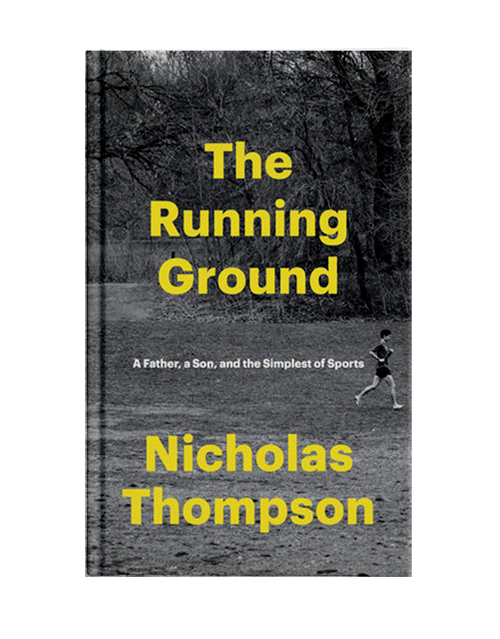
|
‘Running connects me to my father; it reminds me of my father; and it gives me a way to avoid becoming my father.’ |
Children’s Corner
Bruce Handy, ’80, needs just eight words to capture the devastation of a child whose balloon goes skyward in Balloon (Chronicle Books), illustrated by Julie Kwon.
Kids can read about 16th-century painter Lavinia Fontana in English, Italian, or French in Lavinia’s Wondrous Portraits (Corraini Edizioni), by associate professor of art and art history Emanuele Lugli, illustrated in the manner of an artist’s notebook by Chiara Palillo.
Goals
In The Healing Power of Resilience (Simon Element), cardiologist Tara Narula, ’97, looks beyond the standard heart-healthy orders for a better diet and more exercise to an invisible prescription—building up our ability to embrace change. Resilience, she says, is a critical trait for anyone facing a health event. It helps us to alter long-held habits, reclaim control of our well-being, and move forward with our whole hearts.
If your heart is rarely in a networking event, Goldie Chan, ’04, understands how you feel. In Personal Branding for Introverts (Basic Venture), the social media strategist provides tips and exercises to help you present your strengths and skills to others, cultivate genuine connections, and stand out in ways that feel authentic, even if—maybe especially if—you’re a person who prizes alone time and privacy.