
This fall marks 125 years since a German physician named Alois Alzheimer met the patient most responsible for his last name’s haunting immortality. Auguste Deter—her identity not nearly as preserved as his—was a 51-year-old housewife who had been admitted to the psychiatric hospital in Frankfurt, suffering from worsening confusion, outbursts, and memory loss. Deter told Alzheimer she’d been in the hospital three weeks, but it had been one day. She couldn’t recall the name of her husband, who had brought her there. She struggled to identify the food she was eating as they talked, referring to meat as potatoes. But it was only after her death five years later that Alzheimer was able to glimpse the pathology behind her plight. His postmortem revealed a “deposition of a peculiar substance” throughout the brain as well as a “tangle of fibrils . . . where a nerve cell had been.”
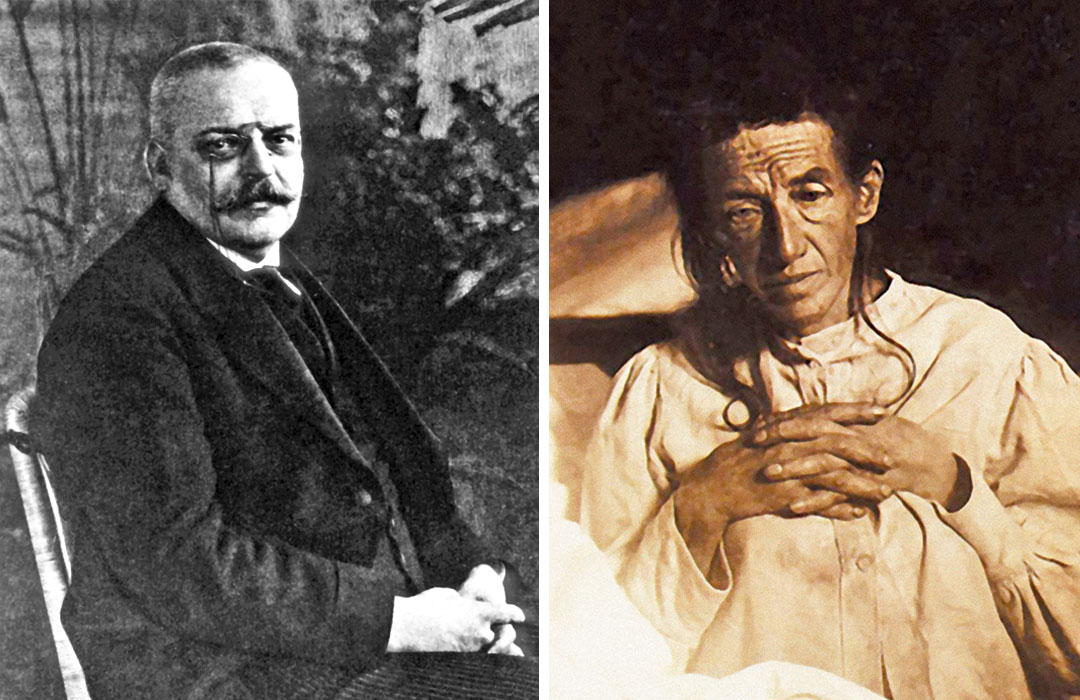 MIND MATTERS: Alzheimer (left) wrote that in their sessions, Deter repeatedly said, “I have lost myself.” (Images: from top: National Library of Medicine/Wikimedia Commons; Wikimedia Commons)
More than a century later, those abnormalities remain the best-known hallmarks of Alzheimer’s disease, the most common type of dementia, accounting for 60 to 80 percent of cases worldwide. The “peculiar substance” forms amyloid plaques—sticky clumps of a protein called beta-amyloid that begin to accumulate across the brain early in the illness. The neurofibrillary tangles—twisted bundles of a different protein called tau—accumulate later inside neurons in areas of the brain most ravaged by the disease, including the memory-making hippocampus. Together, plaques and tangles accompany—and appear to hasten—the loss of synaptic connections between neurons, eroding a person’s memory, judgment, and independence. Today, doctors needn’t wait until death to see either plaques or tangles: Advances in medical imaging mean both can be revealed in glowing detail in living brains, including in people with no outward symptoms. The technology has transformed our understanding of how and when Alzheimer’s takes hold.
But in the most important way, Alzheimer’s disease remains as far beyond the reach of science as it was in 1901. Since 2021, the Food and Drug Administration has approved a trio of drugs that each clear the brain of amyloid plaques, raising hopes of slowing neuro-degeneration. But the drugs have shown only modest effects on patient outcomes, and it may turn out that amyloid is more a consequence of the disease than its primary instigator (though it’s possible anti-amyloid drugs may still prove effective if given earlier). Regardless, today, there are no therapies to prevent, halt, or cure a disease that affects more than 7 million Americans and has risen to become an aging country’s sixth-leading cause of death.
It’s a bleak bottom line, but to talk to Stanford scientists studying the disease is to hear reasons for optimism. Before you can treat a disease, you need to measure it, says Tony Wyss-Coray, a professor of neurology and neurological sciences who leads the Knight Initiative for Brain Resilience at Stanford. And leaps in imaging, genetics, proteomics, and immunology have led to an explosion of insight into the disease, revealing new flanks to attack. “I’m very excited because we have more shots on goal that we can try to translate,” says Sharon Sha, a clinical professor of neurology and neurological sciences and chief of the Stanford Memory Disorders Center. “I think we’ll get there in my lifetime, but we’re not there yet.” Here are four Stanford efforts to better detect, understand, and ultimately defeat Alzheimer’s.
The Genetic Underpinning
As a physician, Stanford neurologist Michael Greicius doesn’t generally advise people without any symptoms of Alzheimer’s to get tested for the most common genetic risk for the disease. Such analyses—available from doctors as well as from companies like 23andMe—scan for a genetic variant called APOE4, which is the strongest known genetic risk factor for typical, late-onset Alzheimer’s. But carrying the variant means you’re more likely to develop the disease, not that you will. And Greicius questions if knowing you are APOE4 positive is worth the burden, at least until the day preventive therapies become available. “It would just make me anxious,” he says. “Every time I forgot why I went into the living room to get something, I’d be like, shit, this is it, now it’s starting.”
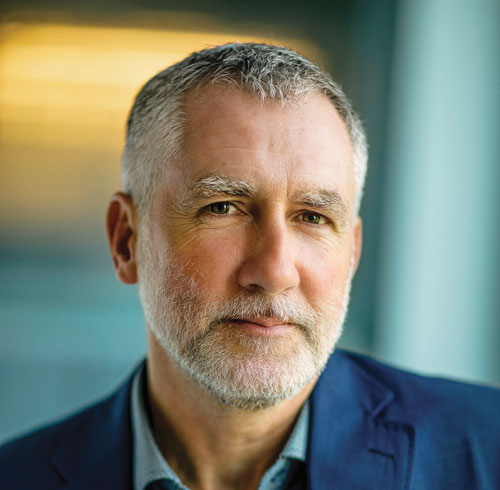 Greicius (Photo: Timothy Archibald/Stanford Medicine)
But as a researcher, Greicius—a professor of neurology and neurological sciences who specializes in computational approaches to genetics—is anything but inattentive to APOE4. The gene and its variants occupy the lion’s share of his lab’s attention as the team looks for clues to its role in the disease, how its influence differs by sex and ancestry, and most tantalizingly, how rare mutations in the gene might point toward new treatments.
All of us have two copies of the APOE gene, one from each parent, sitting on the long arm of our 19th chromosome. The gene comes in three main variants—APOE2, APOE3, and APOE4—that provide instructions for a protein that helps transport cholesterol and other fats throughout the brain and body. The exact role APOE plays in Alzheimer’s is still unknown, but for decades researchers have recognized the gene as a key barometer of risk for the disease.
APOE2—the rarest of the three—reduces risk of Alzheimer’s. APOE3—the most common—is considered the benchmark. And APOE4—present in about 15 to 25 percent of the population—confers the highest likelihood of developing the disease. Its effects vary by race and sex, but generally speaking, people with one copy of APOE4 have about a two- to four-fold risk of developing Alzheimer’s, Greicius says. Those with two copies are at about a 10- to 12-fold risk. According to the National Institutes of Health, people with European ancestry who have two copies of APOE4 can have as high as a 60 percent chance of developing Alzheimer’s dementia by age 85. Additionally, those with APOE4 tend to show symptoms five to 10 years earlier than others who develop the disease.
But there are exceptions that may reveal new lines of attack on the illness. In 2022, Greicius, along with first author Yann Le Guen, now assistant director of computational biology at Stanford, and an international team of collaborators, published a paper in JAMA Neurology examining genetic data from more than 544,000 people, including nearly 68,000 with Alzheimer’s. They identified a mutation called R251G, found in about 1 out of every 1,000 APOE4 carriers, that changes just one of the 299 amino acids in the protein coded by the APOE gene. That tiny change cuts Alzheimer’s risk roughly in half among people with APOE4. “It’s a huge risk reducer,” Greicius says. “Nature’s sort of provided a blueprint for how to mitigate the Alzheimer’s risk of APOE4.”
An important question for Greicius is whether researchers can follow that blueprint to create a drug that mimics the effects of R251G. He has been working with Chaitan Khosla, a professor of chemistry and of chemical engineering and the director of the Innovative Medicines Accelerator, which helps turn Stanford discoveries into therapies. Before researchers can begin developing drugs, Khosla says, they need to determine exactly how APOE contributes to Alzheimer’s and how R251G changes that process: “Nobody questions that APOE plays an important role in Alzheimer’s disease, but nobody can tell you how it plays a role in Alzheimer’s disease.” But his team may be nearing an answer. “We are down to two, or at most 2 ½, possibilities,” Khosla says. “I’m very optimistic. I wouldn’t commit to this if I didn’t genuinely believe that in the next two to three years, we are at the cusp of a real transformative insight into the disease.”
Perhaps genetic testing for Alzheimer’s will soon offer more than a reason to worry.
The Secret to Brain Resilience
Alzheimer’s researchers have long known from autopsies—and increasingly from brain scans and blood tests in living people—that the disease begins in stealth. Amyloid plaques and tau tangles can accumulate silently in the brain for years, even decades, before memory problems emerge—if they emerge at all. One of the field’s biggest unanswered questions is why in some people these biological changes ultimately progress to dementia, while others remain healthy despite harboring the same pathology.
That mystery lies at the heart of the Stanford Aging and Memory Study, or SAMS, a long-running project that follows older adults as they age. Since 2014, about 250 volunteers have enrolled, returning to campus every seven years for several days of memory testing, brain imaging, and biomarker measurements. “We do these measurements, and then we watch them and we see what happens,” says Elizabeth Mormino, a research associate professor of neurology and neurological sciences who leads the study with psychology professor Anthony Wagner, PhD ’97. “You really need the longitudinal piece to understand resilience versus risk.”
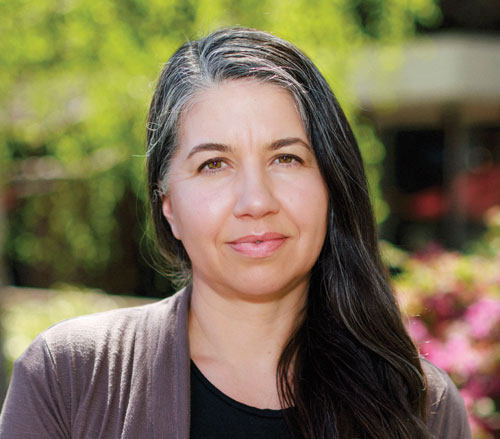 Mormino (Photo: Jeff Baker/Stanford Medicine)
Unlike many Alzheimer’s studies, SAMS enrolls only people with no measurable cognitive impairment. (Mild cognitive impairment is considered the first step to possible dementia.) Among these healthy volunteers, about one-quarter show elevated amyloid, and about 10 percent have elevated tau. After more than a decade of follow-up, about 15 percent of participants clearly stand out as cognitively declining (though very few meet the criteria for even mild cognitive impairment), while many appear resilient to memory decline, Mormino says. By comparing those divergent trajectories, researchers hope to identify the genetic, biological, and lifestyle factors that influence who progresses toward dementia and who remains symptom-free despite the disease’s advancing pathology.
SAMS has become an invaluable testbed, says Wyss-Coray, the neurologist who directs Stanford’s Knight Initiative for Brain Resilience. Using samples from SAMS and five other research cohorts, his lab published a paper in Nature Medicine in 2025 showing that the ratio of two proteins—YWHAG and NPTX2, which help regulate communication at the brain’s synapses—could help predict cognitive decline and the onset of dementia. People with relatively high levels of NPTX2 compared with YWHAG tended to remain cognitively stable over time, even with elevated amyloid or tau. Those with a higher proportion of YWHAG were more likely to decline.
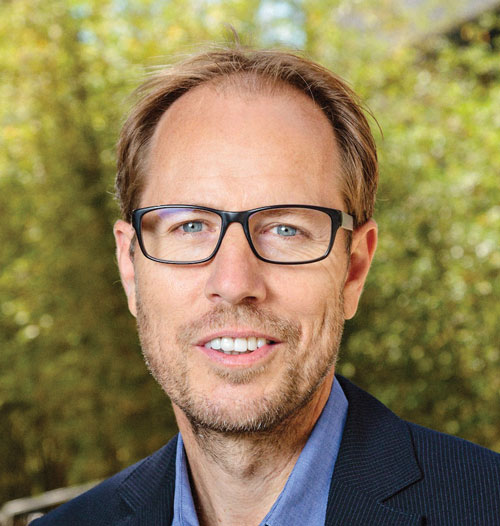 Wyss-Coray (Photo: Gary Wagner)
The findings not only suggested a way to better predict Alzheimer’s risk but also pointed to a potential therapeutic target. In mouse models, boosting NPTX2 appears to protect synapses from damage caused by toxic tau. Delivering it in humans as a therapy could represent a new approach to treating the disease.
SAMS functions as a laboratory for developing and validating such biomarkers, Wyss-Coray says. Once researchers know which measurements are meaningful in a closely studied cohort like SAMS, they can apply those discoveries to datasets involving hundreds of thousands of people. “The initial discoveries are often made in smaller cohorts,” he says. “And then you can say, ‘OK, let’s put up the money to measure the same thing in a large cohort.’”
The Role of Inflammation
Katrin Andreasson was a postdoctoral fellow at Johns Hopkins University when she became fascinated by a series of population studies around the globe reporting a striking pattern. People who regularly took common nonsteroidal anti-inflammatory drugs, or NSAIDs (including ibuprofen), appeared significantly less likely to develop Alzheimer’s.
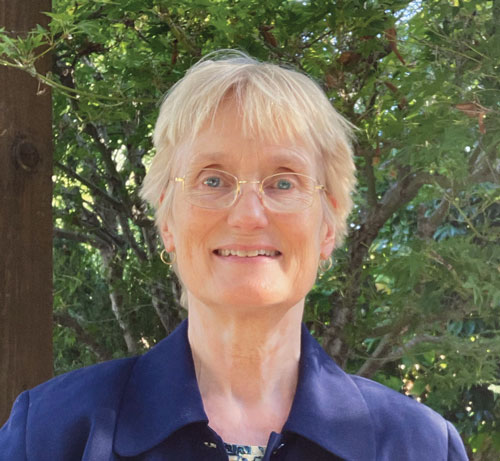 Andreasson (Photo: Courtesy Andreasson Lab)
For Andreasson, that raised an intriguing possibility. If drugs that reduce inflammation seemed to protect against Alzheimer’s, perhaps inflammation itself played a larger role in the disease than scientists realized. But in the late ’90s, Alzheimer’s researchers were so focused on amyloid plaques that it was difficult to get support to explore other ideas. “It just seemed like everybody was sort of looking, thinking one way,” says Andreasson, ’83, MS ’83, a professor of neurology and neurological sciences. “I could not get a grant.”
She found traction in the 2010s. Her research in the decades since has revealed connections between inflammation and Alzheimer’s, leading to a provocative insight: Our vulnerability to the disease may be exacerbated by an inflammation-related energy shortage in the brain—one that appears reversible, at least in lab mice.
NSAIDs reduce inflammation by blocking enzymes that produce chemical messengers called prostaglandins. The blockade causes a broad range of effects, from easing pain to the more problematic consequence of raising blood pressure. Andreasson sought to isolate what in this array might protect against Alzheimer’s.
Her search eventually centered on one messenger, prostaglandin E2, or PGE2, and a receptor on immune cells called EP2. During infection or injury, PGE2 acts like an alarm, mobilizing the body’s immune defenses. It can be overzealous in its urgency—we often take an Advil to ease the resulting swelling, redness, and pain—but in the short term, it generally serves a useful purpose.
As people age, however, PGE2 levels rise, and the alarm rings more frequently and with less cause. Instead of standing down after a threat, immune cells remain in attack mode, becoming less effective and less focused on crucial work such as removing cellular waste and pathogens.
Andreasson’s lab demonstrated the pathway’s possible importance to Alzheimer’s in a 2014 study of mice with amyloid plaques and other features of the disease. When researchers disrupted the PGE2–EP2 connection in the brain’s immune cells, the cells cleared amyloid much more readily. The mice also showed less inflammation and performed better on memory tests.
A subsequent 2021 paper in Nature, with a team including first author Paras Minhas, MD ’17, PhD ’21, offered insight into why. The researchers found that PGE2–EP2 signaling told immune cells to stop using fuel for energy. Instead, the immune cells were instructed to put that fuel into storage, as if for a rainy day. But that rainy day never comes. Deprived of usable fuel, the cells became less capable of protecting the body and more likely to produce damaging inflammation. But when researchers blocked EP2 in old mice, the cells regained youthful vigor. The mice’s memory also improved.
Why aging immune cells would hoard fuel instead of using it to do their job remains a mystery—one that may simply reflect evolutionary indifference. “Aging is probably not what nature intended—we’re supposed to reproduce and then succumb to infections,” Andreasson said in a 2022 interview with the Knight Initiative for Brain Resilience.
Andreasson’s lab has since found another way that inflammation may deprive the brain of energy in the face of Alzheimer’s. This research focused on astrocytes, star-shaped cells that feed neurons and maintain synapses. In a 2024 Science paper, again with first author Minhas, the researchers found that amyloid and tau—the defining abnormalities of Alzheimer’s—activated an enzyme called IDO1 in astrocytes. The resulting chain of events put the astrocytes into a slumberous mode, sapping their ability to keep neurons supplied with energy. But when researchers blocked IDO1, the astrocytes perked up, restoring the neurons’ fuel supply and improving synaptic function.
The treatment restored memories in mice. In one experiment, mice were placed in the center of a brightly lit disk called a Barnes maze, which they had visited during several previous sessions. Eager to escape the glare, they hurried to find the hole along the disk’s edge—an easy task for healthy mice who remembered the way but a struggle for those with Alzheimer’s symptoms. Once researchers blocked IDO1, however, even the Alzheimer’s mice went straight for the exit.
The team also tested IDO1 inhibitors on human astrocytes and neurons derived from Alzheimer’s patients. Again, the experimental treatment restored normal energy metabolism.
It’s a long path from demonstrating an effect in mice and human cells to showing that a treatment works in people. Andreasson says her team is working on how to translate its research in the clinic. But it may be that the secret to fighting Alzheimer’s is in restoring the brain’s ability to fuel its own defense.
Delaying the Disease
Professor of neurology and neurological sciences Frank Longo takes inspiration from the lucky few whose brains have extensive plaques and tangles but who never develop dementia. It’s a tiny group—Longo estimates that about 5 percent of people with extensive Alzheimer’s pathology never show symptoms. But they exemplify an important message. “Nature’s telling us resilience is possible,” he says.
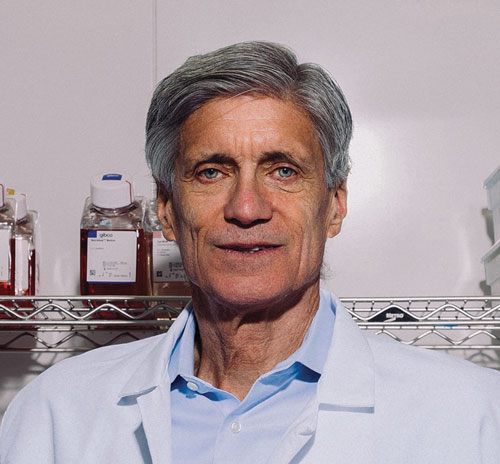 Longo (Photo: Misha Gravenor/Stanford Medicine)
That, he says, captures the grand challenge he has been working on for decades: creating a drug that gives everyone the same protection. Because Alzheimer’s usually strikes late in life, even pushing back the onset of symptoms by a decade could have an enormous impact. “If we can delay it by 10 years,” Longo says, “we eliminate 90 percent of Alzheimer’s in the world.”
Longo considers himself agnostic about what causes Alzheimer’s. He says multiple biological processes likely drive the disease: amyloid plaques, tau tangles, inflammation, and probably others. Trying to stop any one of them is like playing Whac-a-Mole. Instead, his focus is on their common effect: the destruction of the synaptic connections through which neurons communicate and memories are made. He serves as chair of PharmatrophiX, a biotechnology company developing an experimental drug designed to protect those connections from multiple forms of damage. “The bottom line with this disease is you’re losing your synaptic connections—that’s what you need for cognition,” he says. “We’re making synapses resilient to whatever the causes are.”
‘If we can delay it by 10 years, we eliminate 90 percent of Alzheimer’s in the world.’
The company traces its origins to research Longo and UCSF neurologist Stephen Massa began around 2000. They were interested in nerve growth factor, a naturally occurring protein that helps neurons grow, survive, and maintain their connections. But nerve growth factor is too large to cross the blood-brain barrier, the protective boundary that keeps many substances in the bloodstream from entering the brain. So Longo and Massa looked for a smaller molecule that could reproduce some of nerve growth factor’s protective effects. After computationally screening hundreds of thousands of molecules, they identified a compound that became known as LM11A-31, or C31. Longo and his wife, Anne Chun Longo, ’90, founded PharmatrophiX in 2005 to shepherd the drug through the long path of development.
The drug works by targeting a receptor on the surface of neurons called p75NTR. The receptor helps govern whether neurons and their connections are maintained or dismantled. Under duress—as in Alzheimer’s—its signaling tilts toward self-destruction. C31 targets the receptor, seeking to steer that message back toward survival.
‘This is the first time we’re seeing a therapy lead to improved brain metabolic network function in actual Alzheimer’s patients.’
Longo calls the evidence so far encouraging. In laboratory studies, the drug protected neuron-like structures from amyloid-related damage. In mice, he says, treatment restored some lost dendritic spines (tiny projections on neurons where synaptic connections form). And in a 26-week phase 2A trial involving 242 people with mild to moderate Alzheimer’s disease in five European countries, brain scans and other tests suggested the drug may be slowing some aspects of the disease.
In a later analysis, researchers examined brain scans from 159 trial participants to assess how well regions involved in memory and other cognitive functions were working together. They found that C31 appeared to preserve—and in some regions improve—network efficiency. “We’re not going to claim that we’re reversing Alzheimer’s,” Longo says. “I’m very conservative, but this is the first time we’re seeing a therapy lead to improved brain metabolic network function in actual Alzheimer’s patients.” The findings suggest the drug may have slowed cognitive decline, though Longo says confirming that benefit will require a phase 3 trial involving about 1,600 patients and costing hundreds of millions of dollars. If the trial succeeds, Longo says, the drug could receive federal approval within five years.
Longo believes Alzheimer’s research has entered a new era. Advances in blood tests, brain imaging, and other biomarkers have given scientists an unprecedented view of the disease years before symptoms develop, opening the possibility of intervening before irreversible damage occurs. The brain is no longer a black box, he says. We can see things Alois Alzheimer could never have imagined.
Sam Scott is a senior writer at Stanford. Email him at sscott3@stanford.edu.