
If there was a flaw in Asher Hong’s rings routine to close out the 2026 NCAA men’s gymnastics championships in April, it was the small hop after his dismount—a double-twisting double layout. But the senior’s smile as he raised his arms in salute told the bigger story. With the night’s final performance, Hong—an Olympic bronze medalist, 12-time All-American, and defending individual collegiate champion in the event–had erased a nearly 13-point deficit and vaulted Stanford to victory, the team’s sixth NCAA championship in seven years and its 11th overall.
And in winning yet again, Hong and his teammates had stuck the landing on one of the most remarkable milestones in collegiate sport history: 50 consecutive years of Stanford winning at least one NCAA team championship. “We’ve won before, but there can only be one team that keeps the 50 years alive,” says men’s gymnastics head coach Thom Glielmi. “It’s just a tremendous joy and honor to be part of.”
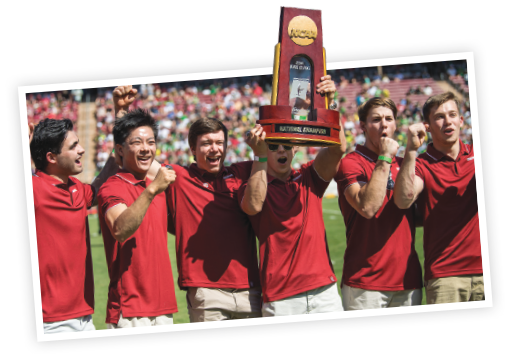
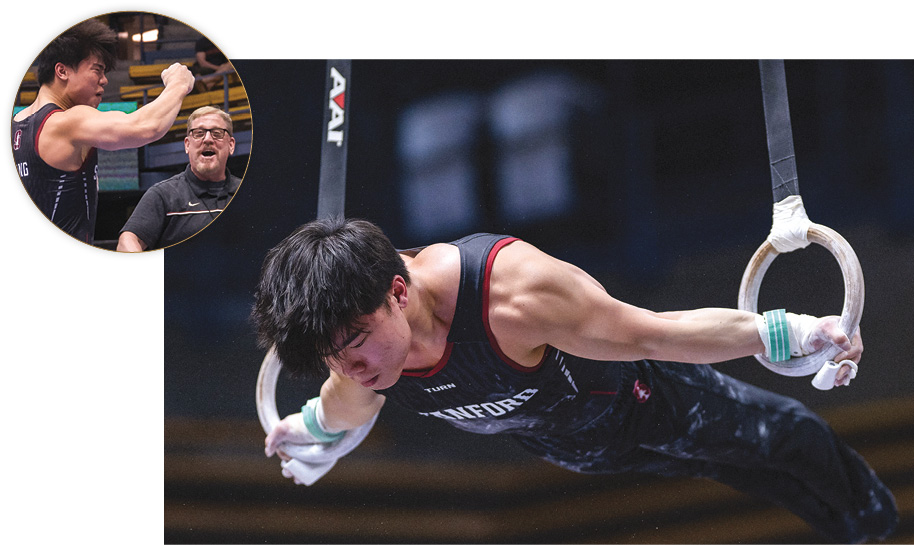 PUT A RING ON IT: Hong seals the deal with a 14.3 on the still rings; Glielmi (left) has coached the team to eight NCAA titles. (Photo: Karen Hickey/ISI Photos (2))
At half a century, Stanford’s run of championships is now almost three times the age of the youngest athletes extending it—Hong’s mother wasn’t even born when it started. It’s an unbroken record of success stretching back to the days of disco, the Ford administration, and 60-cent gallons of gas, now reaching into the new world of transfer portals, image rights, and conference realignment. No other school has an active streak even in the double digits. It has brought Stanford such a bounty of glory—127 titles in 19 sports (at press time), sometimes as many as six in an academic year—that it can be easy to view as automatic. But for those who’ve battled for titles, each extension of the streak is a defiance of the gravity that tugs on even the greatest teams. Tara VanDerveer, who won three titles in 38 years as head coach of Stanford women’s basketball and who made it to the Final Four 11 other times, believes it’s almost impossible to convey the challenge of winning a national championship to someone who hasn’t been there. “It’s so hard and it’s so fragile,” she says. “Even if you have the absolute best team, sometimes it just doesn’t happen.” The delicacy of each successful run, and the endurance to do it again, makes each title that much more amazing, she says.
Certainly, things weren’t always this way. Before the 1970s, a faithful Stanford fan often had to be contented with a title a decade. When men’s swimming and diving won the NCAA title in 1967, it was Stanford’s first NCAA championship since men’s golf in 1953, which itself had been the first since 1946. “The feeling was that it’s nice to be competitive at our level; we’re good, but we’re not great,” says Dick Gould, ’59, MA ’60, a former Stanford tennis player who was the men’s head coach from 1966 to 2004. “We got used to it.”
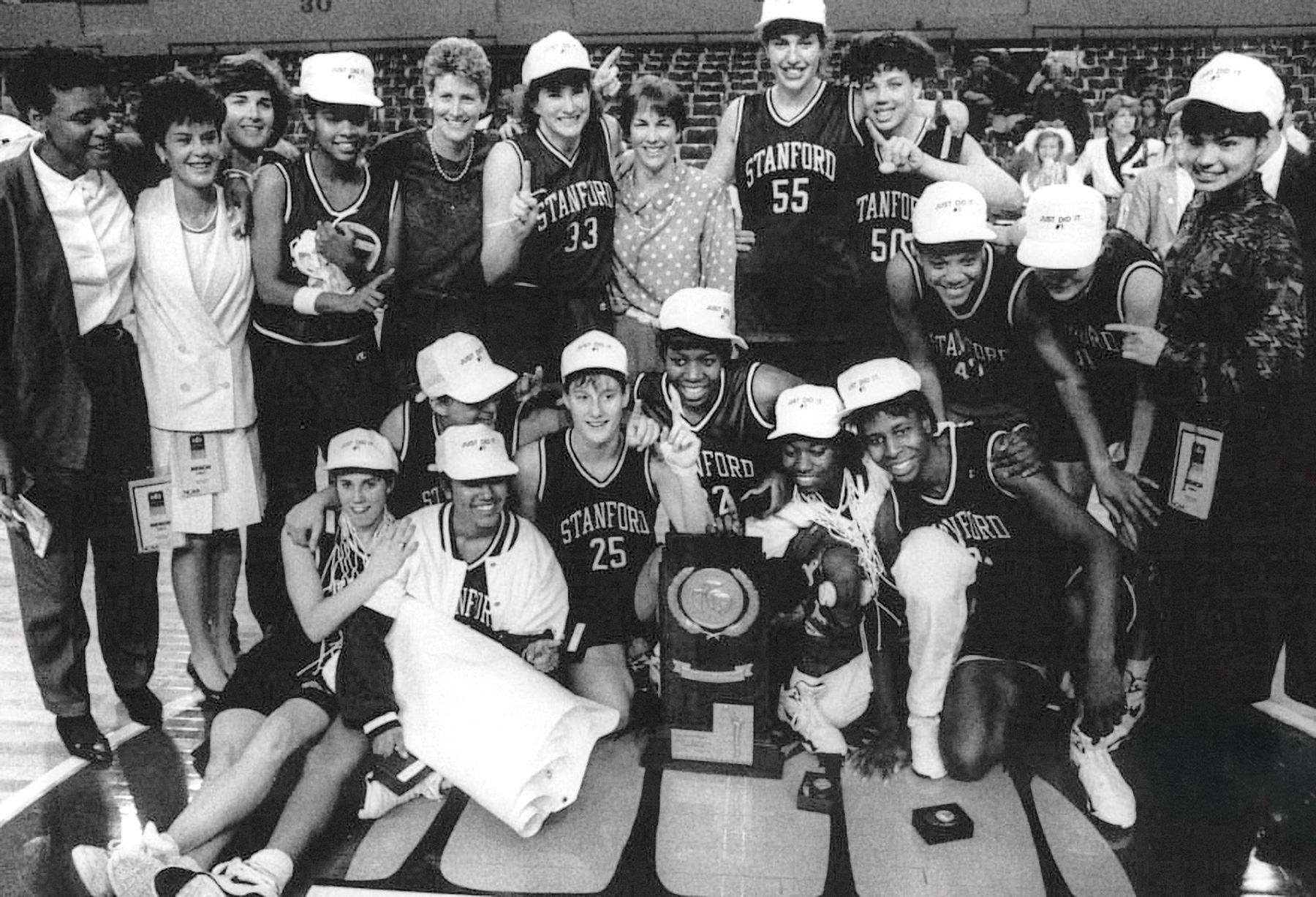 CALIFORNIA DREAMS: VanDerveer and the 1991–92 team took down Western Kentucky for the title in Los Angeles. (Photo: Stanford Athletics)
That would change utterly in the early ’70s, a transformation that Gould credits in no small part to a sport that doesn’t bestow an NCAA title at the Division I level—football. John Ralston, Stanford’s head football coach from 1963 through the 1971 season, operated by the mantra, “What the mind can conceive, the body can achieve.” His teams’ back-to-back victories in the 1971 and 1972 Rose Bowls against giants Ohio State and Michigan, respectively, shattered the notion that Stanford athletics couldn’t perform on the biggest stage. "He believed it could be done, which is a big thing, because everyone else had thrown the towel in," Gould says. Already on the ascent, the men’s tennis team wasted no time getting to the top, winning NCAA championships in 1973 and 1974, the first two of Gould’s 17 titles. No Stanford coach has more.
It would fall to a less likely team to start the streak, however. In the fall of 1973, Stanford men’s water polo lost every one of its conference games for the second time in four seasons. The sport was an overlooked adjunct to the swim program, says 1984 Olympian Drew McDonald, ’77, MS ’80. But in 1974, the school hired its first full-time water polo coach, Art Lambert, a hard-driving taskmaster who had helped lead the U.S. team to fifth place at the 1968 Olympics. At his first Stanford practice, he set up one-on-one drills. Whoever kept possession the longest wouldn’t have to run the stairs in Stanford Stadium on the sweltering summer day. “Guys were getting after it, they were pummeling each other,” says goalie Chris Dorst, ’77, MBA ’82, another 1984 Olympian. “It was a wake-up to everybody. There’s a new sheriff in town.”
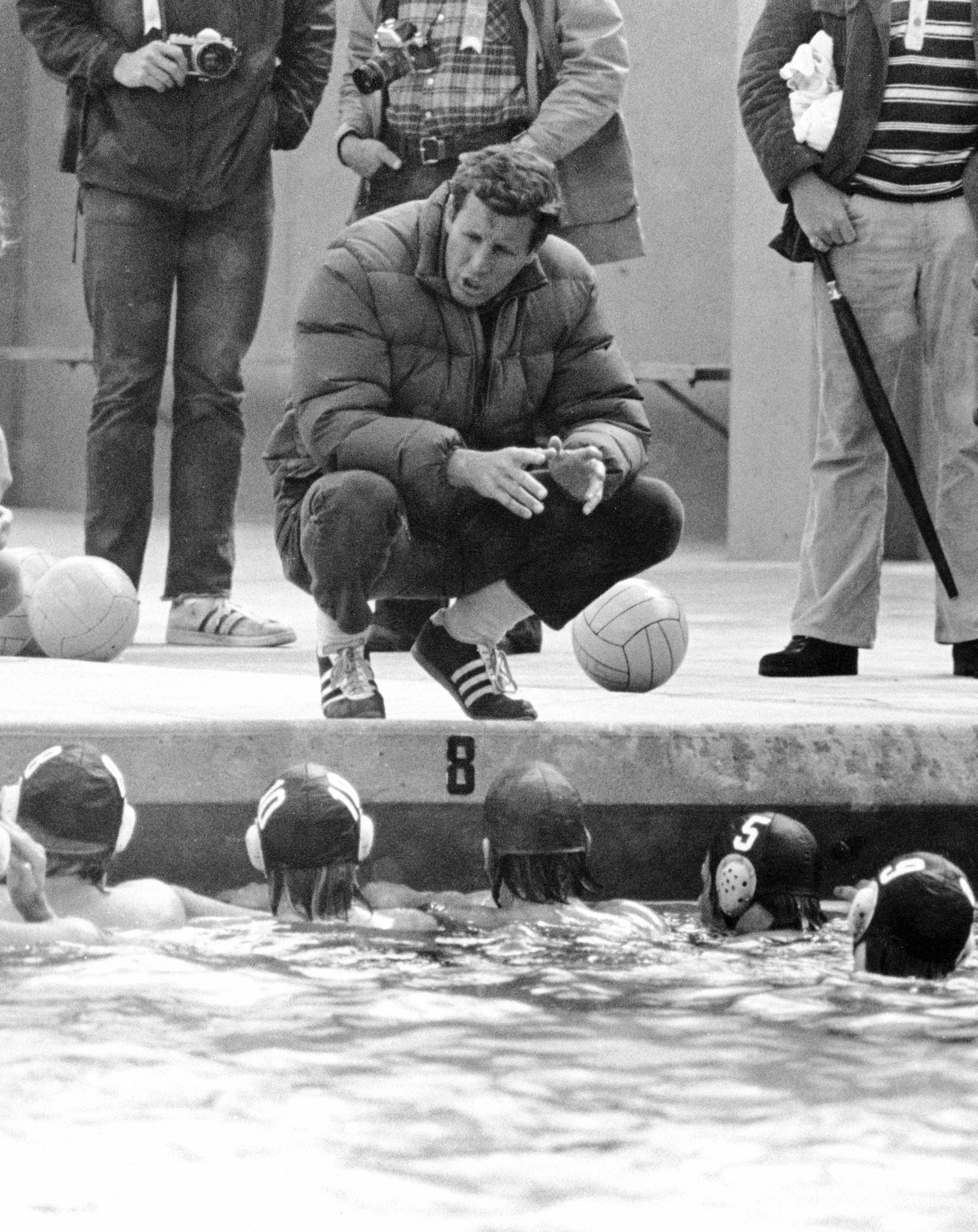 IN THE BEGINNING: Lambert. (Photo: Richard Kharibian/ISI Photos)
Lambert was not a cuddly creature—Dorst remembers submerging his ears to muffle the coach’s rants—but his focus, tactics, and expectations reforged the team. By the NCAA playoffs in November 1976, they were undefeated in conference play and performing with a sense of destiny. “I knew we were winning that championship,” McDonald says. “Never worried about it, period.” His four goals in the final helped Stanford to a 13-12 victory over UCLA. Men’s tennis would follow by winning championships that spring and the next. The streak was on—at least on one side of the athletic department.
On the Dotted Line
Every Team Wins

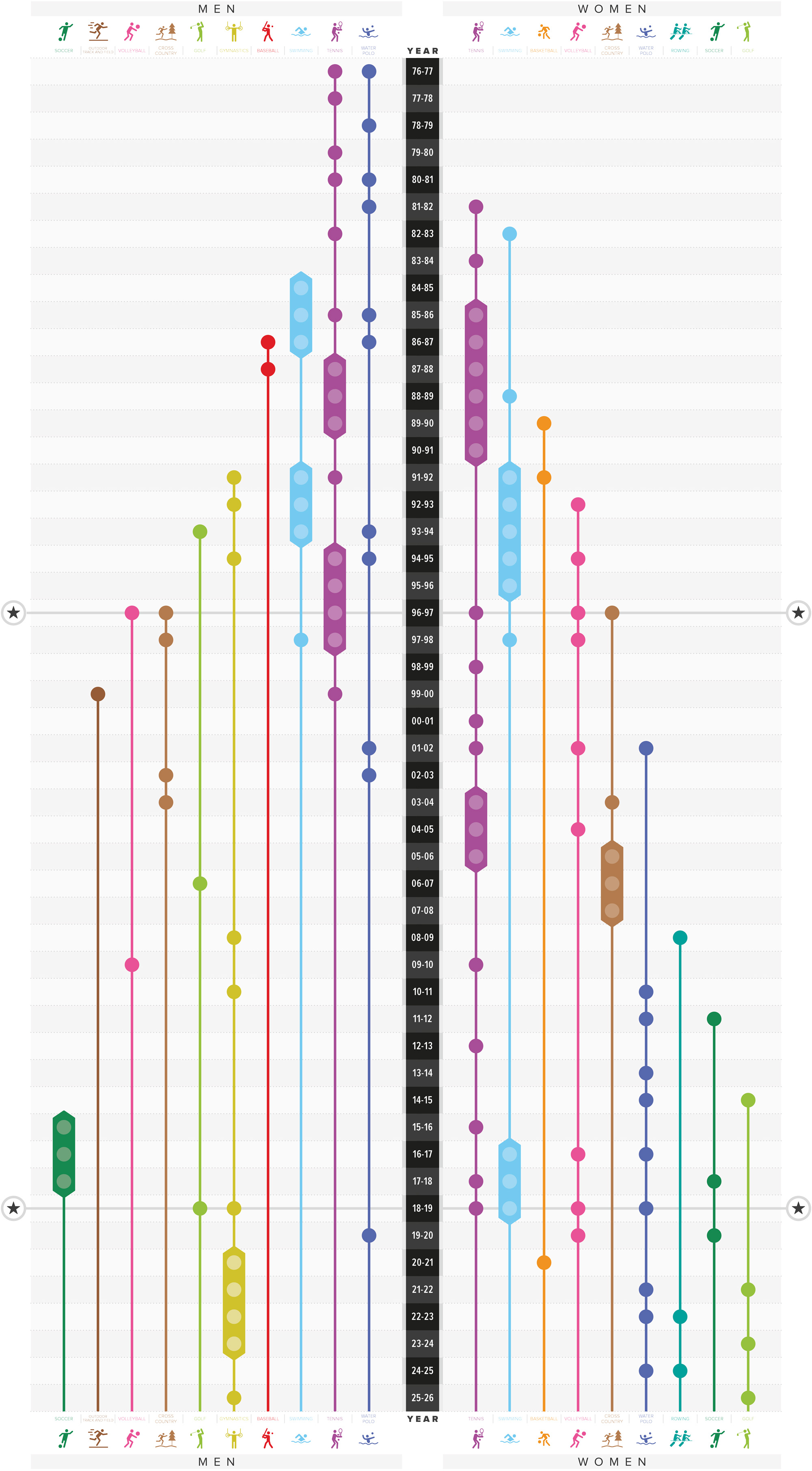 Infographic: Juan Martinez
|
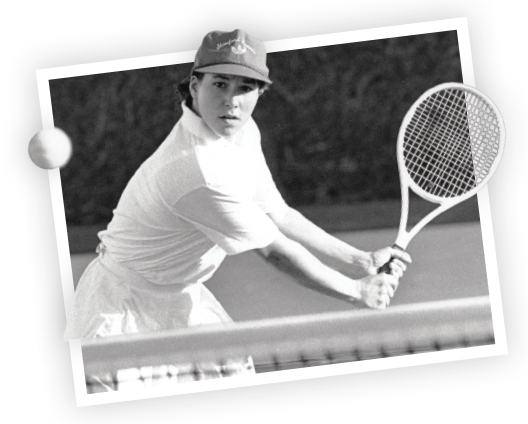
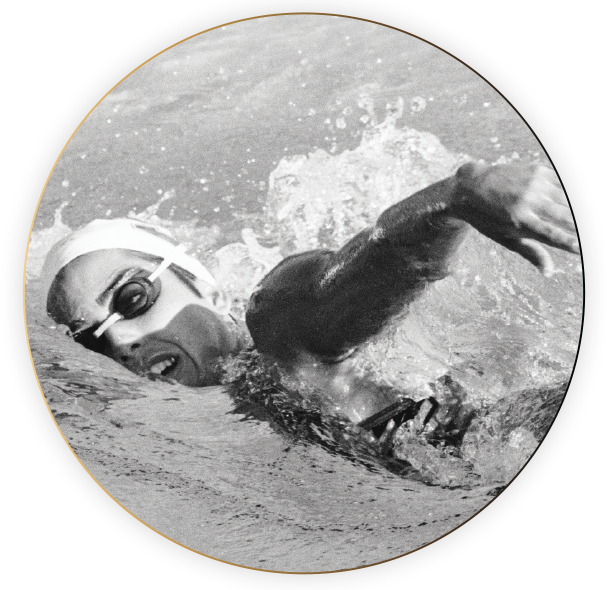
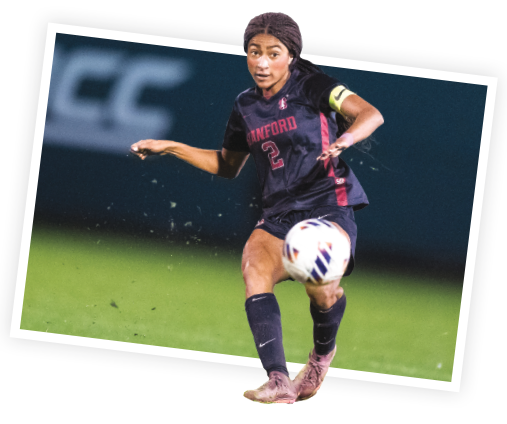
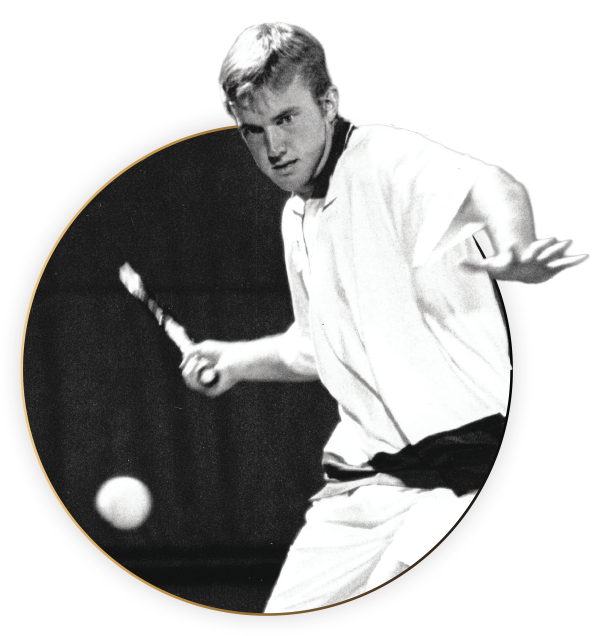
Today, you can’t talk about the success that followed without talking about the power of Stanford women’s sports. From the sudden-death heroics of Mariah Stackhouse, ’16, to give women’s golf its first title in 2015 to the utter dominance of Katie Ledecky, ’20, and the 2018 swimming and diving team to basketball’s nail-biting one-point team victory in 2021, women’s sports have supplied many of the streak’s most iconic—and essential—moments. Prior to 2025–26, the streak had been kept alive by a single team 11 times, eight of them women’s, five of those women’s tennis. Indeed, the streak was never in greater peril than in the spring of 2013. In the fifth overtime of the final match, No. 2 women’s water polo fell to USC. With the school year expiring, women’s tennis was the next best bet. But the team was seeded 12th and coming off a down year—a long shot at best. “The streak is in grave condition,” one commenter wrote on a Stanford fan site, where an article gave it a 4 percent chance of survival. And yet the team rallied to become the lowest-seeded team to win the title (a distinction since claimed by the 15-seed 2016 Stanford women’s tennis team). “I can’t explain to people how incredible this was,” says Kristie Ahn, ’14, who won the decisive match. “To be able to come out on top, to know what was on the line for the school, for our program, it was just like the ultimate redemption arc.” Amid the celebrations, the team tweeted out a picture of the championship trophy: “Someone said we still needed an NCAA championship in 2012–13?”
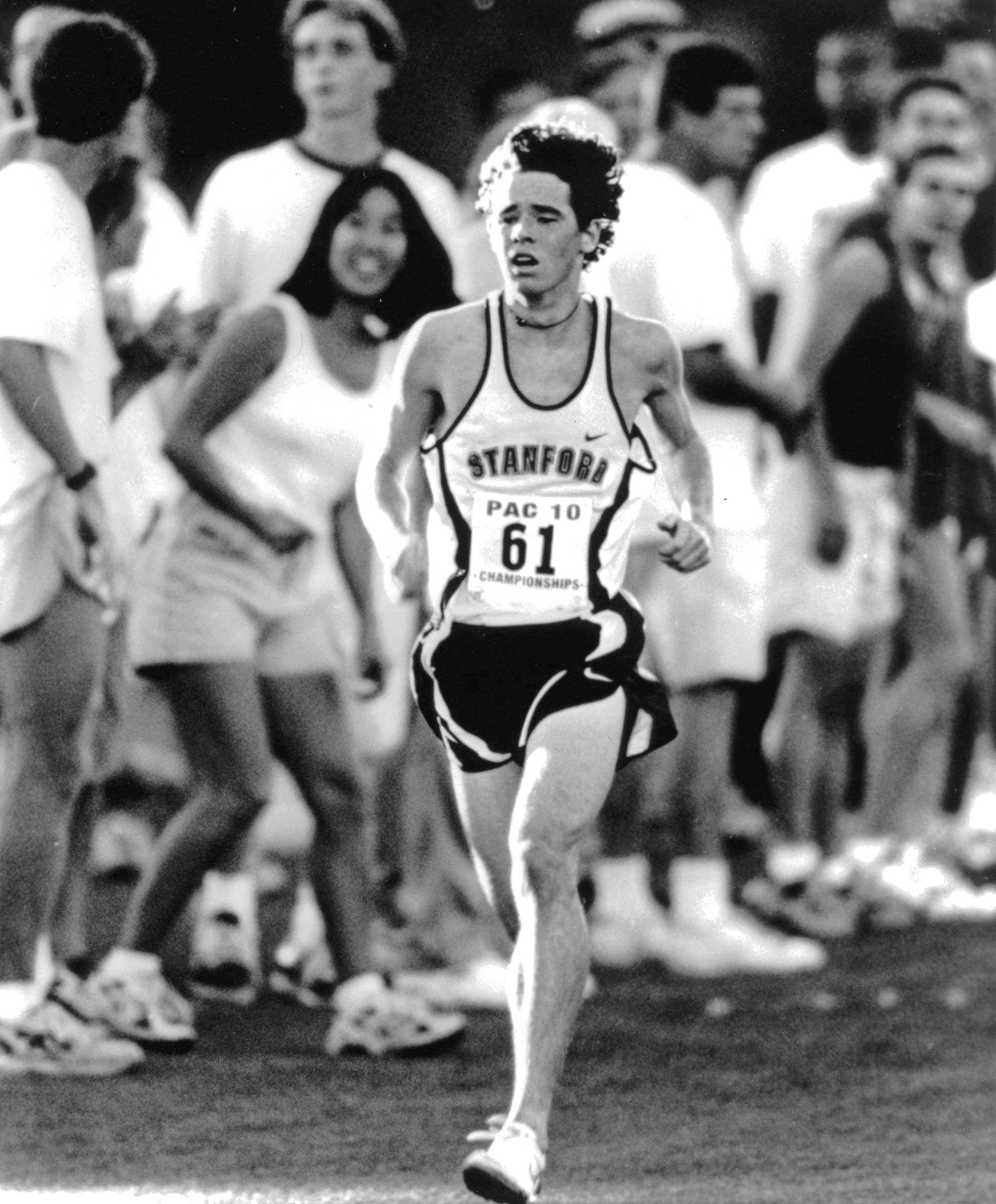
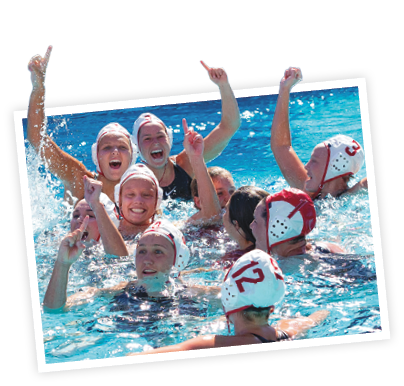
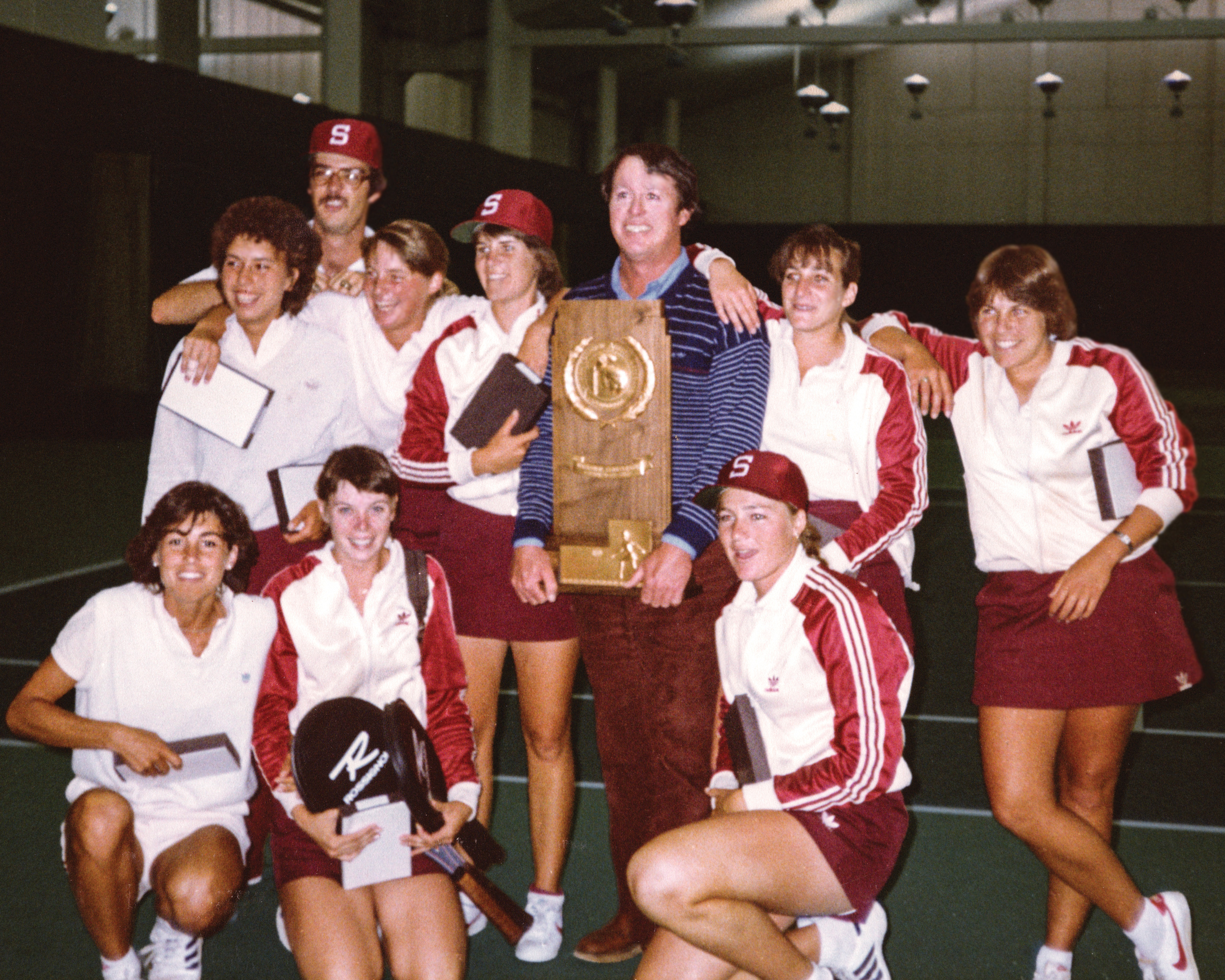 TOTALLY TUBULAR: From top left, Brennan, center, and the 1981–82 women’s tennis team; men’s track and field middle distance runner and 2004 Olympian Jonathon Riley, ’01; and the 2018–19 women’s water polo team, which outscored USC 9–8. (Photo: Stanford Athletics)
When the streak began in 1976, the NCAA did not yet encompass women’s sports, which were only just emerging from generations of nationwide neglect characterized by a dearth of scholarships, scant recruitment, and little coaching. Lele Forood, ’78, who won 10 titles as head coach of Stanford women’s tennis from 2001 to 2024, says that when she arrived as a student in 1974, her team was more like a glorified PE class. “We played a schedule of eight matches; we were not a varsity team,” she says. But the school’s embrace of Title IX, the 1972 federal law banning sex discrimination, would lead to rapid change. In 1978, women’s tennis would go 21–2 en route to Stanford’s first national title in women’s sports, then under the auspices of the Association for Intercollegiate Athletics for Women. Swimming and diving did the same in 1980. Momentum was building. In the 1981–82 school year, the dawn of women’s sports under the NCAA, tennis again prevailed to secure Stanford’s first NCAA women’s title. Swimming and diving again followed, in 1982–83. Even though its first two national titles are excluded on a technicality, Stanford women’s sports now account for 68 NCAA titles, more than half of the 127 championships racked up during the streak.
If there’s a human embodiment of the streak’s endurance, John Tanner, ’82, may well be it. When Lambert was coaching the men’s water polo team to that first championship season, Tanner was a junior at nearby Menlo-Atherton High School watching the Card’s home games. After he enrolled at Stanford, he won three NCAA water polo championships, scoring 27 goals in the undefeated 1981 season. And as coach of the women’s water polo team since 1998, he has led the sport’s winningest collegiate program to 10 NCAA championships. A 16-year-old when the streak started, Tanner is now Stanford’s most senior coach. Like VanDerveer, he knows serendipity is always an essential ingredient. “So many things have to come together, and you have to be fortunate too,” he says. Sports on the Farm aren’t just feeding off one another, he says, they’re taking inspiration from the broader excellence at Stanford. “When you walk across campus, the thing that is amazing about this place is you just feel this energy, this electric current that is just running slightly above your head, and you feel that energy all the time,” he says. “It tends to elevate everyone. You raise your game to meet a standard that you feel comprehensively.”
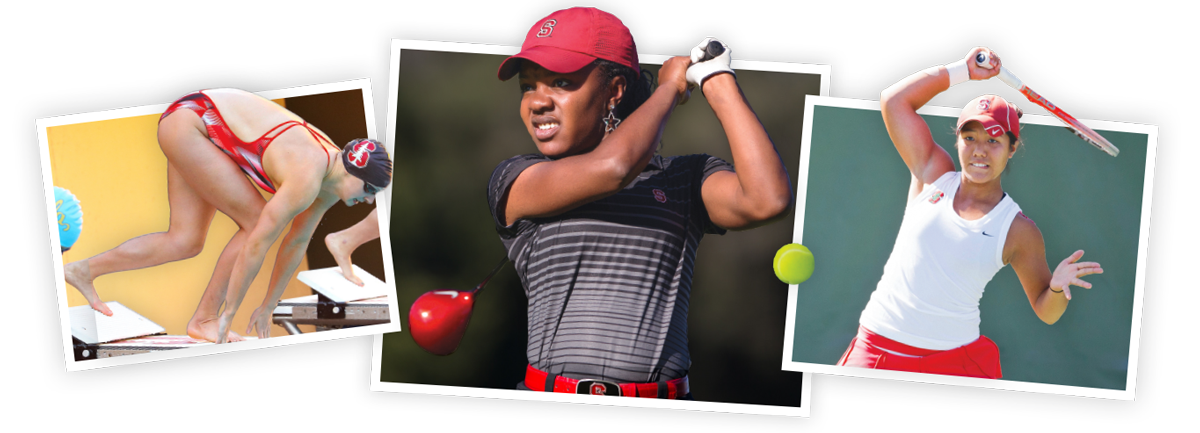 HIGH PERFORMERS: Ledecky, a 14-time Olympic medalist and the 2025 Stanford Commencement speaker, and streak icons Stackhouse and Ahn. (Photos, from left: (All ISI Photos) Hector Garcia-Molina; Casey Valentine; David Elkinson)
So how long will the streak persist? College sports have arguably changed more in the past five years than they did in the prior 50, with new rules about how athletes can be compensated and how frequently and easily they can transfer. It’s a new world entirely from 1976 and yet, so far, the Cardinal’s still in the game. John Donahoe, MBA ’86, who just completed his first academic year as Stanford’s athletic director, says the pieces are in place to keep going. “The combination of Olympic-caliber student-athletes and world-class coaches has us uniquely positioned to contend for national championships on an annual basis.” Inevitably, the streak’s duration will involve luck. Not that coaches like Glielmi or his gymnasts count on that. Less than 48 hours after winning their latest title, most of his team was back in the gym for optional practice—learning new skills, getting ready for national camps, or just enjoying the camaraderie.
“They all wanted to be back in,” he says. “If the athletes are willing to do it and they’re willing to put in the time, then I’m going to match it.”That’s how something so fragile becomes so strong.
|
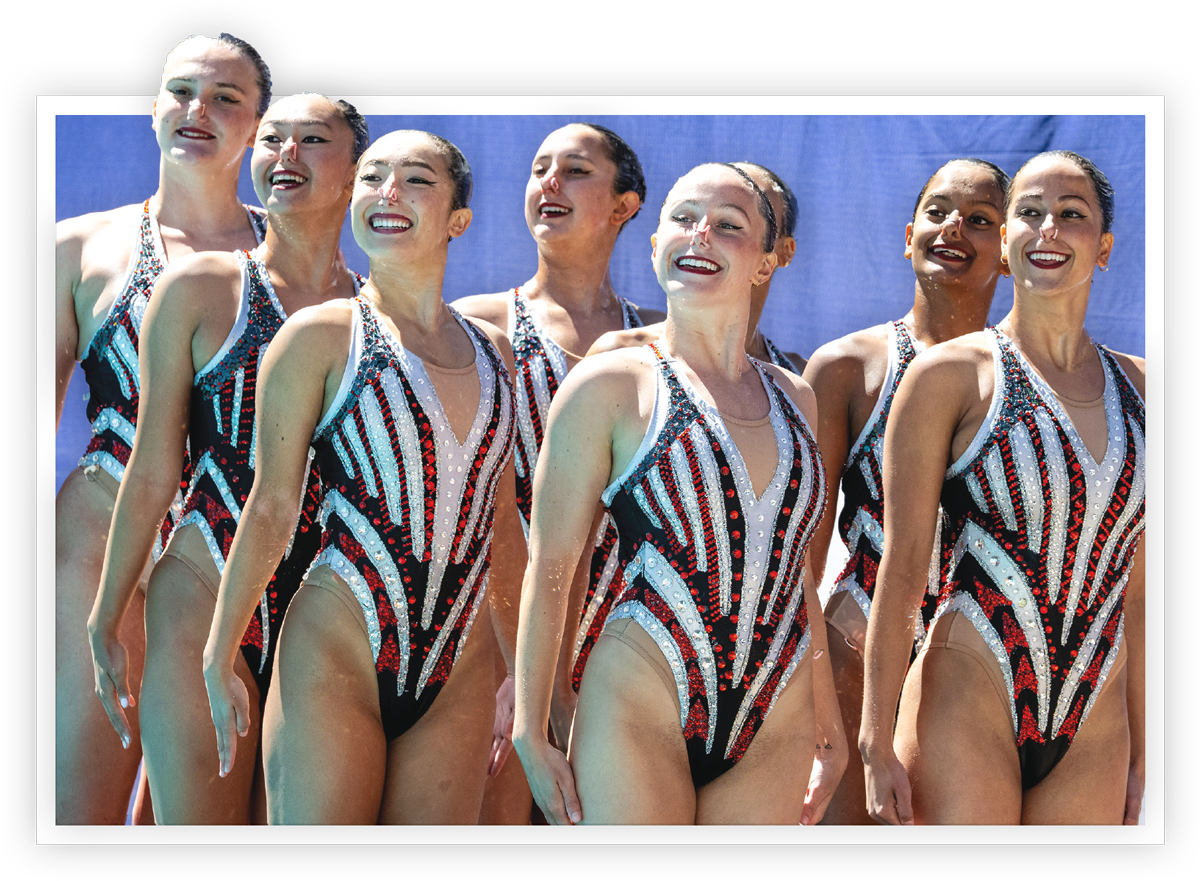
Beyond the NCAAStanford has an all-time total of 178 national championships: 139 in NCAA competition and 39 in other collegiate championships. In 2025–26 alone, sailing won its third straight Inter-Collegiate Sailing Association women’s team race and fourth straight women’s fleet race titles, and artistic swimming (above) tallied its second consecutive USA Artistic Swimming collegiate national championship.
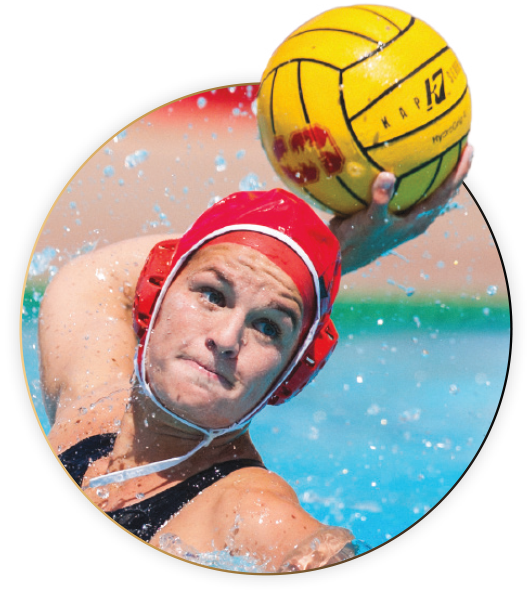
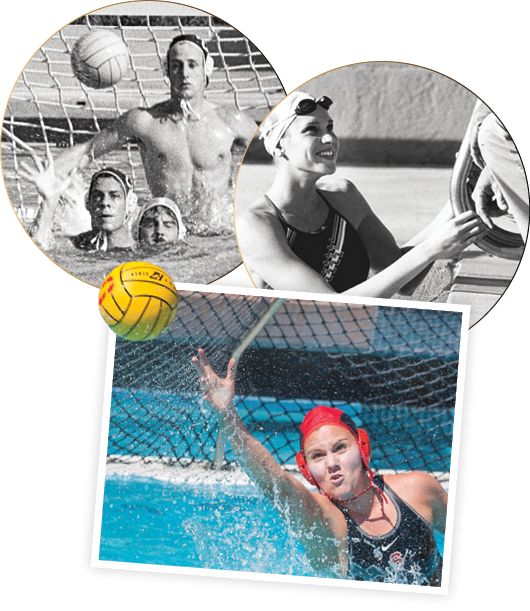
Quite the Talent PoolChris Dorst, ’77, MBA ’82 (top), played on the men’s water polo team that started the streak. His wife, Marybeth Linzmeier Dorst, ’85 (middle), was a swimmer on the women’s team for its first NCAA win, in 1982–83. The couple’s youngest daughter, Emily, ’15 (bottom), won two NCAA championships with Stanford women’s water polo, in 2013–14 and 2014–15.
On Second ThoughtIn May of 1999, women’s tennis saved the streak, prevailing 5–2 over Florida. That academic year, seven Stanford teams—more than in any other year—were NCAA runners-up in their championships: women’s swimming and diving, and men’s cross country, soccer, swimming and diving, indoor track and field, outdoor track and field, and water polo. Consequently, 1998–99 is the most successful year that almost snapped the streak.
When 70% Is an A+Of the 25 women’s water polo title matches held since the sport was brought into the NCAA in 2000–01, the Cardinal has appeared in 18—a higher proportion than any other Stanford team. (Women’s tennis follows, appearing in 27 of 44 final matches since 1981–82.) |
What's your favorite memory related to the streak?
Sam Scott is a senior writer at Stanford. Email him as sscott3@stanford.edu.
Top images: from top, left to right, Bill Dally/ISI Photos; Stanford Athletics; John Todd/ISI Photos; Rod Searcey/ISI Photos; ISI Photos; Michael Hickey/Stanford Athletics; Stanford Athletics; Rod Searcey/ISI Photos; ISI Photos; Al Chang/ISI Photos; Rod Searcey/ISI Photos; Bob Drebin/ISI Photos; Stanford Athletics (2); Rod Searcey/ISI Photos (2); David Gonzales/ISI Photos; ISI Photos; Scott Gould/ISI Photos; Mike Rasay/ISI Photos; Casey Valentine/ISI Photos; Al Chang/Stanford Athletics