
The next Stanford Alumni Association leader.
Longtime Stanford volunteer leader Michelle Landrey Cline, ’93, MBA ’98, has been named the next president of the Stanford Alumni Association (SAA) and the university’s vice president for alumni affairs. She will succeed Howard Wolf, ’80, who will retire August 31 after 25 years in the post.
Landrey Cline “understands the organization from multiple vantage points and brings an appreciation for both its history and its future,” said Stanford Board of Trustees chair Lily Sarafan, ’03, MS ’03, who co-chaired the search with Vice President for University Affairs Megan Pierson, ’82. The role is critical, Sarafan said, in connecting alumni to Stanford and to one another. SAA publishes Stanford magazine, hosts large-scale events such as Reunion Homecoming and the multi-city tour Open Minds, and facilitates alumni connections within their communities. Its leader, who reports to the university president, is a key liaison between alumni and university leadership. Landrey Cline brings “a deep commitment to the university and unparalleled energy to the alumni role,” said university president Jon Levin, ’94. “I look forward to her building relationships across campus and across the alumni community.”
Landrey Cline was previously a senior executive at Business Talent Group, a marketplace for senior independent business contractors to connect with companies and organizations for project-based work. She was co-director of regional outreach and director of special projects at SAA in the early 2000s and has been a volunteer leader at Stanford for 30 years, including as chair of the Alumni Committee on Trustee Nominations and of the GSB Alumni Association Board. She said leading SAA has been a hope of hers since she was president of the Stanford Student Alumni Network as an undergrad. “To have the opportunity now to do it, building upon Howard’s amazing work and under Jon and [provost] Jenny [Martinez]’s inspiring leadership,” she said, “is truly a gift.”
AI can make biased hiring recommendations.
AI hiring tools aren’t neutral. When Stanford researchers looked at overall hiring data representing millions of job applications, racial disparities didn’t stand out. But when they broke things down job-by-job, the gaps became clear. For some jobs, AI screening tools recommended Black and Asian applicants at significantly lower rates than white applicants. “Some companies think that AI will help them be more fair in their decision-making,” said Rishi Bommasani, PhD ’25, a senior research scholar at Stanford’s Institute for Human-Centered Artificial Intelligence. “That’s not necessarily what our results suggest.”
Since many employers rely on the same third-party AI vendors for hiring, a single system’s judgment can affect a job seeker across multiple companies—resulting in what researchers call “systemic rejection.” The reason for the bias in the systems isn’t clear. But some 90 percent of employers now use AI to some extent in hiring, and researchers are calling for transparency and auditing of AI tools.
Of course, that all assumes there are positions to apply to. As big tech and start-ups have slowed their hiring of people with one year or less of experience, more recent grads are blazing their own paths. According to a survey of graduates from 20 U.S. universities, a growing number of computer science and other engineering graduates list their employment role as “founder”—opting for the start-up life over vying for a spot in a shrinking job pool. Stanford’s 2025 graduates top the list, with 17 percent calling themselves founders. That’s up from about 8 percent in 2022.
A step toward a universal vaccine.
A team led by Bali Pulendran, professor of medicine and director of the Institute for Immunity, Transplantation, and Infection, has received a grant to advance work on a “universal vaccine” platform. Such a vaccine could protect against diverse respiratory pathogens, from viruses such as influenza and COVID to the bacteria that cause pneumonia to common allergens such as dust mites.
The idea is that it would work with the innate immune system—the part of our immune defenses that activates in the hours and days after we’re exposed to pathogens. Nearly all existing vaccines target the adaptive immune system, which kicks in later—and leave us more vulnerable to pathogen mutations. In the case of pollen problems, activating the innate immune system dampens the body’s allergic responses, resulting in less inflammation and mucus production. “If successful, this approach could redefine what a vaccine is—shifting the field from targeting individual pathogens to building broad, durable resilience that transcends pathogen boundaries,” Pulendran said.
Build your best burger.
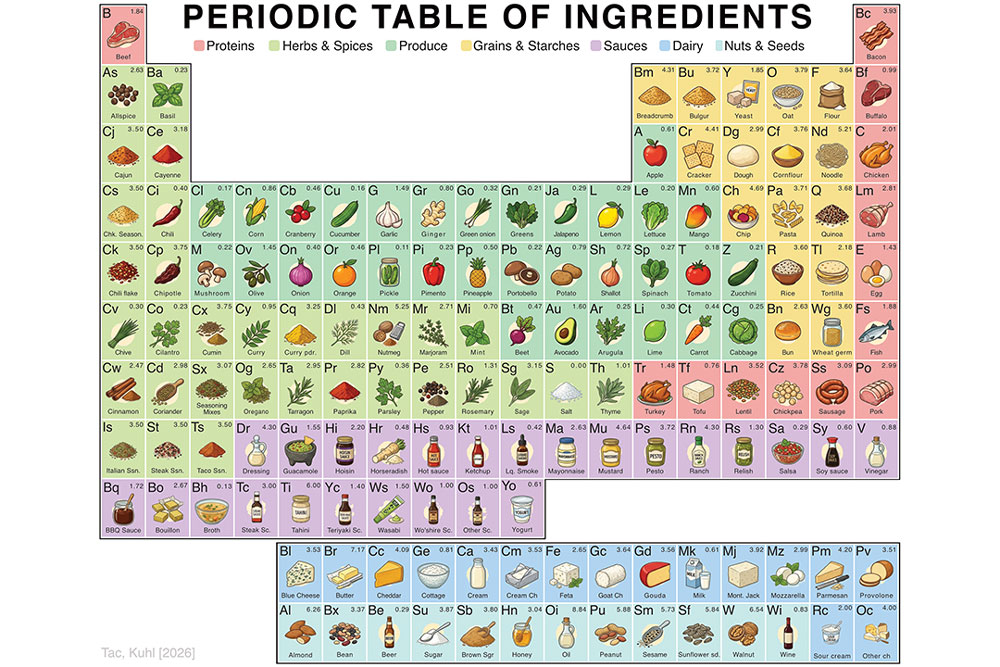 Photo: Living Matter Lab
Ellen Kuhl, a professor of mechanical engineering and director of Stanford Bio-X, gave her BurgerAI more than 2,000 burger recipes (made from combos of 146 unique ingredients) and asked it to generate new burger recipes optimized for sustainability priorities and nutritional needs. The recommended patties did well in taste tests, and Kuhl says the results are an example of AI moving toward inventing something new. We know, we know, you want to try it yourself: Go ask AI to build your burger.
But wait, there’s more…
Last week, all eyes were on Wimbledon wild card Arthur Fery, ’24, who entered the tournament ranked 114th in the world—and made an unlikely run all the way to the semis. He’s the first Stanford men’s tennis player to reach that stage since 1992, when three-time Wimbledon champ John McEnroe, ’81, reached the semis for the eighth time.
The School of Medicine breaks down everything you need to know about GLP-1s.
Climate scientist Daniel Swain, PhD ’16, explains why very warm Pacific seas are expected to drive California coast sea levels higher this fall and winter.
Now that you’re done watching TikToks of World Cup visitors guzzling ranch dressing, check out summer reads from the Stanford Doerr School of Sustainability, Stanford Law School , and Stanford magazine.
Law professor Fred Smith, JD ’07, an expert on the federal courts, examines the Supreme Court’s decision to uphold birthright citizenship with his colleague Pam Karlan, who co-hosts the Stanford Legal podcast.
You probably don’t need to start fiber-maxxing, but most people could stand to change a few small habits for, er, a smoother day.
A moment of zen, Claw style. (Sound on.)
Note: The Loop sometimes links to articles outside of Stanford that may require a subscription to view.