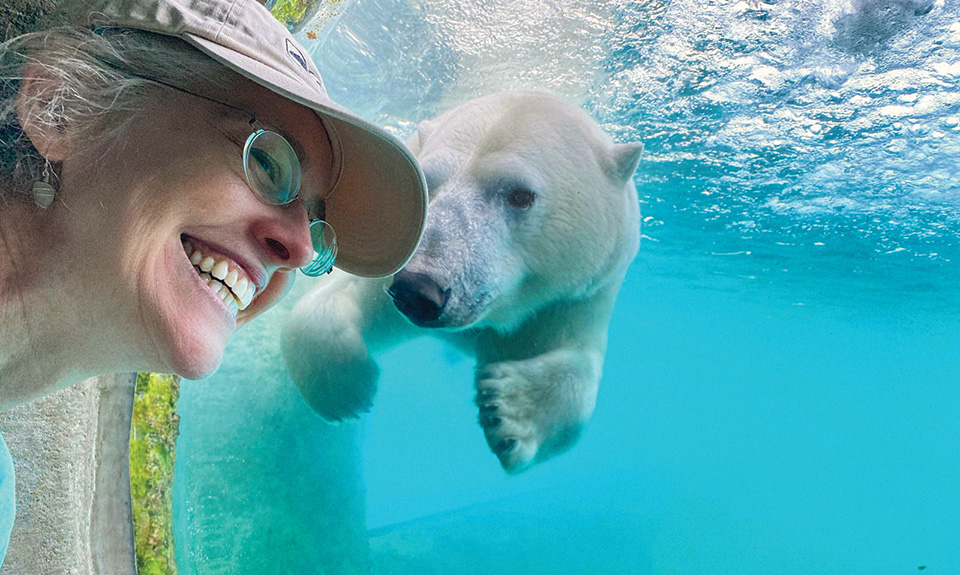
Kate Rodriguez-Clark is an expert on the birds and the bees. As a population ecologist and biologist at the Smithsonian National Zoological Park and Conservation Biology Institute, she acts as a matchmaker for animals in North America’s Association of Zoos and Aquariums (AZA), which includes 240 institutions. To be sure, it’s an exotic job. “There may be about 30 of us worldwide,” says Rodriguez-Clark, ’92. “We all know each other.”
Unlike their wild brethren, zoo animals can’t just head out on the prowl. Many need a scientific Cupid to keep family trees biologically healthy. That’s where Rodriguez-Clark comes in. She and her colleagues ensure genetic diversity among zoo births and a right-sized population based on zoo capacity. That often includes pairing animals from different locations. “There aren’t many industries that get together and cooperate the way the zoo industry has,” she says.
Her current work involves 32 types of marine fish and eight other species, which include mammals such as the golden lion tamarin, birds such as the red siskin, and insects such as the Peruvian firestick. When she’s working to match individual animals, she can be eyeball deep in spreadsheets for days or even weeks. Filling her screen are models that project species population growth as well as future gene diversity. She combs through database records showing the age, sex, parent-age, and past pregnancies of potential mates. “It’s a little bit like a giant sudoku puzzle,” she says. Once she has completed her analyses, she meets with studbook keepers and species coordinators to create a master plan that can last for up to three years.
|
Golden Lion Tamarin |
|
STATUS: endangered (but on the upswing, thanks to conservationists) DATING RADIUS: open to long-distance, but travel is stressful, so nearby mates are sometimes preferable, even if they’re slightly inferior genetic matches OPEN TO INTERNATIONAL LOVE? hard pass—it can take two years to secure the permits needed for an international transfer, so it’s only done in special circumstances LOOKING FOR: someone similar in age, because such pairs have a higher chance of healthy babies FLEX: puts his dad bod to good use as the go-to caregiver for his little ones |
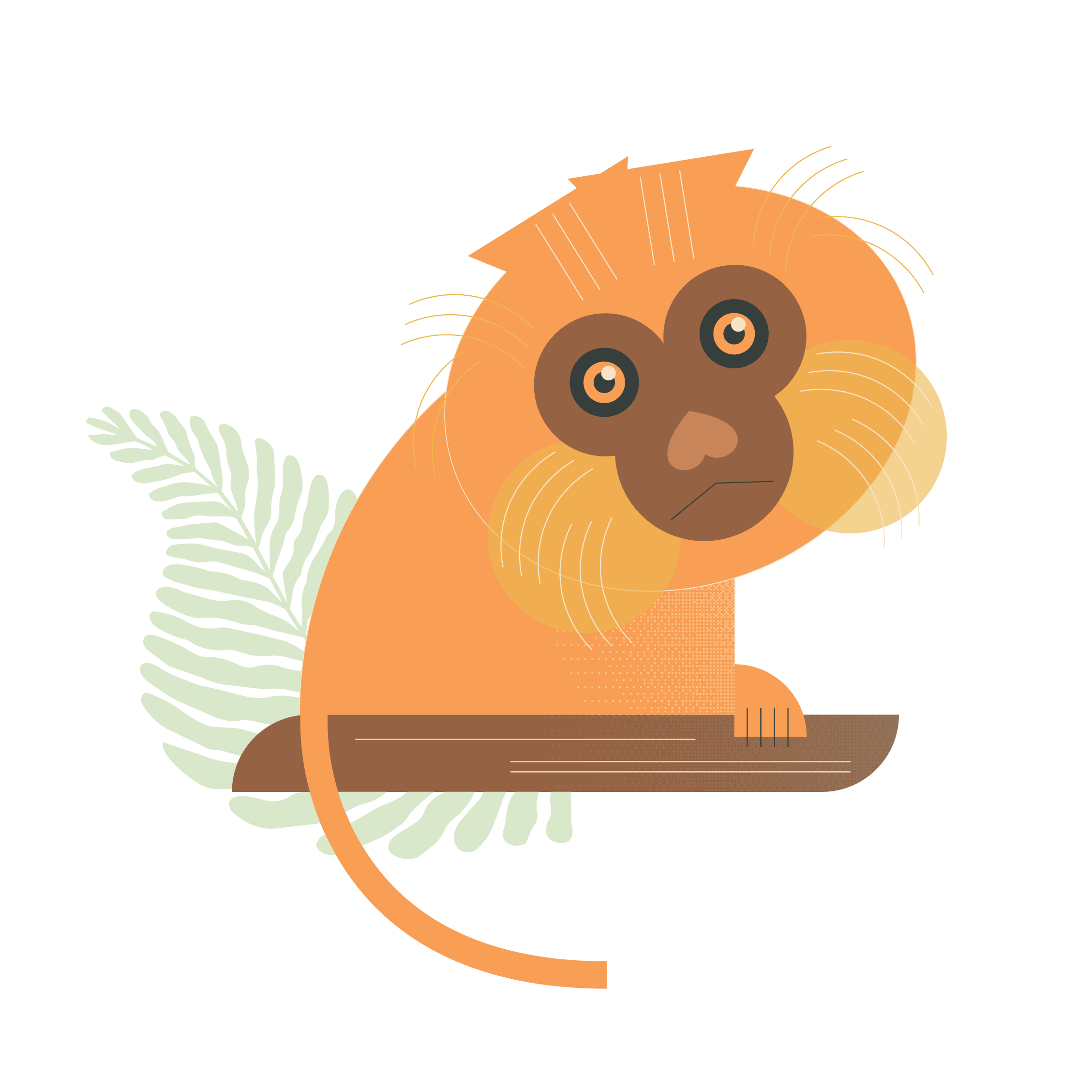
Kenton Kerns, a small mammal curator at the Smithsonian, works with Rodriguez-Clark to manage North America’s golden lion tamarin monkeys. Rodriguez-Clark comes to their meetings with a list of the best genetic matches to keep the small populations as diverse—and thus resilient—as possible, while Kerns brings intel like which animals are currently ill, or which recently moved to a new zoo and need time to adjust before relocating again to meet their soulmate. Together, they create the monkey breeding and transfer plan.
Breeding success rates differ for every species, and matches are never guaranteed—some animals simply don’t like each other, and others mate without producing offspring. But the effort is well worth it to Rodriguez-Clark, because each successful pairing serves a larger purpose. The zoo animals she works with provide scientists with otherwise inaccessible insights that benefit both captive and wild populations. And some are bred specifically to help grow dwindling wild populations. Today, approximately half of all wild golden lion tamarins can be genetically linked to ancestors who were released from zoos to help prevent extinction.
“When you see a baby animal at an AZA zoo,” says Rodriguez-Clark, “there’s probably been hundreds and hundreds of hours that have gone into thinking about how to make that baby happen, and how to be sure that that baby is going to have the best chance possible.”
|
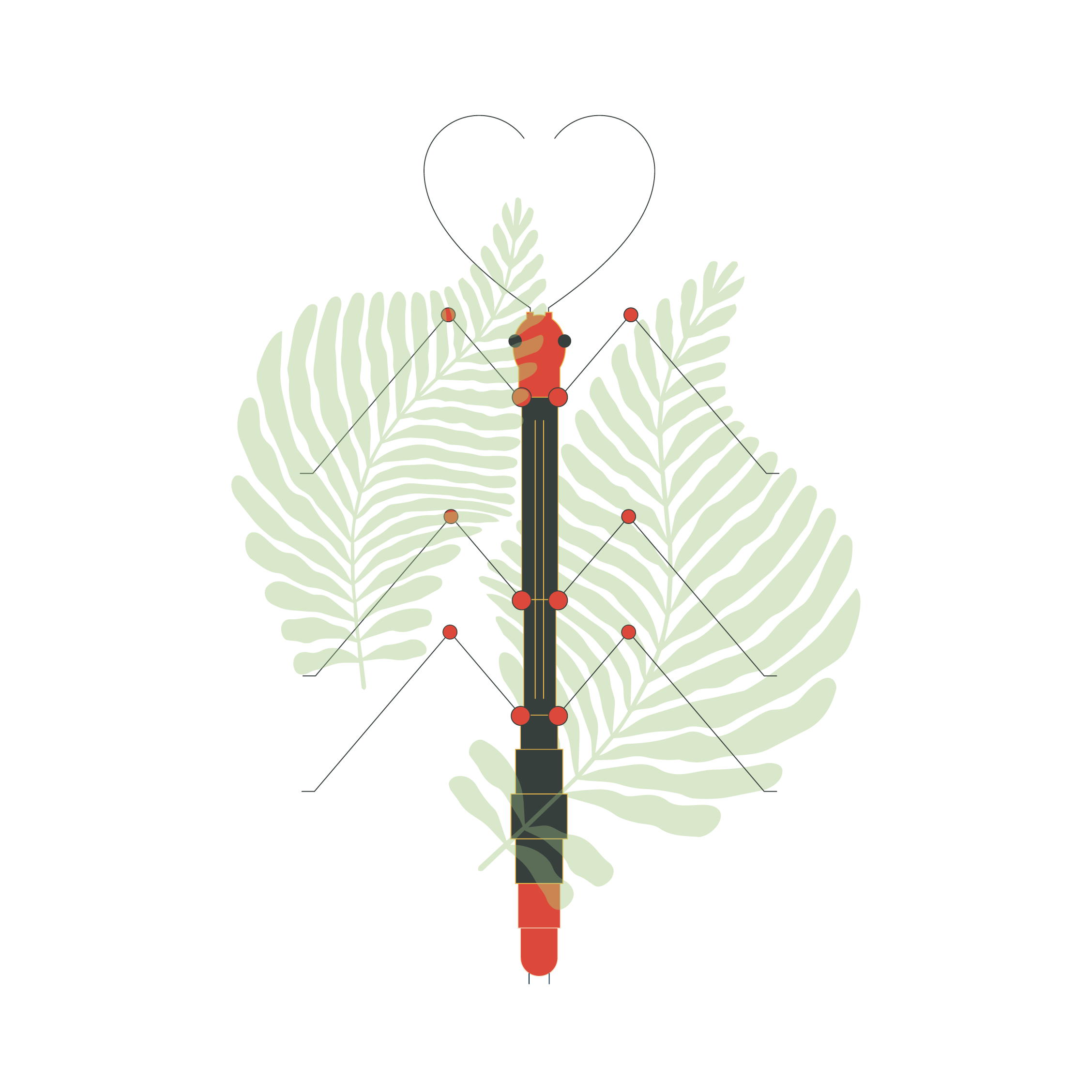
Peruvian Firestick |
|
STATUS: unknown (but it wants to stick around) RED FLAGS: has a big family—the more relatives an animal has, the less genetic diversity her offspring will offer the species SLIM-DOWN RITUAL: a diet made exclusively of ferns FLEX: her fashion sense—unlike most stick insects, she purposefully stands out with bold black and red coloring (in fact, she’s poisonous) |
|
Red Siskin |
|
STATUS: endangered (because a good egg is hard to find) AGE PREFERENCE: a young, healthy chick—older animals or those that are sick are more likely to die before being brought together with their match GIVES HIM THE ICK: flying, ironically, because it’s becoming harder to find airlines that will carry wild animals FLEX: such a handsome catch that his picture was on Venezuela’s largest banknote for many years |

Kali Shiloh is a staff writer at Stanford. Email her at kshiloh@stanford.edu.