History’s Lessons
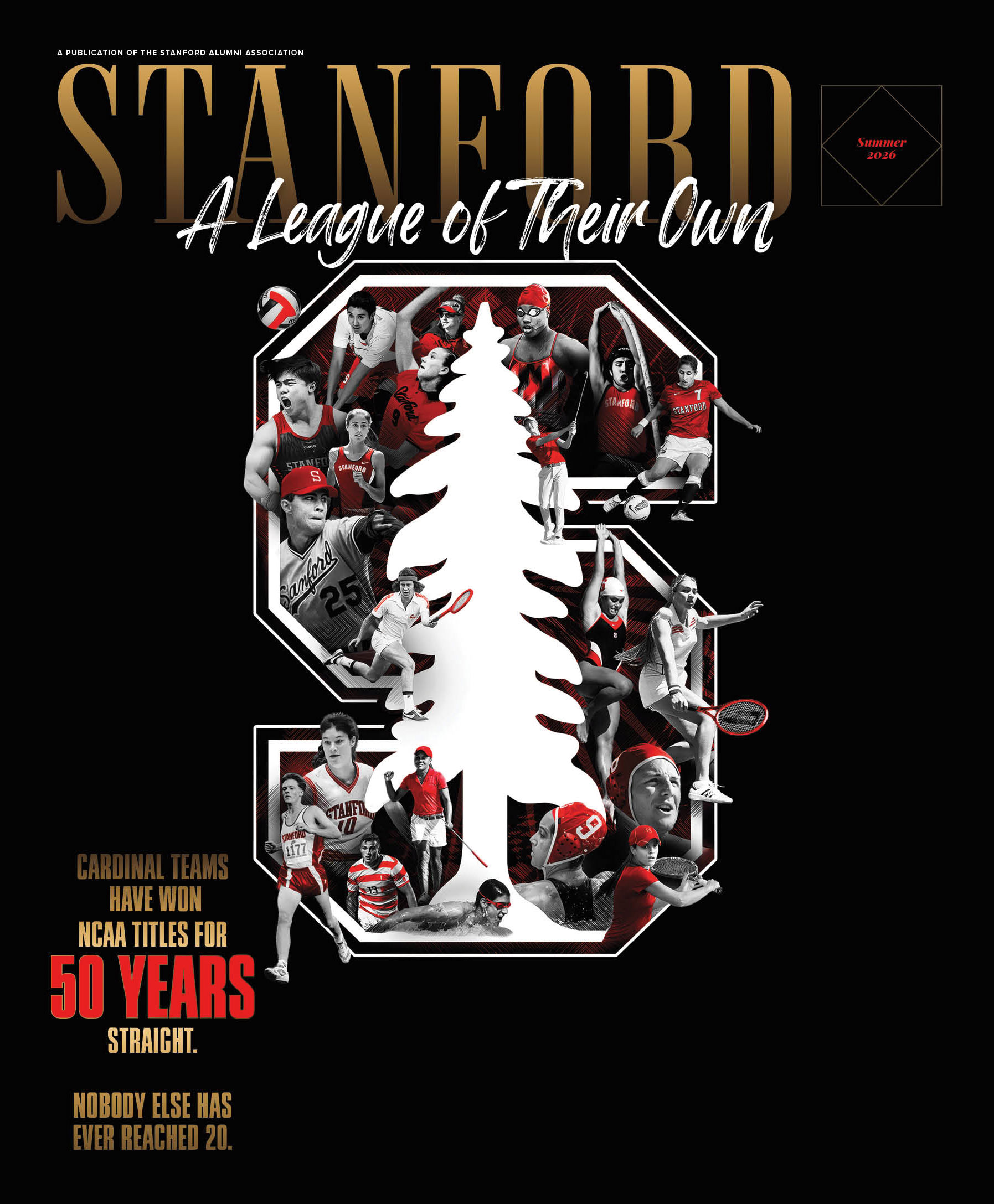
The Summer issue included stories on Stanford’s 50-year streak of NCAA team titles and the incarceration of Japanese American students during World War II.
There is an interesting tie between these stories. Tara VanDerveer, coach for the three women’s basketball titles, was the first Setsuko Ishiyama Director of Women’s Basketball. Like some of the Stanford students in your story, Ms. Ishiyama was sent to the assembly center at Santa Anita racetrack, then to the Manzanar internment camp. She was allowed to transfer to the Heart Mountain camp in Wyoming for her wedding. Though I never had the pleasure of meeting Ms. Ishiyama, I know she was revered by Stanford women’s basketball fans and those who worked to preserve Heart Mountain, two groups close to my heart that she helped immensely.
Steve Easton, JD ’83
Fort Collins, Colorado
I first learned of this painful World War II history over 40 years ago at Stanford, where friends and fellow students shared how family members were incarcerated solely due to their Japanese ethnicity, while those of German or Italian ancestry were not. Racial justice has advanced, but recent years have brought setbacks. As a Chinese American physician and former researcher at the National Institutes of Health and the Centers for Disease Control and Prevention, I closely observed the Department of Justice’s China Initiative, which targeted academics of Chinese descent without any evidence of espionage. Instead of improving national security, as was also the goal of the internment of Japanese Americans, this program has harmed careers, fostered mistrust, and reduced academic collaboration. I appreciate that many Stanford leaders were among the first to question the initiative publicly, balancing security concerns with fairness.
Jack Herrera’s article reminds us that history’s lessons are critically important. By remembering and applying them to present-day challenges, we can strive for a more equitable and productive future.
Dale Hu, ’83
Bethesda, Maryland
Calling Bull
A Summer story chronicled the path of Ryan Jae, ’19, to bull rider and rodeo photographer.
While I enjoyed going to a rodeo as a kid in Houston in the 1960s, I was a bit surprised to see an article these days lauding an alumnus for his frequent participation in a “sport” now widely recognized as a form of animal cruelty. In fact, the gruesome activity only survives because of special exemption from the federal Animal Welfare Act. What next, Cardinal pride at a bullfight or greyhound race?
David DeCrane, MBA ’86
Santa Monica, California
Air Grievances
The Summer issue featured highlights and accomplishments from Class Notes, including the recent travels of several alumni.
I found myself reading the “wanderlust” item. I do creative research around aviation, and I’m fascinated by the ways we choose to use airplanes and how these choices are connected to so many other systems. Of course, air travel causes massive amounts of pollution, and its economic structure tends to reinforce inequality. But I find that narratives that place guilt on consumers for choosing to fly are not very effective. They may even be harmful since they can distract us from the fact that the people with power to regulate and reimagine our infrastructures and consumption are failing to do so.
With that in mind, I don’t intend to tell anyone how to make their own choices about flying—I myself live in Europe and fly to the United States to visit my family once or twice a year. But in a summer when much of the world is experiencing record heat and wildfires, it felt jarring to see Stanford celebrate leisure flying and the accumulation of millions of airline miles. The world in which we could use these measures as a shorthand for appreciating the benefits of travel no longer exists—if it ever did. As long as we’re flying with fossil fuels, those benefits and the harms of pollution—both undeniable—will be intertwined.
Maggie Oran, ’09
Berlin, Germany
Corrections
A Summer feature story about Stanford’s 50-year NCAA title streak listed the women’s golf team as the 2025-26 runner-up, rather than the winner.
The Summer obituary for Graduate School of Business professor Charles Bonini should have indicated that his son Charles predeceased him and should not have indicated that his daughter Cissie was an alumna. In his obituary, Gail Ray Patterson, ’63, should have been identified as male, rather than female.