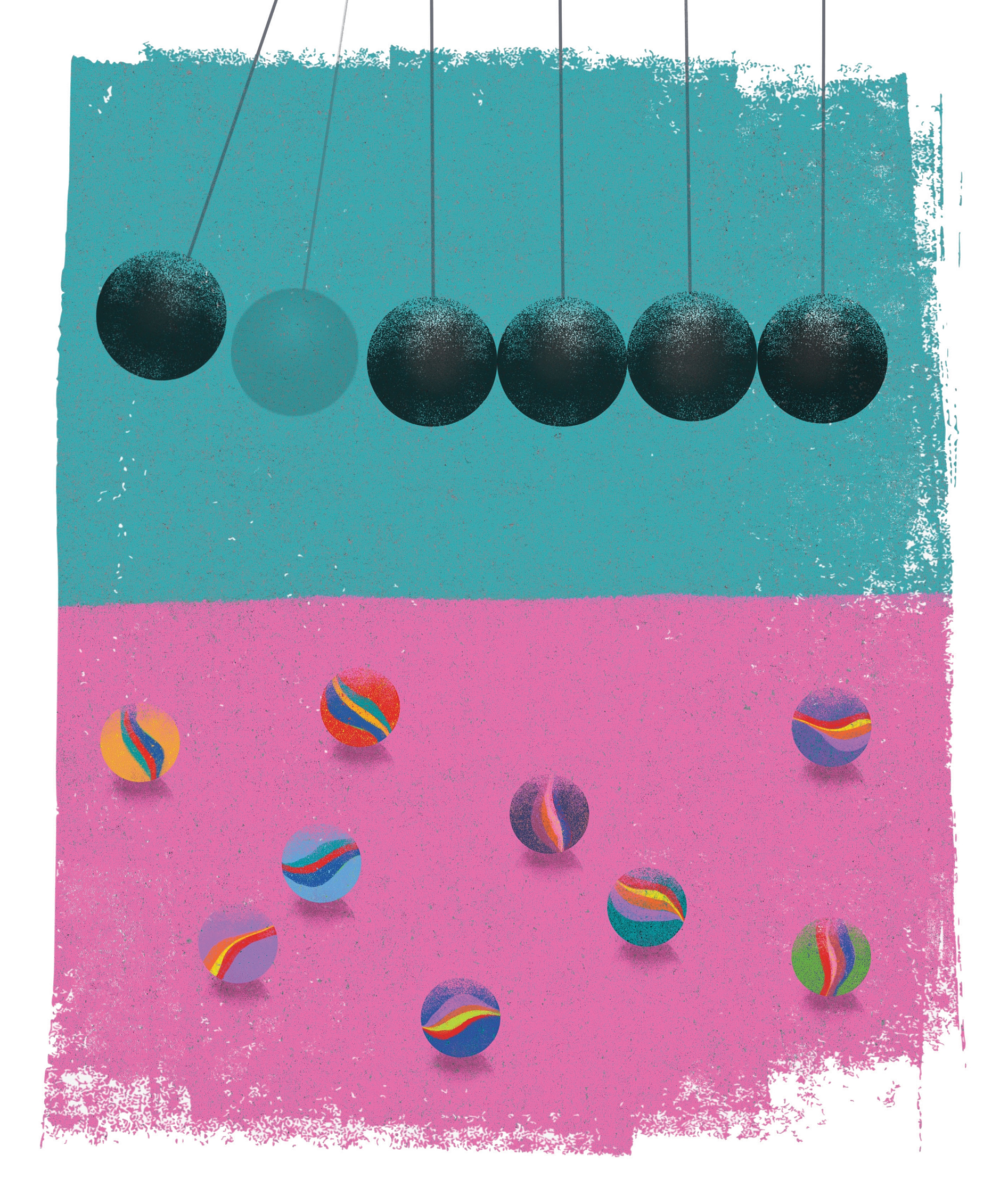
Are you more like Ernie or Bert from Sesame Street? Do you tend to be freewheeling, a bit messy? Or are you more of a neatnik, often cautious, always tidily dressed (turtleneck optional)?
“I’m definitely an Ernie,” says Michele Gelfand, a professor at the Graduate School of Business who studies cross-cultural management and organizational behavior. Gelfand likes to use those lovable Muppets to help explain her pioneering work with the “tight-loose” theory in social psychology. Her research has popularized that 1968 theory, which classifies social systems by the strength of their adherence to norms—those unwritten rules of everyday behavior, like waiting in an orderly queue or using a handshake to say hello.
“I’ve analyzed how similar clocks were in city streets around the world,” Gelfand says. “In tight cultures, clocks are almost identical, but in loose cultures they say something very different, and you are not sure what time it is.”
Gelfand has devoted her career to advancing the scientific study of cultural differences, from countries and states down to businesses and families. Early in her career, “much of the field was focused on cultural values to the exclusion of other aspects of culture, like norms,” she says. “The cultural toolbox was quite limited.” Values are the principles a group prizes, such as freedom or security. Norms are the everyday dos and don’ts. Gelfand surmised that a bigger toolbox could improve understanding and communication, with implications for diplomacy, dealmaking, and even personal relationships.
 Photos: Courtesy Michele Gelfand
In the decades since, Gelfand has traveled the globe in her quest to understand how social norms evolve, shape behavior, and influence levels of conflict and cooperation. She sees a fractal pattern, one that repeats at different scales, in the tightness or looseness of social groups: Some states’ laws and norms are stricter, others more permissive. Hospital culture is highly coordinated; tech start-ups are more relaxed. Parents can helicopter or be laissez-faire. Finding a Goldilocks zone between poles, or at least understanding why different norms develop, can foster compromise and collaboration.
“Culture is so invisible and yet it’s affecting us all—all the time,” Gelfand says. “I always find that to be such an incredible puzzle. It affects everything from our nations to our neurons, from our politics to our parenting.”
Curiouser and curiouser
Born and raised in New York, Gelfand first grew fascinated with cultural norms as a Colgate University student during a semester abroad in London. “I realized how little I understood about the world,” she writes in her 2018 book, Rule Makers, Rule Breakers: How Tight and Loose Cultures Wire Our World. “Overwhelmed by the strange accents, the cars driving on the left side of the road, the pub scene, and the British jokes I didn’t quite understand, I experienced a quintessential case of culture shock.” Her solution was to travel more. She wanted to figure out why such differences exist and how to study them.
After graduating with a degree in psychology, she earned a PhD in social/organizational psychology at the University of Illinois Urbana-Champaign under Harry Triandis, a co-founder of cross-cultural psychology. “I was blown away by the fact that people in cross-cultural psychology were studying culture through scientific mechanisms,” she says. “Harry was also interested in the ecological and historical reasons why certain values and attitudes and norms might evolve. That’s what I wanted to do.”
As a graduate student, Gelfand read a little-known 1968 study by anthropologist Pertti Pelto that would set the course for her career. Pelto had classified traditional societies as “tight” or “loose” based on how strictly they adhered to social norms. After she joined the psychology faculty at the University of Maryland, Gelfand set out to perform a systematic analysis of tight-loose in modern societies. In the early 2000s, she traveled the world with a team of researchers, building datasets that placed nations on a tight-loose continuum. She investigated questions like: Why are people in Singapore fined for selling chewing gum or not flushing a public toilet, while in New Zealand people walk barefoot into banks?
“She was a force of nature,” says Paul Hanges, a University of Maryland professor of psychology who worked with Gelfand for more than two decades. “She had this ability to identify critical topics years before other academics.”
In 2011, she published a landmark study in Science, “Differences Between Tight and Loose Cultures: A 33-Nation Study.” Her team surveyed nearly 7,000 participants in 33 countries across five continents, using a six-item questionnaire to measure the strength of social norms and tolerance for deviance. “The study showed that tight-loose is a continuum,” she says. “Some groups, like Japan and Singapore, Austria and Germany, veer tight. Other groups, like New Zealand or Brazil, Greece or the Netherlands, veer loose.” In a 2018 TEDx talk, she noted that tight cultures tend to have less alcoholism, debt, and obesity, while loose cultures, including that of the United States, are less orderly but corner the market on openness and creativity.
The study also linked tightness to threat. Tight societies tend to have faced high population density, scarce resources, disease, food deprivation, drought, or invasion, Gelfand says. Cultures under high threat crave stricter rules to survive, and those rules can persist after the threat recedes. Japan, a relatively tight culture, has developed well-coordinated responses to frequent earthquakes, tsunamis, and typhoons, she says. Singapore—which has about 20,000 people per square mile to New Zealand’s 50—chose in 1992 to ban the sale of gum, as its discards fouled crowded public spaces.
Fractal findings
Gelfand’s 2011 study launched a new wave of research into the tight-loose theory, from psychology to anthropology to economics. “It was one of the most important papers published in our field in that decade,” says Arie Kruglanski, a professor of psychology at the University of Maryland, who notes that the study has been cited thousands of times. Gelfand, meanwhile, began testing the framework at smaller scales.
One avenue of inquiry was U.S. states. She and her team built an index that placed states on a continuum using variables such as access to alcohol and the legality of corporal punishment in schools. The resulting 2014 study, published in Proceedings of the National Academy of Sciences, found “wide variability in tightness-looseness across the 50 states.” For example, Mississippi and Alabama landed at the tight end of the continuum, whereas California, Oregon, and Washington were at the loose end. Looser states had higher rates of substance abuse; tighter states, more discrimination.
‘Culture is so invisible and yet it’s affecting us all—all the time. It affects everything from our nations to our neurons, from our politics to our parenting.’
“I kept testing to see whether this research could replicate in different settings and scientific fields,” Gelfand says. In another study, she and her colleagues paired up 90 Chinese college students, had them read an article, then evaluated their brain activity using hyperscanning EEG, which simultaneously records the activity from two or more people as they interact. Some pairs read about a threat to their own country, others about a threat to a far-off country, and a third group read an article with no threat.
“What I wanted to see was, when people feel threatened on their own soil, do they start coordinating faster with other people that they’re interacting with?” she says. The results, published in 2017 in Social Cognitive and Affective Neuroscience, showed that pairs who read about threats to their own country had greater interbrain synchrony, a marker of interpersonal coordination.
New frontiers
Gelfand’s research has ranged widely beyond tight-loose. Among the other topics she has studied are cross-cultural negotiation, sexual harassment in organizations, and bias in how managers judge employee misconduct.
Building on collaborations with scholars across the Middle East and Asia, Gelfand has worked to expand negotiation studies beyond Western cultural frameworks. One line of research examines “honor” cultures—those in which a person’s dignity is not inherent but rather must be earned and maintained—which she has shown crop up in the face of weak institutions and scarcity. She has developed new models for negotiating in honor cultures, including a method of incorporating apology, a key conflict de-escalation tool. Reframing honor as moral integrity rather than reputation, she and her colleagues found, restores positive views of apology. She has also collaborated with other scholars to develop an “honor dictionary,” a tool used to analyze written and spoken text and elucidate for researchers how honor cultures navigate negotiations, conflict resolution, and social reputation differently from their Western counterparts.
Hazel Markus, a Stanford professor of psychology and pioneer in the field of cultural psychology, says such awareness of cultural differences “can help bring better understanding between people everywhere. There isn’t one answer that fits all.”
In 2026, Gelfand and colleagues turned to social class. A study published online in the Journal of Personality and Social Psychology in July showed that people from lower social classes follow stricter cultural norms and are less tolerant of deviance, which the authors describe as a “functional adaptation to chronic socioeconomic threat.” This exposure over generations, they wrote, “may itself perpetuate class inequality.”
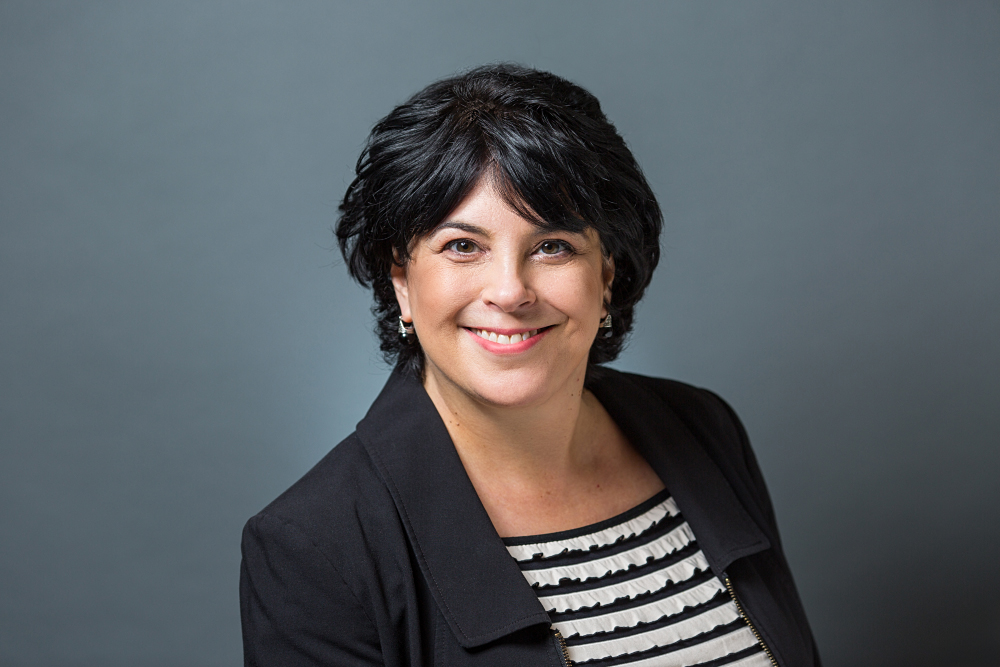 CULTURE CONTINUUM: Gelfand says tight cultures tend to have less alcoholism, debt, and obesity, while loose cultures are less orderly but corner the market on openness and creativity. (Photo: Jonah Koch)
In another study, published in the Proceedings of the National Academy of Sciences in July, Gelfand and colleagues found that people from lower social classes are less likely to negotiate their salaries and more likely to be punished if they do. The pattern, the authors write, “can compound economic disadvantage over time.” Gelfand says organizations could reduce class inequality by providing more transparency around pay, raises, and advancement.
Since joining the faculty in 2021, Gelfand has brought her findings into Stanford courses for executives, business school students, and undergraduates. She talks with her students about how and why cultures vary and the effects of that variation on leadership, conflict, negotiation, teamwork, and mergers. Her goal, she says, is to help leaders identify their own tight-loose mindsets, where those came from, and how to “flex” toward balance. Students also learn to spot when organizations have become too rigid or too lax, and how to right the ship. Overall, she says, it’s about being more “culturally intelligent.”
Gelfand has even used her research to help with negotiations in her own family—say, how to load the dishwasher. Her husband of 32 years, Todd Betke, neatly aligns the dishes, while she throws them in willy-nilly. “What I find is that people who have tighter mindsets, often they’re embedded in occupations that demand tightness,” she says. “Like my husband, Todd, is a lawyer. If he makes a mistake, it could be millions of dollars for a client. Or, say, if a physician makes a mistake, someone might die. There’s a consequence of error that makes people evolve to have a tight mindset. So, Todd has evolved to have a tighter mindset, and I’ve evolved to have more of a loose mindset because I’m an academic—my job is more about creativity.” (Research requires rigor too, she concedes, so ambidextrous may better describe her.)
Eventually the couple negotiated a compromise: Betke loads the dishwasher and Gelfand backs away slowly. (She is allowed to unload.) Both, she says, are satisfied.
Tracie White is a senior writer at Stanford. Email her at traciew@stanford.edu.