In the 1960s, anthropologists Renato and Michelle “Shelly” Zimbalist Rosaldo spent nearly three years in the mountains of northern Luzon, Philippines, studying the Bugkalot people, then known by outsiders as Ilongot. At the time, the Ilongot were notorious for headhunting, which involved killing people and severing their heads. But it wasn’t until 1981, 14 years after Renato Rosaldo first heard them describe headhunting as a way to cope with negative emotions, that he finally understood the practice.
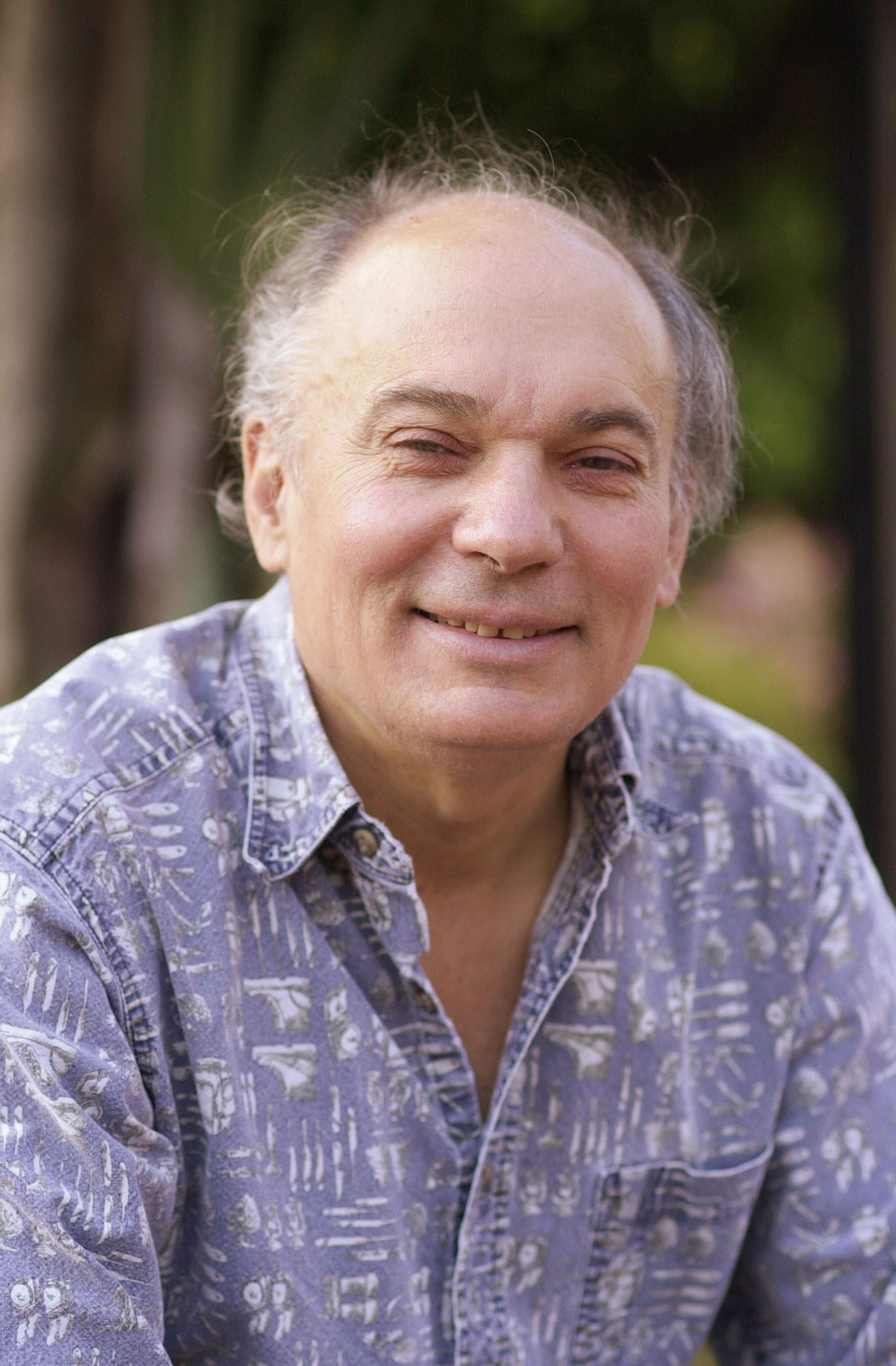 Photo: Linda A. Cicero/Stanford News Service
On a fieldwork trip back to the Philippines that year, Shelly slipped off a trail and fell to her death. “Only then was I in a position to grasp the force of what Ilongots had repeatedly told me about grief, rage, and headhunting,” Rosaldo wrote. A year later, his mourning fueled his most famous academic paper, “Grief and a Headhunter’s Rage: On the Cultural Forces of Emotions.” Rosaldo’s work contributed to a monumental shift in anthropology away from detached descriptions of other cultures and toward understanding reinforced by the personal experience of the author.
Renato I. Rosaldo Jr., a professor emeritus of anthropology and the founder of Stanford’s Center for Chicano Research, died on May 26. He was 85.
The son of a Mexican father and an American mother, Rosaldo grew up in Illinois, Wisconsin, and Arizona. In a 2021 Annual Review of Anthropology essay, he recalled learning about being Mexican-American by observing his high-school friends in Tucson—an experience he referred to as some of his first anthropological field work.
After earning his bachelor’s in Spanish history and literature and his PhD in social anthropology at Harvard, Rosaldo joined Stanford’s anthropology faculty in 1970. Even before his landmark piece on the Ilongot, “he was already pushing a lot of boundaries on how we understand representation of culture,” says Miguel Díaz-Barriga, MA ’84, PhD ’91, a former advisee who is now a professor of anthropology at the University of Richmond. Rosaldo’s 1980 book on the Ilongot, as well as his 1989 book Culture and Truth: The Remaking of Social Analysis, offered examples of how to embrace emotion and positionality in the social sciences— that is, the idea that ethnographers, like all people, have particular viewpoints and, he wrote, “their analyses always are incomplete.” Rosaldo later led his field as the president of the American Ethnological Society from 1991 to 1995.
After Shelly’s death, Rosaldo focused his efforts closer to home and created the first large-scale annual review of Mexican-American anthropology. In 1985, he founded the Center for Chicano Research at Stanford, where he and his second wife, Mary Louise Pratt, PhD ’75, the Olive H. Palmer Professor of Humanities, Emerita, became pillars of support for the burgeoning Chicano community on campus. The couple moved to NYU in the early 2000s.
Rosaldo’s embrace of emotion wasn’t relegated to work. At dinner parties, his son Manuel recalls, he was known for his “giggle fits” after hearing a silly joke, which created an escalating volley of laughs until he was red in the face and out of breath. “I asked him once, did he always laugh so freely?” says Manuel, who works at Stanford’s Haas Center for Public Service and for the Vice Provost for Graduate Education. “He said no, he learned to laugh that way after expressing a lot of grief. He laughed hard because he felt deeply.”
In addition to Manuel and Pratt, Rosaldo is survived by his children Samuel Rosaldo and Olivia Rosaldo-Pratt; six grandchildren; and a brother.
Kali Shiloh is a staff writer at Stanford. Email her at kshiloh@stanford.edu.