

If you’ve worn an Apple Watch, Garmin, or other exercise tracker, you’ve likely encountered “VO2 max”—a calculation of the maximum volume of oxygen your body can consume while exercising. It’s become a widely embraced metric of aerobic fitness and predictor of longevity. A measurement of 54 (milliliters per kilogram per minute) is considered “superior” for a 30-year-old man, as is 47.4 for a 30-year-old woman. Stanford cardiologist Euan Ashley and his colleagues have their eyes out for those with scores far higher. Their ELITE study, which seeks to understand the genetic determinants of performance in top endurance athletes, has received DNA samples from nearly 3,000 participants from 15 countries with an average VO2 max of 73 for men and 61 for women.
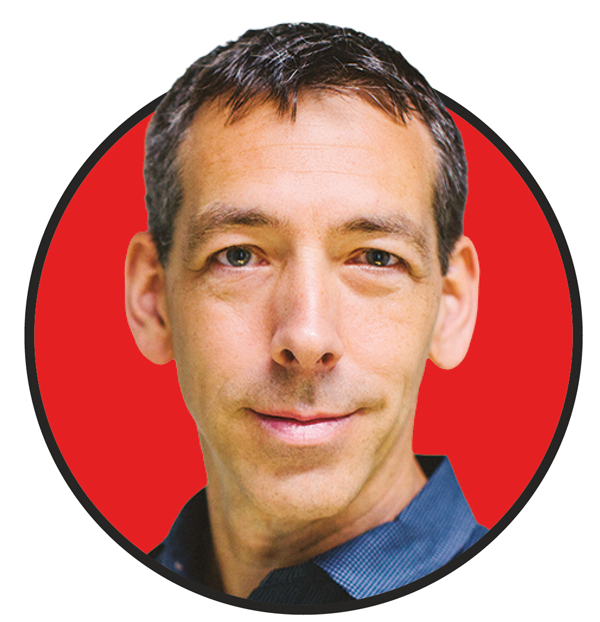 Euan Ashley
Ashley, the chair of the department of medicine, is an expert in hearts in distress. His clinical focus includes cardiovascular diseases, cardiomyopathies, and a litany of other ailments. But as a lifelong athlete and a renowned geneticist, he also has a long fascination with hearts at their most powerful. He once set up a mobile lab to test finishers at the end of a 400 km endurance race in the Scottish Highlands. Conditioning only partially explains why certain athletes have cardiovascular capacity in the top 1 percent. The ELITE study seeks to shed light on the genetics underpinning the rest. “We’re interested in learning from the people whose engines work better than anyone else’s, how that’s the case,” Ashley says. The resulting insights may one day benefit athletes themselves—helping develop better training regimens based on genetic profiles, for example. But the goal is to aid those at the other end of the spectrum too. If the research finds, say, a genetic variant in an enzyme that helps an athlete’s heart contract with extraordinary efficiency, scientists may be able to target that enzyme in hearts that pump poorly. “We hope to learn from the fittest hearts what we can apply to the sickest hearts,” says senior research engineer Maléne Lindholm, who manages the study.
 Maléne Lindholm
Such research has not often risen to the top of the funding pile. In a typical application for a biomedical research grant, it helps to directly address death and disease, says Scott Delp, MS ’87, PhD ’90, a Stanford professor of bioengineering and of mechanical engineering. “Someone has to die in the first paragraph, or at least get very sick, and then you swoop in with science and save them.” That approach has paid amazing dividends in our treatment and understanding of illnesses from diabetes to cancer, he says, but it comes with limitations. “Almost everything we know about health comes from studying disease,” he says.
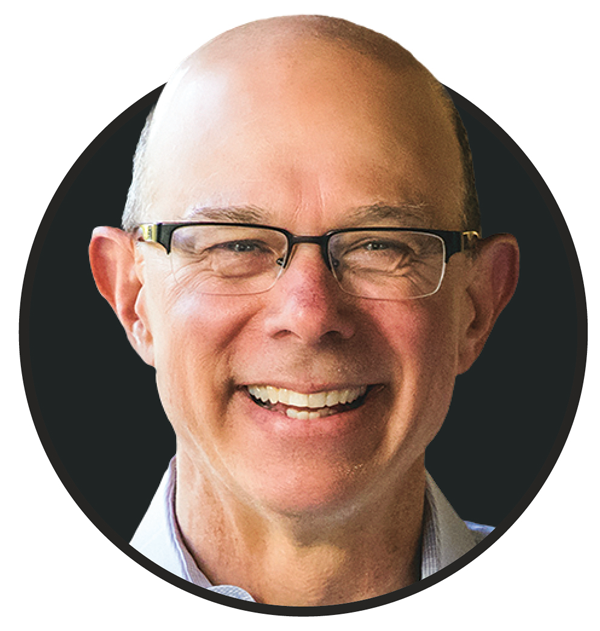 Scott Delp
Delp leads an organization that inverts that model. The Wu Tsai Human Performance Alliance is a Stanford-based research partnership with locations at five other institutions that emphasizes the study and pursuit of peak performance, supporting efforts like ELITE. The Alliance launched in 2021 thanks to a $220 million donation from Joe Tsai and Clara Wu Tsai, ’88, MA ’88. The couple’s experience as owners of several professional sports teams—including the NBA’s Brooklyn Nets and the WNBA’s New York Liberty—convinced them of the need and opportunity for research into avoiding injury, improving rehabilitation, and optimizing achievement. The findings, they hope, will not only help athletes have better, longer careers but also broadly benefit the general population. “Impact for me means being able to affect the lives of as many people as possible—not just elite athletes,” Wu Tsai says.
Staying Agile
The alliance takes a broad view of where to put its support. Each year, it awards numerous “agility” grants of up to $100,000 for early-stage projects that have ranged from psychological studies of the relationship between mindset and performance to physiological inquiries into the connection between endurance and the gut microbiome.
One priority: learning more about female athletes, who have long been sidelined from research due in part to the data variability introduced by the menstrual cycle. A 2021 meta-analysis of papers in major sports medicine journals found that while women were included in 63 percent of studies, they made up only 1⁄3 of the overall participants; only 6 percent of studies were conducted exclusively on women, compared with 31 percent for men. Lara Weed, MS ’22, a doctoral student in bioengineering, is leading a Wu Tsai-supported study that delves into issues she’s had on her mind since her days as a teenage gymnast grappling with the effects of her menstrual cycle on flexibility. “I ended up getting a lot of back injuries that I think were primarily tied to the menstrual cycle,” she says. “Your body physically moves differently during certain phases. It takes years to understand which symptoms are coming from the menstrual cycle versus just a random bad day.”
The study—which examines how sleep, circadian rhythms, and the menstrual cycle combine in women to affect neuromuscular performance—used wearable sensors and urine-based hormone testing to monitor 50 women aged 18 to 30 for 28 days, twice bringing them into the lab for strength, coordination, and balance assessments at very different times of day: 3 hours before and 8 hours after their usual wake time. “We know the menstrual cycle affects performance, but it’s also true that sleep and circadian rhythms are changing across the cycle, and that can confound things,” Weed says. “The idea was to be able to tease apart which effects are really due to hormones, and which are due to circadian timing or sleep disruption.”
Analysis of the data is ongoing, but the results will help provide a baseline of performance fluctuations across the menstrual cycle for use in future studies, she says. It’s obvious from the reactions she receives that there’s a great deal of desire for rigorous inquiry. “Every time I’ve presented this work—even in early stages—there’s a lot of excitement, because it’s one of those things that everybody kind of knows must matter, but there’s not really any data,” she says. “The fact that the menstrual cycle was affecting performance was not a secret, but it wasn’t known what specifically it affects or what to do about it.”
Similarly, Jonathan Long, an associate professor of pathology and a biochemist, is amassing data on another vital but mysterious physiological process. He’s using two Wu Tsai agility grants to gain insight into two supplements—ketone ester and taurine—as part of his broader quest to understand the biochemistry of exercise. It’s commonplace, he says, to refer to exercise as a medicine. And exercise has, of course, long been associated with a range of beneficial health outcomes, including preventing disease. But to call it medicine, he says, implies we know far more than we do. Long points out that when you pick up a prescribed drug at the pharmacy—like a statin—you also receive a long instruction manual describing everything from proper dosage to pharmacokinetics to possible adverse effects. Meanwhile, the prevailing federal advice on exercise, issued by the Centers for Disease Control and Prevention, boils down to a call to move more and sit less with an aim of doing at least 150 minutes of moderate-intensity activity a week (more if you can). Moreover, Long says, not all scientists agree on what constitutes physical activity: Is it gardening, marathon training, both? If we prescribed medicines like we prescribe exercise, Long said at a Wu Tsai symposium in 2023, it would sound like this: “You should take some pills. Maybe you should take two. Maybe four. Maybe 10. Maybe you should spread your pills throughout the week, and of course the more pills you take the better it is for you.”
Long’s previous research has shown that different types of exercise—aerobic, anaerobic, and resistance—result in the production of different sets of molecules in the blood. (In a 2022 study, his lab found a previously unknown molecule called Lac-Phe that spikes after high-intensity exercise and explains why hard workouts suppress appetite.) Before we can prescribe exercise with the precision with which we prescribe medication, Long says, we need to probe which molecules do what when we engage in different types of physical activity. “If we really want to have exercise as medicine, in the way that we really understand modern medicines, if we want to be able to harness it and dissect it and give it to the right person at the right place at the right time for the right things, then we need to have a better understanding of what it is besides you move 150 minutes per week and live a better life.”

Full Recovery
In addition to the short-term agility grants, Wu Tsai provides sustained support for four aspirational, interconnected projects it calls “moonshots.” One—the Molecular Athlete—supports the ELITE study and has a focus on decoding the biology and genetics of high performance. “We’ve learned so much in medicine from the illest,” Ashley says. “What can we learn from the healthiest?” Another—Regenerative Rehabilitation—is a quest to restore damaged tissue to its preinjury strength, flexibility, and utility. For Michael Longaker, the professor of surgery leading Stanford’s contribution to the effort, the moonshot has provided new direction to an old obsession: preventing scarring.
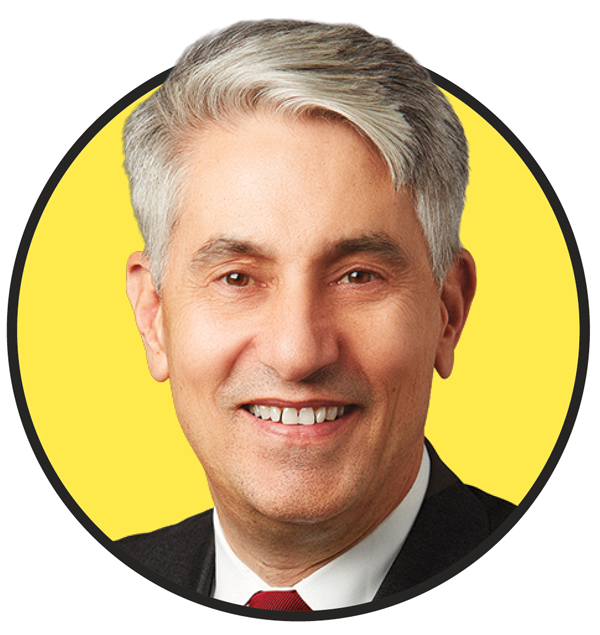 Michael Longaker
When Longaker was a postdoctoral fellow in the late ’80s, he operated on a fetal lamb that was then restored to the womb and subsequently born without the blemishes associated with incision. For Longaker, it was an unforgettable illustration of how scars are not the inevitable consequence of injury, but the result of a tactical shift late in gestation when the body switches to more rapid recovery. In a world of pathogens and predators, perfect repair becomes a luxury.
Scars are flawed fixes, “spot welds,” in Longaker’s words. Scar tissue in skin has no hair follicles and no sweat glands. It is less flexible and weaker than skin. And, of course, it looks different. Longaker’s work has helped decipher the chemical and physical signals that tell skin to make scars, which has led to a tantalizing potential therapy: verteporfin, a drug already on the market for macular degeneration. It turns off the master switch of scar formation—something called a Yes-associated protein. In animal models, wounds treated with verteporfin healed virtually scarlessly, raising hopes of transformative treatment. “We hope in the next year or two to start our clinical trial at Packard Children’s Hospital for cleft lip scar revision,” Longaker says.
Longaker says Wu Tsai leaders encouraged him and collaborator Derrick Wan, ’97, a fellow plastic surgeon and professor at the School of Medicine, to think about how their work could apply within the body to areas key to performance and mobility. “They challenged us to say, ‘How could this be incorporated into other tissues beyond skin?’ ” Longaker says. Delp connected the two with orthopedic surgeon Geoff Abrams, ’00, an associate professor at the School of Medicine who was working to reduce scarring and inflammation in tendons, which link muscles and bones.
Scarring is not as readily associated with tendons as it is with skin, our vast, visible external organ. But fibrosis—aka scarring—wreaks havoc in the interior of the body as well. It’s weaker, stiffer, and more prone to rupture, as anyone who has ever rehabbed an Achilles tear has worried about. Longaker and Wan say the mechanisms of scarring in tendons and muscles are not significantly different than those in skin. Their work with Abrams is testing potential small molecules that could inhibit the call to create scar tissue and instead promote good-as-new healing.
“Regenerative rehabilitation means that tissue will respond to injury and regenerate without a scar and be as strong as it was before, as soon as possible,” Longaker says. “We still want to see the healing be accelerated to full strength, not 80 percent strength. That’s something we think we can really contribute to.”
The collaboration with Abrams happened only because of Delp’s intervention, Longaker says. “There are 2,400 faculty members at Stanford. We could have collided at a drinking fountain at any time—we hadn’t,” he says. “Wu Tsai brought us together.”

Something In the Way They Move
When Delp was a 20-year-old college student, he was telemark skiing at Vail when he sustained a devastating tear to his psoas, a long muscle that runs from the lower spine to the top of the femur. It took 15 years—and many fruitless doctor visits—to fully recover from the injury. “No one knew how to fix me,” he says. “I thought, I’ve got to figure this out.” The young engineering student switched his focus from solar and wind energy to the mysteries of the body, ultimately becoming the founding chair of Stanford’s bioengineering department.
Delp leads not only Wu Tsai but its Digital Athlete moonshot, which focuses on creating predictive computer models to improve training and prevent injuries. In his quarter-century on the Stanford faculty, he has developed a lab that uses sophisticated motion-capture cameras and computer modeling to help people with conditions like osteoarthritis and cerebral palsy improve their movement. The work, he says, has paired naturally with assisting athletes. In both cases, Delp says, he is optimizing performance. “A kid with cerebral palsy is trying to stand tall,” he says. “An athlete is trying to run faster. Their goals are different, but the underlying science is the same.”
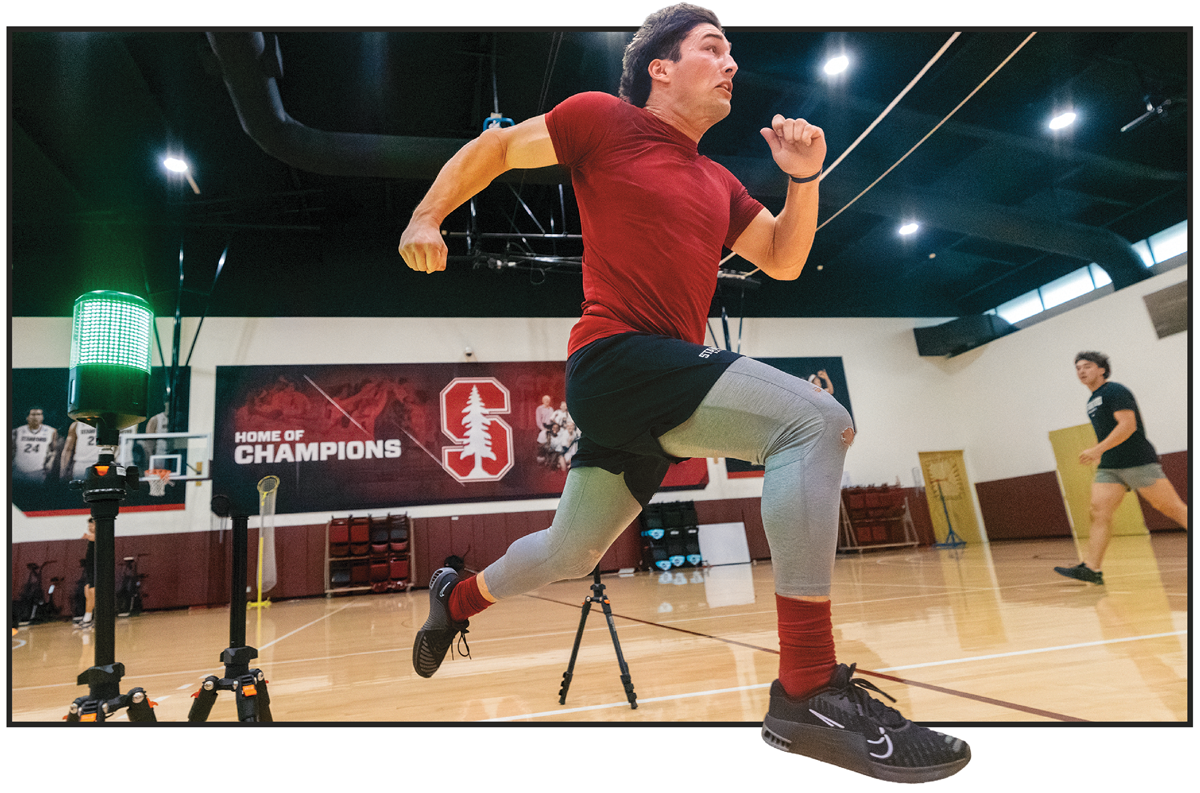 WHOLE NEW BALL GAME: Performance lab data, such as sprint split times for Stanford outfielder Brady Reynolds, ’27, can enable Wu Tsai researchers to provide training prescriptions that translate to on-field advantages.
As part of the moonshot, Delp is working to put the power of his multimillion-dollar lab into smartphones. His team has developed an open-source tool called OpenCap that uses video to perform 3D-motion capture and biomechanical analysis. He’s using it to develop an app that assesses an athlete’s risk of injuring her anterior cruciate ligament—the ACL—a knee injury especially prevalent in girls and women. The app records an athlete doing a pair of movements—a run-cut maneuver and a single-leg drop jump—and breaks down the biomechanics to give a score indicating if the subject has resilient or injury-prone movement patterns. “About 70 percent of ACL tears are noncontact—they’re not from getting hit but from how someone moves,” says Kirsten Seagers, MS ’19, a doctoral student working on the project. “If you take a wrong jump landing or dodge a defender the wrong way, it’s not bad luck—it’s mechanics we can train.”
The Stanford women’s basketball team took part in the study, to provide model movements and to receive preliminary scores. Now the lab is recruiting 1,000 female soccer, volleyball, and basketball players, ages 12 to 30, for a study that follows them over time to compare how their scores relate to injury outcomes. The goal is not just to identify risk but to reduce it.
“Thousands of papers describe the ACL injury problem,” Delp says. “We’re focused on changing it.”
That could be as important for weekend warriors as top-level athletes. It’s a model of the Wu Tsai approach. People don’t die of ACL tears, and surgery is better than ever at remedying them. But how much better to learn ideal ways of moving to avoid the pain, rest, and rehab altogether. “It’s not about just athletes or Olympians—it’s about everybody. We’re all trying to do the same thing: stay healthy, strong, and able to live full,” Delp says. “By discovering the fundamental principles that govern our ability to engage in life, and translating them to everybody, we can elevate everyone.”
Performance EvaluationThe alliance’s four moonshots. |
| Digital Athlete Mission: understand how athletes of all ages can train to achieve peak physical performance by creating predictive models to guide training and treatment Headquarters: Stanford Regenerative Rehabilitation Mission: restore function to damaged tissues, accelerating healing, facilitating rehabilitation, and improving quality of life Headquarters: University of Oregon Molecular Athlete Mission: map molecules and gene expression that occur during performance to help maximize performance, healing, and recovery Headquarters: Salk Institute Multiscale Athlete Mission: synthesize experimental measurements to predict molecular and cellular states of tissues and their effects on whole-body performance; serve as conduit for transferring knowledge from Molecular Athlete and Regenerative Rehabilitation to Digital Athlete Headquarters: UC San Diego |
Sam Scott is a senior writer at Stanford. Email him at sscott3@stanford.edu.
Photos, from top: Courtesy Stanford Medicine; Maléne Lindholm; Courtesy Scott Delp; Courtesy Michael Longaker; Andrew Brodhead/Stanford University