Richard Luthy knew pretty much everything there was to know about water in California. His five decades as an environmental engineer led him from wading in San Francisco Bay to battling microscopic water pollutants in the lab to innovating new policy solutions for a water-starved American West.
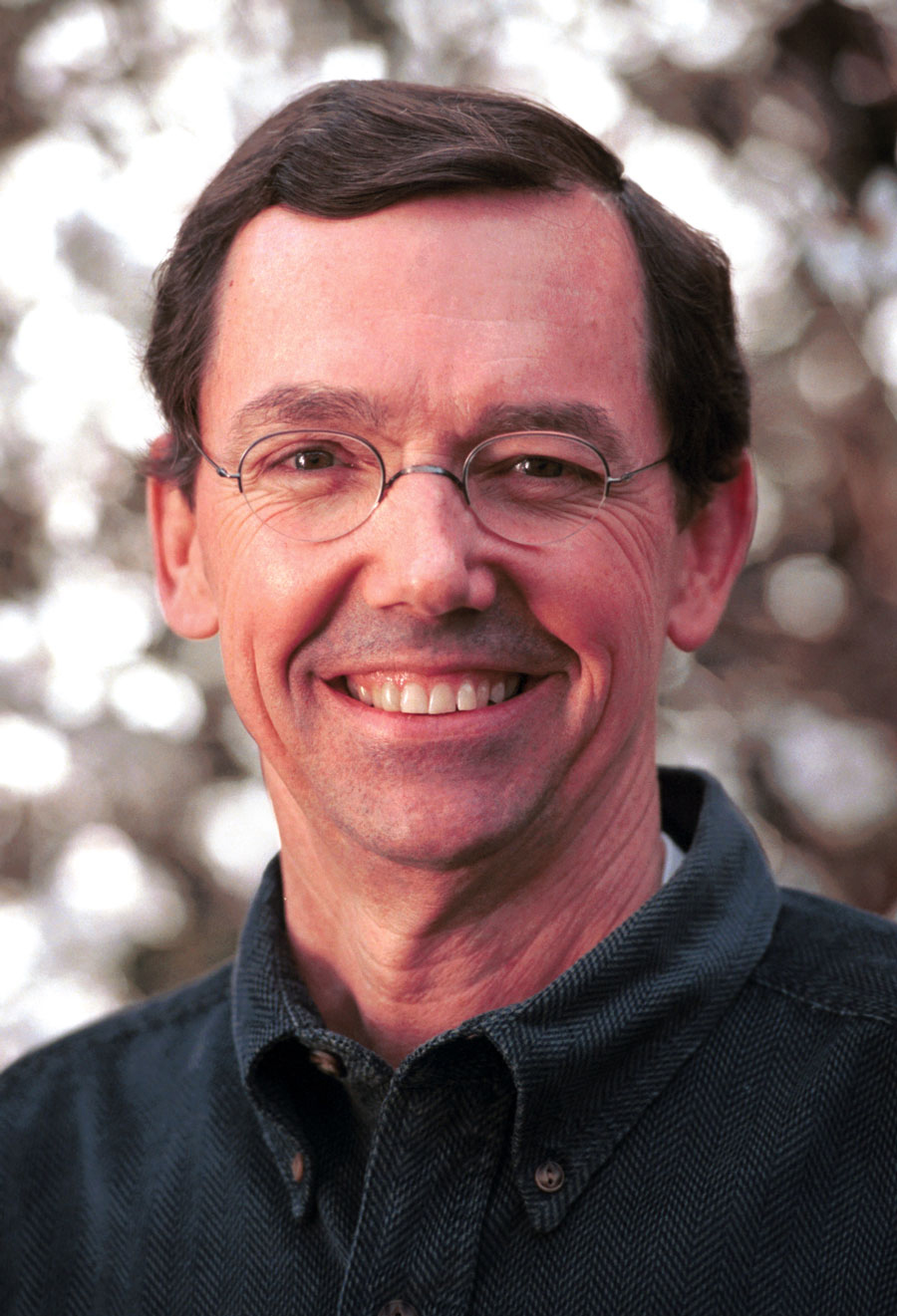 Photo: Linda A. Cicero/Stanford University
“He was capable of thinking at the molecular level and a much larger statewide level about our future and our water,” says his colleague Jeff Koseff, an emeritus professor of civil and environmental engineering. “It is not an exaggeration to say Dick Luthy became one of the most influential environmental engineers—if not the preeminent one—in the United States.”
Richard Godfrey Luthy, a professor of civil and environmental engineering, remained active as a researcher and educator until his death on October 6 at Stanford Hospital following a cerebral hemorrhage. He’d planned to take students on a tour of campus water systems that day. He was 80.
“He loved taking students on field trips around campus,” says Sarah Billington, professor and chair of civil and environmental engineering. “He knew where every sewer went. He knew about and worked in every branch of water quality. He just loved it.”
Luthy was born on June 11, 1945, in Buffalo, N.Y., then moved to Kansas—where he developed a love for science, often playing with a chemistry set in the family garage—and later to Palo Alto. He joined the Navy Civil Engineer Corps in the early ’70s and became a deep-sea diver, leading underwater construction projects. By 1976, he’d completed a PhD in environmental engineering at UC Berkeley and joined the faculty at Carnegie Mellon University in Pittsburgh. He was recruited to Stanford in 2000.
Luthy’s research on controlling water contaminants supported an inexpensive process for treating sediments using activated carbon in place of dredging. His lab once showed how a clam, left in a mixture of sediment contaminated with PCBs but with activated carbon added, absorbed 95 percent less of the man-made toxin than a control clam in untreated contaminated sediment did. His rural- and urban-water research demonstrated ways to capture and store surface runoff underground.
“Dick was really concerned about the sustainability and resiliency of water in California,” Koseff says. “He embraced that whole vision of taking one drop of water and using it multiple times.” In a recent Stanford publication, Luthy wrote, “There isn’t a single activity that will solve our water problems, but conservation, recycling, desalination, stormwater capture, recharge, and water banking will go a long way.”
On campus, he was known as a father figure to many, a lover of Stanford Football, and a calm presence who would end fractious meetings with the words, “It’s time for a hamburger!”
Luthy is survived by his wife, Mary Sullivan; children, Matthew, Mara, and Olivia Saachi; and three grandsons.
Tracie White is a senior writer at Stanford. Email her at traciew@stanford.edu.